Gazania
9 species in the reference · family Asteraceae · 9 with a habitat climate · 8 grown, per iNaturalist, 1 not counted
About the genus
Gazania is a genus of flowering plants in the family Asteraceae, native to Southern Africa. They produce large, daisy-like composite flowerheads in brilliant shades of yellow and orange, over a long period in summer. They are often planted as drought-tolerant groundcover, but regarded as an environmental weed in parts of Australia, the Mediterranean, New Zealand, and California, where they have become naturalised.
Quoted from Wikipedia, "Gazania", its opening paragraph, revision 1375062445, read 2026-11-08, CC BY-SA 4.0.
Where Gazania is native
| Cape Provinces | 9 |
|---|---|
| KwaZulu-Natal | 3 |
| Free State | 2 |
| Mozambique | 2 |
| Namibia | 2 |
| Northern Provinces | 2 |
| Swaziland | 2 |
| Angola | 1 |
| Botswana | 1 |
| Lesotho | 1 |
| Zambia | 1 |
| Zimbabwe | 1 |
Species native to each region. A species counts in every region it is native to. Native ranges: Kew's World Checklist of Vascular Plants (Govaerts et al., CC BY 4.0), file of 4 June 2026.
9 species
Gazania
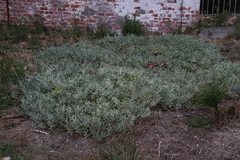 Gazania rigens Treasure flower Photo: CC BY-SA, Tony Rebelo
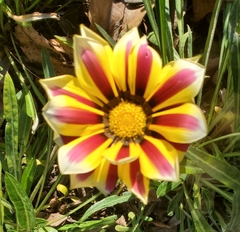 Gazania linearis Treasureflower Photo: CC BY, jrsweet
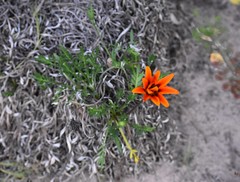 Gazania krebsiana Terracotta Gazania Photo: CC BY, Justin Ponder
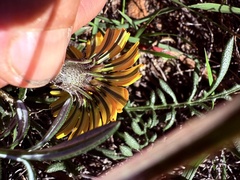 Gazania rigida Karoo Gazania Photo: CC BY, Christina
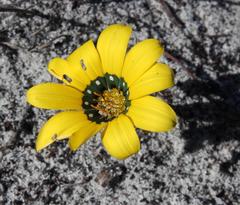 Gazania pectinata Photo: CC BY-SA, Tony Rebelo
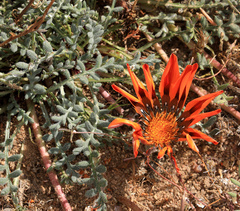 Gazania leiopoda Magnificent Gazania Photo: CC BY, Wynand Uys
 Gazania ciliaris Photo: CC BY-SA, Tony Rebelo
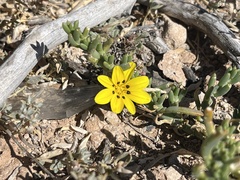 Gazania lichtensteinii Yellow Gazania Photo: CC0, Debbi Winterton
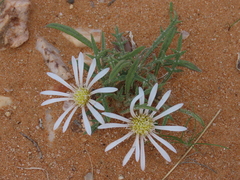 Gazania jurineifolia White Thistle Gazania Photo: CC0, dune_ninja
Grown: iNaturalist's observations of the species marked captive or cultivated; "not counted" where the species list does not count it. Native ranges: Kew's World Checklist of Vascular Plants (Govaerts et al., CC BY 4.0), file of 4 June 2026. Grown: iNaturalist's observations marked captive or cultivated, counted 17 October 2026 (the species list's count). Habitat climate known: the species page has a habitat climate, read from CHELSA's monthly climate and NASA POWER's daily extremes at its well-placed wild records inside Kew's native range; each page says its own sources and days. Record low: the lowest night in NASA POWER's daily series at the habitat's typical spot, as the species page gives it, held in °C to a tenth and shown in your units; each page says its own years and day read. Counts as the reference built on 19 November 2026 holds them. The CSV holds every result, not only this page's.