Heimia
4 species in the reference · family Lythraceae · 4 with a habitat climate · 4 grown, per iNaturalist
About the genus
Heimia is a genus of flowering plants in the loosestrife family, Lythraceae. It contains two or three species of closely related shrubs commonly known as sun opener or shrubby yellowcrest. They are native to the Americas, from northern Argentina north to the southernmost United States (southern Texas). The leaves are 2–5 cm long and 1 cm broad, entire, and variably arranged alternate, opposite or whorled on the stems. More on Wikipedia
Quoted from Wikipedia, "Heimia", its opening paragraph, revision 1383376578, read 2026-11-08, CC BY-SA 4.0.
Where Heimia is native
| Brazil South | 3 |
|---|---|
| Argentina Northeast | 2 |
| Argentina Northwest | 2 |
| Bolivia | 2 |
| Brazil Southeast | 2 |
| Paraguay | 2 |
| Uruguay | 2 |
| Brazil West-Central | 1 |
| Jamaica | 1 |
| Mexico Central | 1 |
| Mexico Gulf | 1 |
| Mexico Northeast | 1 |
Species native to each region. A species counts in every region it is native to. Native ranges: Kew's World Checklist of Vascular Plants (Govaerts et al., CC BY 4.0), file of 4 June 2026.
4 species
Heimia
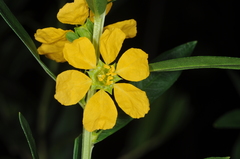 Heimia salicifolia Shrubby yellowcrest Photo: CC BY, aacocucci
 Heimia myrtifolia Photo: CC BY-SA, Krzysztof Ziarnek, Kenraiz
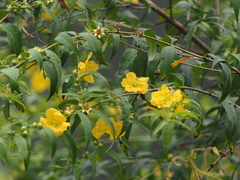 Heimia montana Photo: CC BY, Rosario Douglas
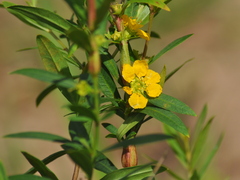 Heimia apetala Photo: CC BY, vinicius_s_domingues
Grown: iNaturalist's observations of the species marked captive or cultivated; "not counted" where the species list does not count it. Native ranges: Kew's World Checklist of Vascular Plants (Govaerts et al., CC BY 4.0), file of 4 June 2026. Grown: iNaturalist's observations marked captive or cultivated, counted 17 October 2026 (the species list's count). Habitat climate known: the species page has a habitat climate, read from CHELSA's monthly climate and NASA POWER's daily extremes at its well-placed wild records inside Kew's native range; each page says its own sources and days. Record low: the lowest night in NASA POWER's daily series at the habitat's typical spot, as the species page gives it, held in °C to a tenth and shown in your units; each page says its own years and day read. Counts as the reference built on 19 November 2026 holds them. The CSV holds every result, not only this page's.