Incarvillea
14 species in the reference · family Bignoniaceae · 11 with a habitat climate · 8 grown, per iNaturalist, 6 not counted
About the genus
Incarvillea is a genus of about 16 species of flowering plants in the family Bignoniaceae, native to central and eastern Asia, with most of the species growing at high altitudes in the Himalaya and Tibet. The most familiar species is Incarvillea delavayi, a garden plant commonly known as hardy gloxinia or Chinese trumpet flower. Unlike most other members of Bignoniaceae, which are mainly tropical woody plants, species of Incarvillea are herbaceous perennial plants from temperate regions.
Quoted from Wikipedia, "Incarvillea", its opening paragraph, revision 1380476901, read 2026-11-08, CC BY-SA 4.0.
Where Incarvillea is native
| China South-Central | 11 |
|---|---|
| Tibet | 9 |
| Qinghai | 5 |
| Nepal | 4 |
| China North-Central | 3 |
| Afghanistan | 2 |
| West Himalaya | 2 |
| China Southeast | 1 |
| East Himalaya | 1 |
| Inner Mongolia | 1 |
| Kazakhstan | 1 |
| Kirgizistan | 1 |
Species native to each region. A species counts in every region it is native to. Native ranges: Kew's World Checklist of Vascular Plants (Govaerts et al., CC BY 4.0), file of 4 June 2026.
14 species
Incarvillea
 Incarvillea delavayi Chinese trumpet-flower Photo: Public domain, FredrikLähnn
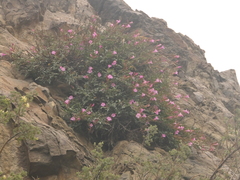 Incarvillea arguta Photo: CC BY, Sagnik Dutta Roy
 Incarvillea olgae Princess Trumpet-flower Photo: CC BY-SA, Krzysztof Ziarnek, Kenraiz
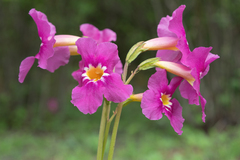 Incarvillea zhongdianensis Photo: CC BY, Morten Ross
 Incarvillea mairei Photo: CC BY-SA, brewbooks from near Seattle, USA
 Incarvillea sinensis Trumpet-flower Photo: CC BY-SA, Cephas
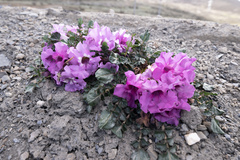 Incarvillea compacta Dwarf Trumpet-flower Photo: CC BY, Morten Ross
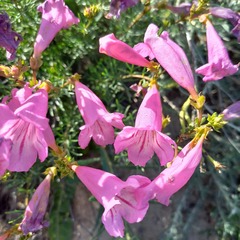 Incarvillea semiretschenskia Photo: CC BY, Alexander Dubynin
- no open photograph on file Incarvillea beresowskii
 Incarvillea emodi Photo: CC BY-SA, Averater
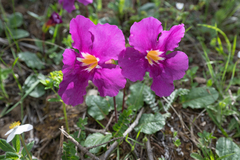 Incarvillea forrestii Photo: CC BY, Morten Ross
- no open photograph on file Incarvillea himalayensis
- no open photograph on file Incarvillea lutea
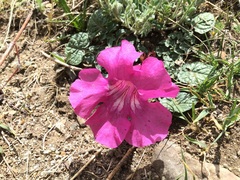 Incarvillea younghusbandii Photo: CC BY, 王天明
Grown: iNaturalist's observations of the species marked captive or cultivated; "not counted" where the species list does not count it. Native ranges: Kew's World Checklist of Vascular Plants (Govaerts et al., CC BY 4.0), file of 4 June 2026. Grown: iNaturalist's observations marked captive or cultivated, counted 17 October 2026 (the species list's count). Habitat climate known: the species page has a habitat climate, read from CHELSA's monthly climate and NASA POWER's daily extremes at its well-placed wild records inside Kew's native range; each page says its own sources and days. Record low: the lowest night in NASA POWER's daily series at the habitat's typical spot, as the species page gives it, held in °C to a tenth and shown in your units; each page says its own years and day read. Counts as the reference built on 19 November 2026 holds them. The CSV holds every result, not only this page's.