Maianthemum
12 species in the reference · family Asparagaceae · 11 with a habitat climate · 9 grown, per iNaturalist, 3 not counted
About the genus
Maianthemum includes the former genus Smilacina and is a genus of perennial herbaceous flowering plants with fleshy, persistent rhizomes. It is widespread across much of North America, Europe and Asia, and may be terrestrial, aquatic or epiphytic. It is characterized by simple, unbranched stems that are upright, leaning or hanging down and have 2–17 foliage leaves. Leaves are simple and may clasp the stem or be short-petiolate. More on Wikipedia
Quoted from Wikipedia, "Maianthemum", its opening paragraph, revision 1372287921, read 2026-11-08, CC BY-SA 4.0.
Where Maianthemum is native
| China South-Central | 6 |
|---|---|
| British Columbia | 5 |
| Alberta | 4 |
| Amur | 4 |
| Connecticut | 4 |
| Khabarovsk | 4 |
| Korea | 4 |
| Maine | 4 |
| Manitoba | 4 |
| Massachusetts | 4 |
| Michigan | 4 |
| Minnesota | 4 |
Species native to each region. A species counts in every region it is native to. Native ranges: Kew's World Checklist of Vascular Plants (Govaerts et al., CC BY 4.0), file of 4 June 2026.
12 species
Maianthemum
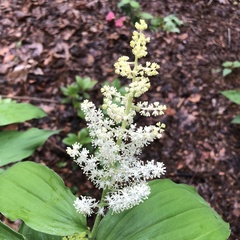 Maianthemum racemosum False spikenard Photo: CC BY, Andrew Conboy
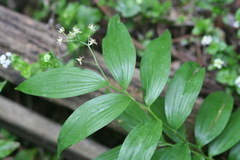 Maianthemum stellatum Little false Solomon's-seal Photo: CC BY, runcator
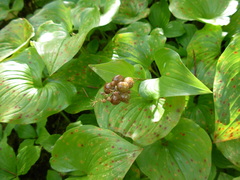 Maianthemum dilatatum False lily of the valley Photo: CC BY-SA, J Brew
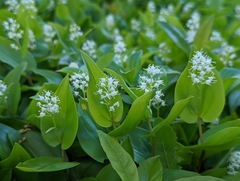 Maianthemum canadense Canada mayflower Photo: CC0, agbelliveau
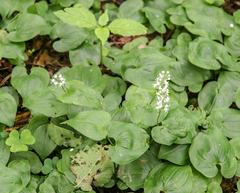 Maianthemum bifolium May lily Photo: CC BY, stolbovsky
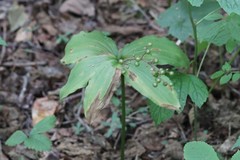 Maianthemum japonicum Japanese Mayflower Photo: CC BY, Nina Filippova
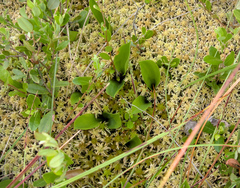 Maianthemum trifolium Threeleaf false lily of the valley Photo: CC BY, Hungry-Sarracenia Photo
 Maianthemum oleraceum Photo: CC BY, Siddarth Machado
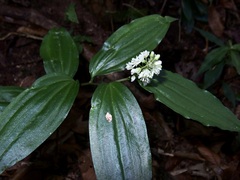 Maianthemum paniculatum Photo: CC BY, Sue Carnahan
- no open photograph on file Maianthemum fuscum
- no open photograph on file Maianthemum henryi
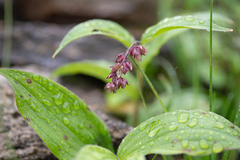 Maianthemum purpureum Photo: CC BY, Morten Ross
Grown: iNaturalist's observations of the species marked captive or cultivated; "not counted" where the species list does not count it. Native ranges: Kew's World Checklist of Vascular Plants (Govaerts et al., CC BY 4.0), file of 4 June 2026. Grown: iNaturalist's observations marked captive or cultivated, counted 17 October 2026 (the species list's count). Habitat climate known: the species page has a habitat climate, read from CHELSA's monthly climate and NASA POWER's daily extremes at its well-placed wild records inside Kew's native range; each page says its own sources and days. Record low: the lowest night in NASA POWER's daily series at the habitat's typical spot, as the species page gives it, held in °C to a tenth and shown in your units; each page says its own years and day read. Counts as the reference built on 19 November 2026 holds them. The CSV holds every result, not only this page's.