Malpighia
5 species in the reference · family Malpighiaceae · 4 with a habitat climate · 5 grown, per iNaturalist
About the genus
Malpighia is a genus of flowering plants in the nance family, Malpighiaceae. It contains 108 species of shrubs or small trees, all of which are native to the American tropics, ranging from Texas through Mexico, Central America, and the Caribbean to Venezuela, Colombia, and Ecuador. The generic name honours Marcello Malpighi, a 17th-century Italian physician and botanist. The species grow to 1–6 m (3.3–19.7 ft) tall, with a dense, often thorny crown. More on Wikipedia
Quoted from Wikipedia, "Malpighia", its opening paragraph, revision 1368562502, read 2026-11-08, CC BY-SA 4.0.
Where Malpighia is native
| Cuba | 3 |
|---|---|
| Guatemala | 3 |
| Honduras | 3 |
| Leeward Is. AB Ant | 3 |
| Mexico Gulf | 3 |
| Mexico Northeast | 3 |
| Mexico Southeast | 3 |
| Mexico Southwest | 3 |
| Puerto Rico | 3 |
| Belize | 2 |
| Colombia | 2 |
| Costa Rica | 2 |
Species native to each region. A species counts in every region it is native to. Native ranges: Kew's World Checklist of Vascular Plants (Govaerts et al., CC BY 4.0), file of 4 June 2026.
5 species
Malpighia
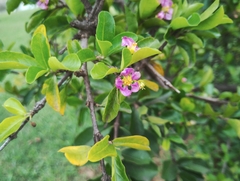 Malpighia emarginata Barbados cherry Photo: CC BY, The Great Walter
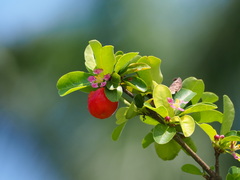 Malpighia glabra Barbados cherry Photo: CC0, 葉子
 Malpighia coccigera Singapore holly Photo: CC BY-SA, AnnLazaro
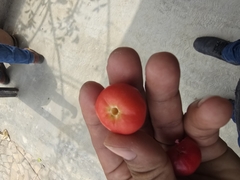 Malpighia mexicana Photo: CC0, Heriberto Santiago
- no open photograph on file Malpighia fucata Palo bronco
Grown: iNaturalist's observations of the species marked captive or cultivated; "not counted" where the species list does not count it. Native ranges: Kew's World Checklist of Vascular Plants (Govaerts et al., CC BY 4.0), file of 4 June 2026. Grown: iNaturalist's observations marked captive or cultivated, counted 17 October 2026 (the species list's count). Habitat climate known: the species page has a habitat climate, read from CHELSA's monthly climate and NASA POWER's daily extremes at its well-placed wild records inside Kew's native range; each page says its own sources and days. Record low: the lowest night in NASA POWER's daily series at the habitat's typical spot, as the species page gives it, held in °C to a tenth and shown in your units; each page says its own years and day read. Counts as the reference built on 19 November 2026 holds them. The CSV holds every result, not only this page's.