Matthiola
7 species in the reference · family Brassicaceae · 6 with a habitat climate · 7 grown, per iNaturalist
About the genus
Matthiola is a genus of flowering plant in the mustard family Brassicaceae. It is named after Italian naturalist Pietro Andrea Mattioli (1501–1577). The genus contains about 50 species of annual, biennial and perennial herbaceous plants and subshrubs. Many are cultivated for their heavily scented, colorful flowers.
Quoted from Wikipedia, "Matthiola", its opening paragraph, revision 1370355331, read 2026-11-08, CC BY-SA 4.0.
Where Matthiola is native
| Greece | 5 |
|---|---|
| Albania | 4 |
| Algeria | 4 |
| Cyprus | 4 |
| France | 4 |
| Italy | 4 |
| Lebanon-Syria | 4 |
| Libya | 4 |
| Sicilia | 4 |
| Spain | 4 |
| Turkey | 4 |
| Baleares | 3 |
Species native to each region. A species counts in every region it is native to. Native ranges: Kew's World Checklist of Vascular Plants (Govaerts et al., CC BY 4.0), file of 4 June 2026.
7 species
Matthiola
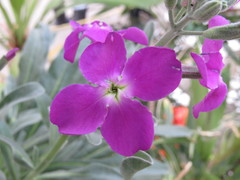 Matthiola incana Hoary stock Photo: CC BY, Juan Carlos Caicedo Hernández
 Matthiola longipetala Night-scented stock Photo: CC0, Cecelia Alexander
 Matthiola maderensis Photo: CC BY, Andre Hosper
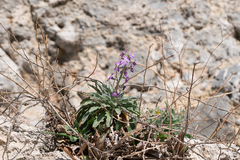 Matthiola sinuata Sea stock Photo: CC BY, Eleftherios Katsillis
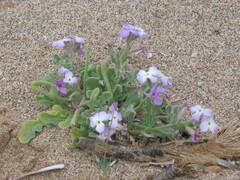 Matthiola tricuspidata Photo: CC BY, zebedeugalinha
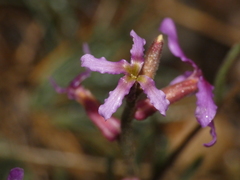 Matthiola fruticulosa Sad stock Photo: CC BY, Yves Bas
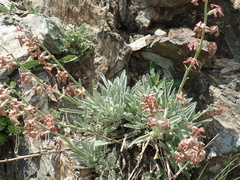 Matthiola montana Photo: CC0, John Kenrick Gibson
Grown: iNaturalist's observations of the species marked captive or cultivated; "not counted" where the species list does not count it. Native ranges: Kew's World Checklist of Vascular Plants (Govaerts et al., CC BY 4.0), file of 4 June 2026. Grown: iNaturalist's observations marked captive or cultivated, counted 17 October 2026 (the species list's count). Habitat climate known: the species page has a habitat climate, read from CHELSA's monthly climate and NASA POWER's daily extremes at its well-placed wild records inside Kew's native range; each page says its own sources and days. Record low: the lowest night in NASA POWER's daily series at the habitat's typical spot, as the species page gives it, held in °C to a tenth and shown in your units; each page says its own years and day read. Counts as the reference built on 19 November 2026 holds them. The CSV holds every result, not only this page's.