Mertensia
14 species in the reference · family Boraginaceae · 13 with a habitat climate · 11 grown, per iNaturalist, 3 not counted
About the genus
Mertensia is a genus of flowering plants in the borage family Boraginaceae. They are perennial herbaceous plants with blue or sometimes white flowers that open from pink-tinged buds. Such a change in flower color is common in Boraginaceae and is caused by changes in soil pH. Mertensia is one of several plants that are commonly called "bluebell". More on Wikipedia
Quoted from Wikipedia, "Mertensia", its opening paragraph, revision 1384168214, read 2026-11-08, CC BY-SA 4.0.
Where Mertensia is native
| Colorado | 6 |
|---|---|
| Montana | 5 |
| Wyoming | 5 |
| Alaska | 4 |
| Idaho | 4 |
| New Mexico | 4 |
| Oregon | 4 |
| Washington | 4 |
| Kuril Is. | 3 |
| Manitoba | 3 |
| Northwest Territories | 3 |
| Ontario | 3 |
Species native to each region. A species counts in every region it is native to. Native ranges: Kew's World Checklist of Vascular Plants (Govaerts et al., CC BY 4.0), file of 4 June 2026.
14 species
Mertensia
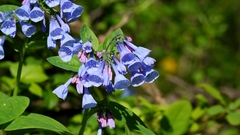 Mertensia virginica Virginia bluebells Photo: CC BY, Steve Rhinehart
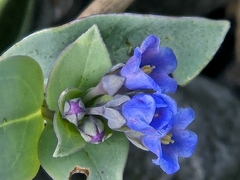 Mertensia maritima Oysterleaf Photo: CC0, Daniel Atha
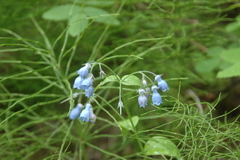 Mertensia paniculata Tall bluebells Photo: CC BY, Syd Cannings
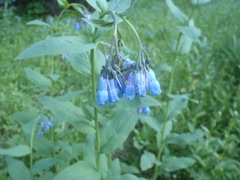 Mertensia ciliata Mountain bluebells Photo: CC BY, Rose Zappa
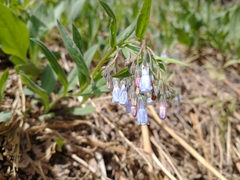 Mertensia oblongifolia Sagebrush bluebells Photo: CC0, Drew Meyer
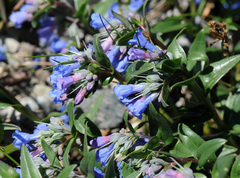 Mertensia lanceolata Lance-leaved bluebells Photo: CC BY, Todd Boland
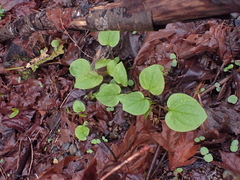 Mertensia platyphylla Broadleaf bluebells Photo: CC0, Deniz Wilson
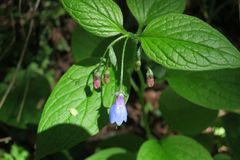 Mertensia subcordata Photo: CC BY, Ed Alverson
 Mertensia pterocarpa Photo: CC BY-SA, KENPEI
 Mertensia sibirica Siberian bluebells Photo: CC BY-SA, Anneli Salo
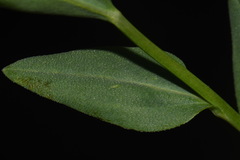 Mertensia tweedyi Photo: CC BY-SA, Brian Finzel
- no open photograph on file Mertensia cana Canescent bluebells
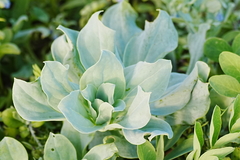 Mertensia simplicissima Photo: CC BY, WATANABE Hitoshi 渡辺仁
 Mertensia viridis Greenleaf Bluebells Photo: CC BY-SA, Hedwig Storch
Grown: iNaturalist's observations of the species marked captive or cultivated; "not counted" where the species list does not count it. Native ranges: Kew's World Checklist of Vascular Plants (Govaerts et al., CC BY 4.0), file of 4 June 2026. Grown: iNaturalist's observations marked captive or cultivated, counted 17 October 2026 (the species list's count). Habitat climate known: the species page has a habitat climate, read from CHELSA's monthly climate and NASA POWER's daily extremes at its well-placed wild records inside Kew's native range; each page says its own sources and days. Record low: the lowest night in NASA POWER's daily series at the habitat's typical spot, as the species page gives it, held in °C to a tenth and shown in your units; each page says its own years and day read. Counts as the reference built on 19 November 2026 holds them. The CSV holds every result, not only this page's.