Miscanthus
6 species in the reference · family Poaceae · 6 with a habitat climate · 6 grown, per iNaturalist
About the genus
Miscanthus, or silvergrass, is a genus of African, Eurasian, and Pacific Island plants in the grass family, Poaceae. The name is derived from the Greek words "miskos", meaning "stem", and "anthos", meaning "flower", in reference to the stalked spikelets on plants of this genus. Several species are known for their height and biomass production, and may be used as ornamental grasses.
Quoted from Wikipedia, "Miscanthus", its opening paragraph, revision 1324924005, read 2026-11-08, CC BY-SA 4.0.
Where Miscanthus is native
| Japan | 5 |
|---|---|
| Korea | 4 |
| China South-Central | 3 |
| China Southeast | 3 |
| Vietnam | 3 |
| China North-Central | 2 |
| Hainan | 2 |
| Jawa | 2 |
| Khabarovsk | 2 |
| Laos | 2 |
| Malaya | 2 |
| Maluku | 2 |
Species native to each region. A species counts in every region it is native to. Native ranges: Kew's World Checklist of Vascular Plants (Govaerts et al., CC BY 4.0), file of 4 June 2026.
6 species
Miscanthus
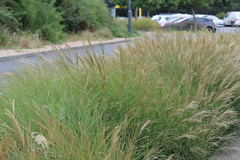 Miscanthus sinensis Chinese silvergrass Photo: CC0, Robert H. Wardell
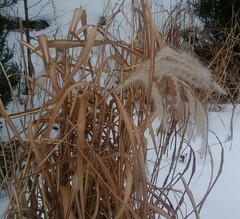 Miscanthus sacchariflorus Amur silvergrass Photo: CC0, Daria
 Miscanthus × longiberbis Small East Asian silvergrass Photo: CC BY-SA, Suzanne Milner Robert A. Holland Andrew…
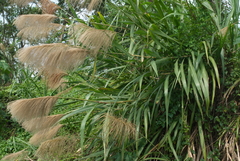 Miscanthus floridulus Pacific island silvergrass Photo: CC BY, 潘立傑 LICHIEH_PAN
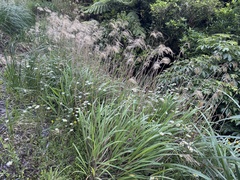 Miscanthus nepalensis Himalayan fairy grass Photo: CC BY, Damon H
 Miscanthus oligostachyus Small Japanese silver grass Photo: CC BY-SA, Kurt Stüber
Grown: iNaturalist's observations of the species marked captive or cultivated; "not counted" where the species list does not count it. Native ranges: Kew's World Checklist of Vascular Plants (Govaerts et al., CC BY 4.0), file of 4 June 2026. Grown: iNaturalist's observations marked captive or cultivated, counted 17 October 2026 (the species list's count). Habitat climate known: the species page has a habitat climate, read from CHELSA's monthly climate and NASA POWER's daily extremes at its well-placed wild records inside Kew's native range; each page says its own sources and days. Record low: the lowest night in NASA POWER's daily series at the habitat's typical spot, as the species page gives it, held in °C to a tenth and shown in your units; each page says its own years and day read. Counts as the reference built on 19 November 2026 holds them. The CSV holds every result, not only this page's.