Muscari
33 species in the reference · family Asparagaceae · 22 with a habitat climate · 21 grown, per iNaturalist, 12 not counted
About the genus
Muscari is a genus of perennial bulbous plants native to Eurasia that produce spikes of dense, most commonly blue, urn-shaped flowers resembling bunches of grapes in the spring. The common name for the genus is grape hyacinth, but they should not be confused with hyacinths. A number of species of Muscari are used as ornamental garden plants.
Quoted from Wikipedia, "Muscari", its opening paragraph, revision 1367990450, read 2026-11-08, CC BY-SA 4.0.
Where Muscari is native
| Turkey | 22 |
|---|---|
| Greece | 11 |
| Transcaucasus | 9 |
| Iran | 7 |
| Yugoslavia | 7 |
| East Aegean Is. | 6 |
| Iraq | 6 |
| Lebanon-Syria | 6 |
| Palestine | 6 |
| Spain | 6 |
| Bulgaria | 5 |
| Italy | 5 |
Species native to each region. A species counts in every region it is native to. Native ranges: Kew's World Checklist of Vascular Plants (Govaerts et al., CC BY 4.0), file of 4 June 2026.
33 species
Muscari
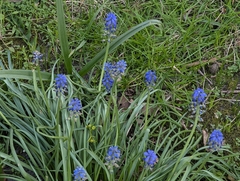 Muscari armeniacum Garden Grape-hyacinth Photo: CC BY, Viktor
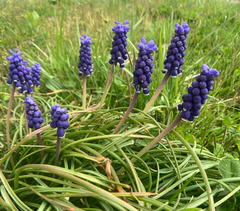 Muscari botryoides Compact grape-hyacinth Photo: CC BY-SA, Chuck Martin
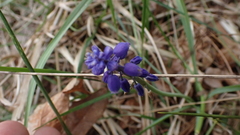 Muscari neglectum Grape-hyacinth Photo: CC BY, John Abrams
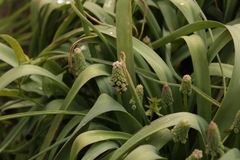 Muscari comosum Tassel hyacinth Photo: CC BY, Bobo-X
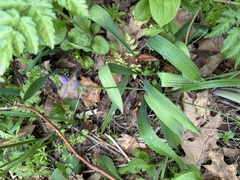 Muscari latifolium Broad-leaved Grape-hyacinth Photo: CC BY, Chris D Thomas
 Muscari azureum Azure Grape-hyacinth Photo: CC BY, Alexis Tinker-Tsavalas
 Muscari aucheri Aucher-Éloy grape hyacinth Photo: CC BY-SA, Averater
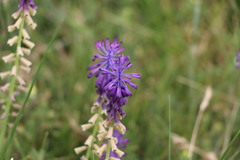 Muscari tenuiflorum Photo: CC BY, Florencia Grattarola
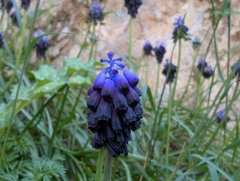 Muscari commutatum Dark Grape-hyacinth Photo: CC BY, Elias
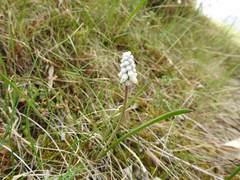 Muscari pallens Photo: CC BY, Konstantin Grebennikov
 Muscari baeticum Photo: CC BY-SA, Aissa Djamel Filali
 Muscari dolichanthum Photo: CC BY-SA, SKas
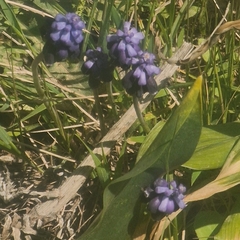 Muscari atlanticum Photo: CC BY, Bernd De Bosscher
- no open photograph on file Muscari olivetorum
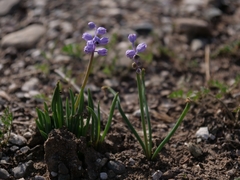 Muscari parviflorum Autumn Grape-hyacinth Photo: CC BY, Marios Thoma
- no open photograph on file Muscari caucasicum
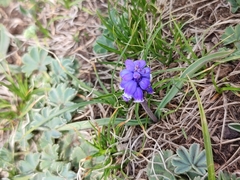 Muscari coeruleum Photo: CC BY, Иван Ковтун Ivan Kovtun
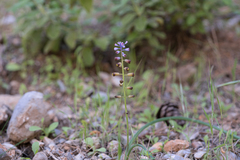 Muscari weissii Weiss' Grape Hyacinth Photo: CC BY, Eleftherios Katsillis
 Muscari bourgaei Photo: CC BY, Averater
- no open photograph on file Muscari coeleste
- no open photograph on file Muscari pseudomuscari
- no open photograph on file Muscari adilii
- no open photograph on file Muscari anatolicum
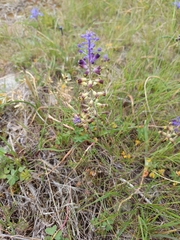 Muscari cycladicum Photo: CC BY, Σταυρούλα Χρήστος
- no open photograph on file Muscari discolor
- no open photograph on file Muscari forniculatum
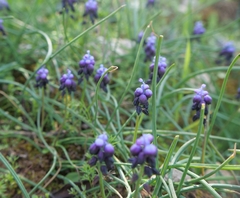 Muscari inconstrictum Photo: CC BY, Marios Thoma
- no open photograph on file Muscari kerkis
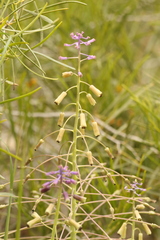 Muscari longipes Tumbling Roman Squill Photo: CC BY-SA, Chaym Turak
- no open photograph on file Muscari massayanum
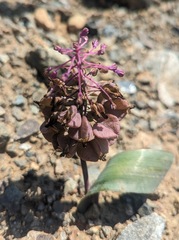 Muscari mirum Photo: CC BY, Michael, Antoni and Nihat Hinczewski
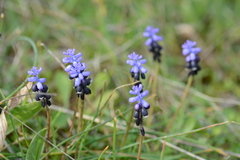 Muscari pulchellum Photo: CC BY, Pantazi Katerina
- no open photograph on file Muscari sandrasicum
Grown: iNaturalist's observations of the species marked captive or cultivated; "not counted" where the species list does not count it. Native ranges: Kew's World Checklist of Vascular Plants (Govaerts et al., CC BY 4.0), file of 4 June 2026. Grown: iNaturalist's observations marked captive or cultivated, counted 17 October 2026 (the species list's count). Habitat climate known: the species page has a habitat climate, read from CHELSA's monthly climate and NASA POWER's daily extremes at its well-placed wild records inside Kew's native range; each page says its own sources and days. Record low: the lowest night in NASA POWER's daily series at the habitat's typical spot, as the species page gives it, held in °C to a tenth and shown in your units; each page says its own years and day read. Counts as the reference built on 19 November 2026 holds them. The CSV holds every result, not only this page's.