Nematanthus
8 species in the reference · family Gesneriaceae · 8 with a habitat climate · 5 grown, per iNaturalist, 3 not counted
About the genus
Nematanthus is a genus of flowering plants in the family Gesneriaceae. All of its species are endemic to Brazil. Compared to other gesneriads, Nematanthus has leaves that are small, succulent, and hard-surfaced. The plant has a trailing, branching, and spreading habit; it is generally an epiphyte in nature and a hanging-basket plant in cultivation. More on Wikipedia
Quoted from Wikipedia, "Nematanthus", its opening paragraph, revision 1239559989, read 2026-11-08, CC BY-SA 4.0.
Where Nematanthus is native
| Brazil Southeast | 7 |
|---|---|
| Brazil South | 4 |
Species native to each region. A species counts in every region it is native to. Native ranges: Kew's World Checklist of Vascular Plants (Govaerts et al., CC BY 4.0), file of 4 June 2026.
8 species
Nematanthus
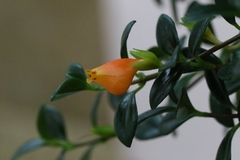 Nematanthus gregarius Goldfish flower Photo: CC0, Agnes Trekker
 Nematanthus wettsteinii Photo: Public domain, Stickpen
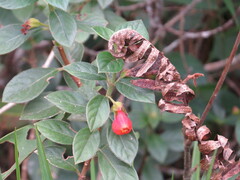 Nematanthus strigillosus Photo: CC BY, Victor Farjalla Pontes
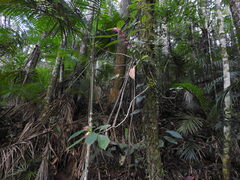 Nematanthus tessmannii Photo: CC BY-SA, Aline Fernanda Antunes
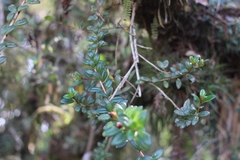 Nematanthus australis Photo: CC BY, Patrícia Mees
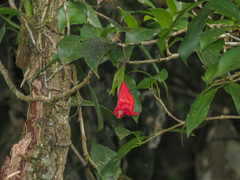 Nematanthus crassifolius Photo: CC BY, Diogo Luiz
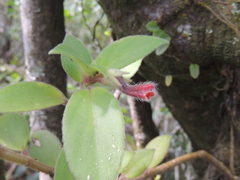 Nematanthus fissus Photo: CC BY, William G. Borges
 Nematanthus hirtellus Photo: CC BY-SA, Krzysztof Ziarnek, Kenraiz
Grown: iNaturalist's observations of the species marked captive or cultivated; "not counted" where the species list does not count it. Native ranges: Kew's World Checklist of Vascular Plants (Govaerts et al., CC BY 4.0), file of 4 June 2026. Grown: iNaturalist's observations marked captive or cultivated, counted 17 October 2026 (the species list's count). Habitat climate known: the species page has a habitat climate, read from CHELSA's monthly climate and NASA POWER's daily extremes at its well-placed wild records inside Kew's native range; each page says its own sources and days. Record low: the lowest night in NASA POWER's daily series at the habitat's typical spot, as the species page gives it, held in °C to a tenth and shown in your units; each page says its own years and day read. Counts as the reference built on 19 November 2026 holds them. The CSV holds every result, not only this page's.