Paris
11 species in the reference · family Melanthiaceae · 6 with a habitat climate · 7 grown, per iNaturalist, 4 not counted
About the genus
Paris is the capital and largest city of France, with an estimated city population of 2.04 million in an area of 105.4 km2 (40.7 sq mi), as of January 2026, and a metropolitan population of 13.3 million (2023). Located on the Seine in the centre of the Île-de-France region, it is the largest metropolitan area and fourth-most populous city in the European Union (EU). Paris is nicknamed the "City of Light" mainly due to its leading role in the Age of Enlightenment.
Quoted from Wikipedia, "Paris", its opening paragraph, revision 1383929647, read 2026-11-08, CC BY-SA 4.0.
Where Paris is native
| China South-Central | 7 |
|---|---|
| East Himalaya | 4 |
| Assam | 3 |
| China North-Central | 3 |
| China Southeast | 3 |
| Myanmar | 3 |
| Tibet | 3 |
| Japan | 2 |
| Nepal | 2 |
| North Caucasus | 2 |
| Qinghai | 2 |
| Transcaucasus | 2 |
Species native to each region. A species counts in every region it is native to. Native ranges: Kew's World Checklist of Vascular Plants (Govaerts et al., CC BY 4.0), file of 4 June 2026.
11 species
Paris
 Paris polyphylla Love Apple Photo: CC BY, Licheng Shih
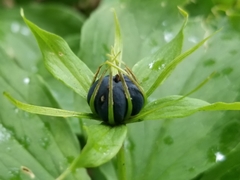 Paris quadrifolia Herb-Paris Photo: CC BY, Daniel McClosky
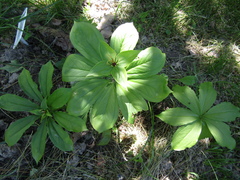 Paris incompleta Photo: CC BY, Oleksandr Shynder
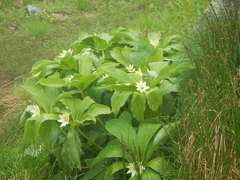 Paris japonica Photo: CC BY, Junichi Mandai
 Paris thibetica Photo: CC BY, Scott Zona
- no open photograph on file Paris luquanensis
- no open photograph on file Paris yunnanensis
- no open photograph on file Paris delavayi
 Paris lancifolia Photo: CC BY, Cheng-Te Hsu
- no open photograph on file Paris mairei
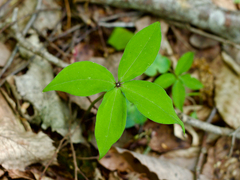 Paris tetraphylla Four-leaf paris Photo: CC BY, りなべる
Grown: iNaturalist's observations of the species marked captive or cultivated; "not counted" where the species list does not count it. Native ranges: Kew's World Checklist of Vascular Plants (Govaerts et al., CC BY 4.0), file of 4 June 2026. Grown: iNaturalist's observations marked captive or cultivated, counted 17 October 2026 (the species list's count). Habitat climate known: the species page has a habitat climate, read from CHELSA's monthly climate and NASA POWER's daily extremes at its well-placed wild records inside Kew's native range; each page says its own sources and days. Record low: the lowest night in NASA POWER's daily series at the habitat's typical spot, as the species page gives it, held in °C to a tenth and shown in your units; each page says its own years and day read. Counts as the reference built on 19 November 2026 holds them. The CSV holds every result, not only this page's.