Pereskia
7 species in the reference · family Cactaceae · 7 with a habitat climate · 6 grown, per iNaturalist, 1 not counted
About the genus
Pereskia is a small genus of about ten species of cacti that do not look much like other types of cacti, having substantial leaves and non-succulent stems. The genus is named after Nicolas-Claude Fabri de Peiresc, a 16th-century French botanist. The genus was more widely circumscribed until molecular phylogenetic studies showed that it was paraphyletic. Some species have since been transferred to Leuenbergeria, and also to Rhodocactus by some sources, although not by Plants of the World Online as of April 2026. More on Wikipedia
Quoted from Wikipedia, "Pereskia", its opening paragraph, revision 1346837202, read 2026-11-08, CC BY-SA 4.0.
Where Pereskia is native
| Bolivia | 4 |
|---|---|
| Argentina Northeast | 3 |
| Brazil Northeast | 3 |
| Brazil South | 3 |
| Brazil Southeast | 3 |
| Paraguay | 3 |
| Brazil West-Central | 2 |
| Argentina Northwest | 1 |
| Colombia | 1 |
| French Guiana | 1 |
| Guyana | 1 |
| Panama | 1 |
Species native to each region. A species counts in every region it is native to. Native ranges: Kew's World Checklist of Vascular Plants (Govaerts et al., CC BY 4.0), file of 4 June 2026.
7 species
Pereskia
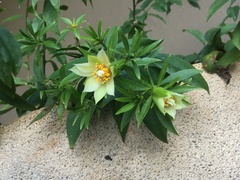 Pereskia aculeata Barbados gooseberry Photo: CC BY, B. Phalan
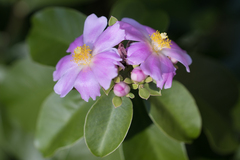 Pereskia grandifolia Rose cactus Photo: CC0, Frank Thomas Sautter
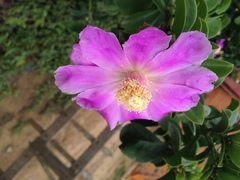 Pereskia sacharosa Seven-needles plant Photo: CC0, Étienne Lacroix-Carignan
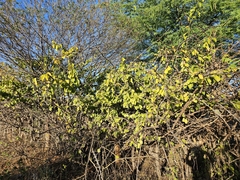 Pereskia bahiensis Photo: CC BY, Celso Henrique Varela Rios
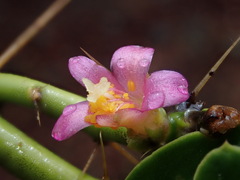 Pereskia diaz-romeroana Photo: CC BY, Nolan Exe
 Pereskia nemorosa Photo: CC BY, Jens-Christian Svenning
 Pereskia weberiana Photo: CC BY-SA, Magnus Manske
Grown: iNaturalist's observations of the species marked captive or cultivated; "not counted" where the species list does not count it. Native ranges: Kew's World Checklist of Vascular Plants (Govaerts et al., CC BY 4.0), file of 4 June 2026. Grown: iNaturalist's observations marked captive or cultivated, counted 17 October 2026 (the species list's count). Habitat climate known: the species page has a habitat climate, read from CHELSA's monthly climate and NASA POWER's daily extremes at its well-placed wild records inside Kew's native range; each page says its own sources and days. Record low: the lowest night in NASA POWER's daily series at the habitat's typical spot, as the species page gives it, held in °C to a tenth and shown in your units; each page says its own years and day read. Counts as the reference built on 19 November 2026 holds them. The CSV holds every result, not only this page's.