Polypodium
16 species in the reference · family Polypodiaceae · 16 with a habitat climate · 13 grown, per iNaturalist, 3 not counted
About the genus
Polypodium is a genus of ferns in the family Polypodiaceae, subfamily Polypodioideae, according to the Pteridophyte Phylogeny Group classification of 2016 (PPG I). The genus is widely distributed throughout the world, with the highest species diversity in the tropics. The name is derived from Ancient Greek poly ("many") + podion ("little foot"), on account of the foot-like appearance of the rhizome and its branches. They are commonly called polypodies or rockcap ferns, but for many species unique vernacular names exist.
Quoted from Wikipedia, "Polypodium", its opening paragraph, revision 1369859549, read 2026-11-08, CC BY-SA 4.0.
Where Polypodium is native
| California | 5 |
|---|---|
| France | 5 |
| Great Britain | 5 |
| Ireland | 5 |
| Italy | 5 |
| Spain | 5 |
| British Columbia | 4 |
| Corse | 4 |
| Mexico Northwest | 4 |
| Netherlands | 4 |
| Oregon | 4 |
| Switzerland | 4 |
Species native to each region. A species counts in every region it is native to. Native ranges: Kew's World Checklist of Vascular Plants (Govaerts et al., CC BY 4.0), file of 4 June 2026.
16 species
Polypodium
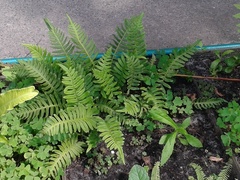 Polypodium vulgare Polypody Photo: CC BY, Oleksandr Shynder
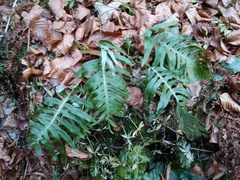 Polypodium cambricum Southern polypody Photo: CC BY, Erwin Gruber
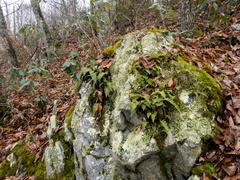 Polypodium virginianum Rock polypody Photo: CC BY-SA, Turner Brockman
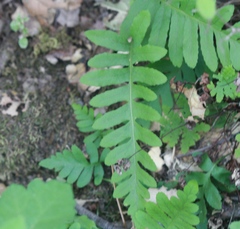 Polypodium californicum California polypody Photo: CC0, Scott Loarie
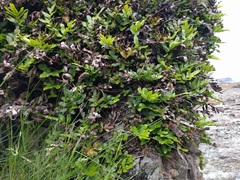 Polypodium scouleri Leathery polypody Photo: CC BY, John Brew
 Polypodium glycyrrhiza Licorice fern Photo: CC BY, Ed Alverson
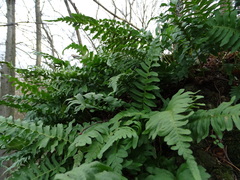 Polypodium interjectum Intermediate polypody Photo: CC BY, Patrick Hacker
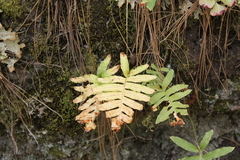 Polypodium macaronesicum Canary Islands polypody Photo: CC BY, Javier Sánchez Álvarez
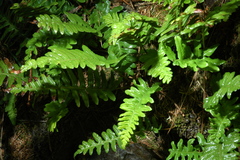 Polypodium calirhiza Nested polypody Photo: CC BY, Timothy McNitt
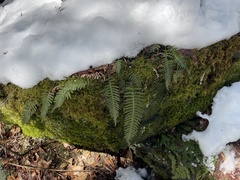 Polypodium appalachianum Appalachian polypody Photo: CC BY, Chase Mathey
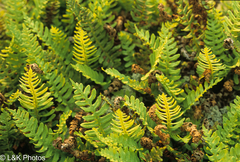 Polypodium sibiricum Siberian polypody Photo: CC0, lallen
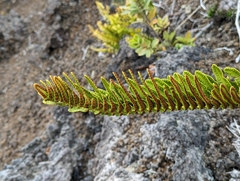 Polypodium pellucidum Dotted polypody Photo: CC BY, David Anderson
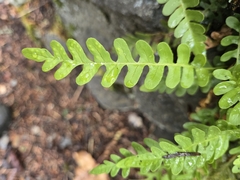 Polypodium hesperium Western polypody Photo: CC0, Shane Johnson
- no open photograph on file Polypodium × font-queri
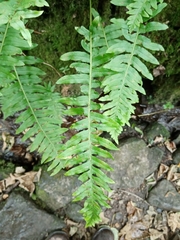 Polypodium × mantoniae Photo: CC BY, Zeke Marshall
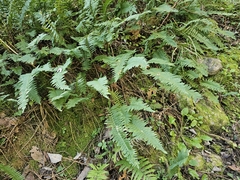 Polypodium plesiosorum Photo: CC BY, Liliana Ramírez-Freire
Grown: iNaturalist's observations of the species marked captive or cultivated; "not counted" where the species list does not count it. Native ranges: Kew's World Checklist of Vascular Plants (Govaerts et al., CC BY 4.0), file of 4 June 2026. Grown: iNaturalist's observations marked captive or cultivated, counted 17 October 2026 (the species list's count). Habitat climate known: the species page has a habitat climate, read from CHELSA's monthly climate and NASA POWER's daily extremes at its well-placed wild records inside Kew's native range; each page says its own sources and days. Record low: the lowest night in NASA POWER's daily series at the habitat's typical spot, as the species page gives it, held in °C to a tenth and shown in your units; each page says its own years and day read. Counts as the reference built on 19 November 2026 holds them. The CSV holds every result, not only this page's.