Pteridium
7 species in the reference · family Dennstaedtiaceae · 7 with a habitat climate · 7 grown, per iNaturalist
About the genus
Bracken (Pteridium) is a genus of large, cosmopolitan, coarse ferns in the family Dennstaedtiaceae. Brackens are noted for their large, highly divided fronds and are found on all continents except Antarctica; their typical habitat is moorland. The word bracken is of Old Norse origin, related to Swedish bräken and Danish bregne, both meaning fern. In the past, the genus was commonly treated as having only one species, Pteridium aquilinum, but the current trend is to subdivide it into about ten species. More on Wikipedia
Quoted from Wikipedia, "Bracken", its opening paragraph, revision 1383880084, read 2026-11-08, CC BY-SA 4.0.
Where Pteridium is native
| Mexico Northeast | 4 |
|---|---|
| Mexico Northwest | 4 |
| Guatemala | 3 |
| Honduras | 3 |
| Mexico Central | 3 |
| Mexico Gulf | 3 |
| Mexico Southeast | 3 |
| Mexico Southwest | 3 |
| Baltic States | 2 |
| Belarus | 2 |
| Belgium | 2 |
| Bolivia | 2 |
Species native to each region. A species counts in every region it is native to. Native ranges: Kew's World Checklist of Vascular Plants (Govaerts et al., CC BY 4.0), file of 4 June 2026.
7 species
Pteridium
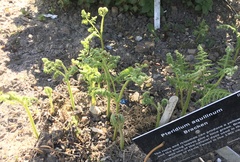 Pteridium aquilinum Bracken Photo: CC BY, Scott Shanks
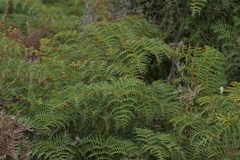 Pteridium esculentum Austral bracken Photo: CC BY-SA, Christopher Stephens
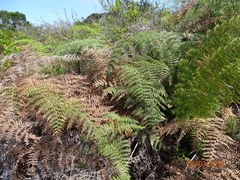 Pteridium arachnoideum Tropical brackenfern Photo: CC BY-SA, Ignacio March Mifsut
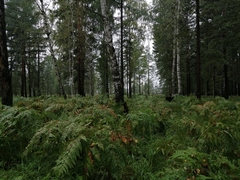 Pteridium pinetorum Photo: CC BY, Roman A. Lagazyuk (Роман А. Лагазюк)
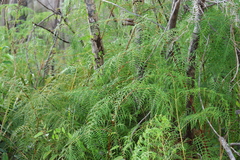 Pteridium caudatum Southern bracken fern Photo: CC BY, er-birds
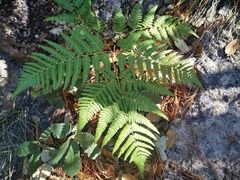 Pteridium feei Photo: CC BY-SA, Luis Fuentes Castillo
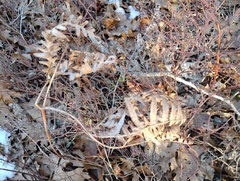 Pteridium latiusculum Photo: CC BY, Bryce
Grown: iNaturalist's observations of the species marked captive or cultivated; "not counted" where the species list does not count it. Native ranges: Kew's World Checklist of Vascular Plants (Govaerts et al., CC BY 4.0), file of 4 June 2026. Grown: iNaturalist's observations marked captive or cultivated, counted 17 October 2026 (the species list's count). Habitat climate known: the species page has a habitat climate, read from CHELSA's monthly climate and NASA POWER's daily extremes at its well-placed wild records inside Kew's native range; each page says its own sources and days. Record low: the lowest night in NASA POWER's daily series at the habitat's typical spot, as the species page gives it, held in °C to a tenth and shown in your units; each page says its own years and day read. Counts as the reference built on 19 November 2026 holds them. The CSV holds every result, not only this page's.