Pterostylis
10 species in the reference · family Orchidaceae · 10 with a habitat climate · 8 grown, per iNaturalist, 2 not counted
About the genus
Pterostylis is a genus of about 300 species of plants in the orchid family, Orchidaceae. Commonly called greenhood orchids, they are terrestrial, deciduous, perennial, tuberous, herbs found in Australia, New Zealand, New Guinea, New Caledonia and one Indonesian island. The flowers are mostly green, sometimes with brown, reddish or white stripes, and are distinguished from other orchids by their unusual flower structures and pollination mechanism.
Quoted from Wikipedia, "Pterostylis", its opening paragraph, revision 1354642954, read 2026-11-08, CC BY-SA 4.0.
Where Pterostylis is native
| New South Wales | 9 |
|---|---|
| Victoria | 8 |
| South Australia | 6 |
| Tasmania | 6 |
| Queensland | 4 |
| Norfolk Is. | 3 |
| New Zealand North | 2 |
| New Caledonia | 1 |
| New Zealand South | 1 |
Species native to each region. A species counts in every region it is native to. Native ranges: Kew's World Checklist of Vascular Plants (Govaerts et al., CC BY 4.0), file of 4 June 2026.
10 species
Pterostylis
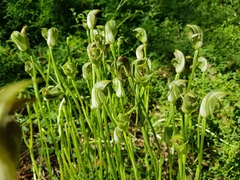 Pterostylis curta Blunt greenhood Photo: CC BY, Lek Khauv
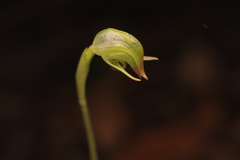 Pterostylis nutans Nodding Greenhood Photo: CC0, Joshua S. Martin
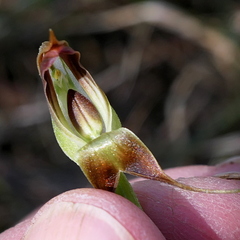 Pterostylis pedunculata Maroonhood Photo: CC BY, Max Campbell
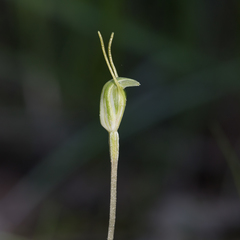 Pterostylis nana Dwarf greenhood Photo: CC BY, Kym Nicolson
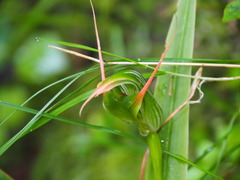 Pterostylis banksii Tutukiwi Photo: CC BY, Michael Berardozzi
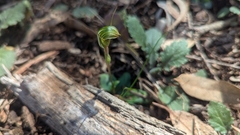 Pterostylis concinna Trim Greenhood Photo: CC BY, Jacob Moore
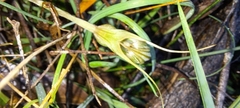 Pterostylis ophioglossa Snake tongue greenhood Photo: CC BY, Liam southwell
 Pterostylis truncata Brittle greenhood Photo: CC BY, Thomas Nataprawira
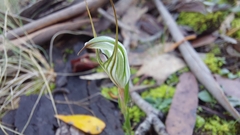 Pterostylis alata Striped Greenhood Photo: CC BY, Brendan Costello
 Pterostylis obtusa Blunt-tongue greenhood Photo: CC BY-SA, Geoff Derrin
Grown: iNaturalist's observations of the species marked captive or cultivated; "not counted" where the species list does not count it. Native ranges: Kew's World Checklist of Vascular Plants (Govaerts et al., CC BY 4.0), file of 4 June 2026. Grown: iNaturalist's observations marked captive or cultivated, counted 17 October 2026 (the species list's count). Habitat climate known: the species page has a habitat climate, read from CHELSA's monthly climate and NASA POWER's daily extremes at its well-placed wild records inside Kew's native range; each page says its own sources and days. Record low: the lowest night in NASA POWER's daily series at the habitat's typical spot, as the species page gives it, held in °C to a tenth and shown in your units; each page says its own years and day read. Counts as the reference built on 19 November 2026 holds them. The CSV holds every result, not only this page's.