Rothmannia
7 species in the reference · family Rubiaceae · 6 with a habitat climate · 7 grown, per iNaturalist
About the genus
Rothmannia is a genus of African flowering plants in the family Rubiaceae. It was described in 1776 and was named after Göran Rothman (1739–1778) by Thunberg – both were pupils of Linnaeus.
Quoted from Wikipedia, "Rothmannia", its opening paragraph, revision 1354651609, read 2026-11-08, CC BY-SA 4.0.
Where Rothmannia is native
| Kenya | 4 |
|---|---|
| Malawi | 4 |
| Tanzania | 4 |
| Cameroon | 3 |
| KwaZulu-Natal | 3 |
| Mozambique | 3 |
| Northern Provinces | 3 |
| Zaïre | 3 |
| Zimbabwe | 3 |
| Angola | 2 |
| Benin | 2 |
| Burundi | 2 |
Species native to each region. A species counts in every region it is native to. Native ranges: Kew's World Checklist of Vascular Plants (Govaerts et al., CC BY 4.0), file of 4 June 2026.
7 species
Rothmannia
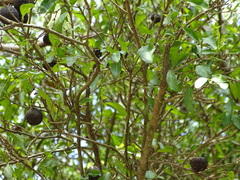 Rothmannia globosa September Bells Photo: CC BY, Shaun Swanepoel
 Rothmannia capensis Common Rothmannia Photo: CC BY, YvettevWijk
 Rothmannia longiflora Photo: CC BY-SA, 阿橋 HQ
 Rothmannia annae Wright's Gardenia Photo: CC BY, Ph. Saget
 Rothmannia manganjae Photo: CC BY, Tatiana Gerus from Brisbane, Australia
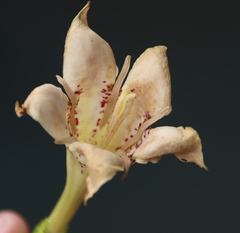 Rothmannia fischeri Sand scented-bells Photo: CC BY-SA, Tony Rebelo
 Rothmannia urcelliformis Photo: CC BY, Sunday Berlioz KAKPO
Grown: iNaturalist's observations of the species marked captive or cultivated; "not counted" where the species list does not count it. Native ranges: Kew's World Checklist of Vascular Plants (Govaerts et al., CC BY 4.0), file of 4 June 2026. Grown: iNaturalist's observations marked captive or cultivated, counted 17 October 2026 (the species list's count). Habitat climate known: the species page has a habitat climate, read from CHELSA's monthly climate and NASA POWER's daily extremes at its well-placed wild records inside Kew's native range; each page says its own sources and days. Record low: the lowest night in NASA POWER's daily series at the habitat's typical spot, as the species page gives it, held in °C to a tenth and shown in your units; each page says its own years and day read. Counts as the reference built on 19 November 2026 holds them. The CSV holds every result, not only this page's.