Roystonea
6 species in the reference · family Arecaceae · 5 with a habitat climate · 6 grown, per iNaturalist
About the genus
Roystonea is a genus of eleven species of monoecious palms, native to the Neotropics, in the Caribbean, the adjacent coasts of Florida in the United States, Mexico, Central America and northern South America. Commonly known as the royal palms, the genus was named after Roy Stone, a U.S. Army engineer. It contains some of the most recognizable and commonly cultivated palms of tropical and subtropical regions.
Quoted from Wikipedia, "Roystonea", its opening paragraph, revision 1292510417, read 2026-11-08, CC BY-SA 4.0.
Where Roystonea is native
| Cuba | 2 |
|---|---|
| Dominican Republic | 2 |
| Haiti | 2 |
| Honduras | 2 |
| Leeward Is. AB Ant | 2 |
| Mexico Southeast | 2 |
| Bahamas | 1 |
| Belize | 1 |
| Cayman Is. | 1 |
| Colombia | 1 |
| Florida | 1 |
| Jamaica | 1 |
Species native to each region. A species counts in every region it is native to. Native ranges: Kew's World Checklist of Vascular Plants (Govaerts et al., CC BY 4.0), file of 4 June 2026.
6 species
Roystonea
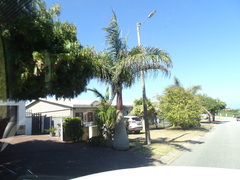 Roystonea regia Cuban royal palm Photo: CC BY, Shaun Swanepoel
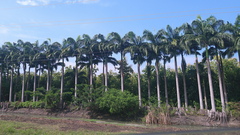 Roystonea oleracea Caribbean royal palm Photo: CC BY, Raúl A. Ruiz M.
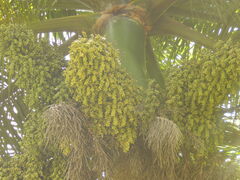 Roystonea borinquena Puerto Rican royal palm Photo: CC BY, Andrew Conboy
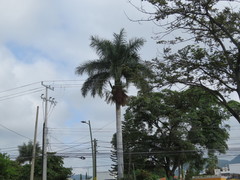 Roystonea dunlapiana Yagua Photo: CC BY, Francisco Emilio Roldán Velasco
- no open photograph on file Roystonea violacea
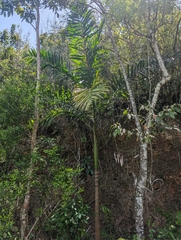 Roystonea altissima Jamaican Royal Palm Photo: CC BY, Marilyne Busque-Dubois
Grown: iNaturalist's observations of the species marked captive or cultivated; "not counted" where the species list does not count it. Native ranges: Kew's World Checklist of Vascular Plants (Govaerts et al., CC BY 4.0), file of 4 June 2026. Grown: iNaturalist's observations marked captive or cultivated, counted 17 October 2026 (the species list's count). Habitat climate known: the species page has a habitat climate, read from CHELSA's monthly climate and NASA POWER's daily extremes at its well-placed wild records inside Kew's native range; each page says its own sources and days. Record low: the lowest night in NASA POWER's daily series at the habitat's typical spot, as the species page gives it, held in °C to a tenth and shown in your units; each page says its own years and day read. Counts as the reference built on 19 November 2026 holds them. The CSV holds every result, not only this page's.