Sesleria
13 species in the reference · family Poaceae · 13 with a habitat climate · 11 grown, per iNaturalist, 2 not counted
About the genus
Sesleria is a genus of perennial plants in the grass family.
Quoted from Wikipedia, "Sesleria", its opening paragraph, revision 1290502108, read 2026-11-08, CC BY-SA 4.0.
Where Sesleria is native
| Yugoslavia | 7 |
|---|---|
| Czechoslovakia | 6 |
| Italy | 5 |
| Poland | 5 |
| Greece | 4 |
| Hungary | 4 |
| Romania | 4 |
| Austria | 3 |
| Bulgaria | 3 |
| Albania | 2 |
| France | 2 |
| Germany | 2 |
Species native to each region. A species counts in every region it is native to. Native ranges: Kew's World Checklist of Vascular Plants (Govaerts et al., CC BY 4.0), file of 4 June 2026.
13 species
Sesleria
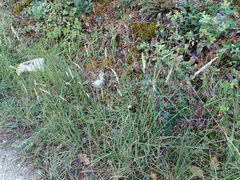 Sesleria autumnalis Autumn Moor Grass Photo: CC BY, Dino Babić
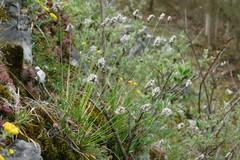 Sesleria caerulea Blue moor-grass Photo: CC BY, Pavel Kacl
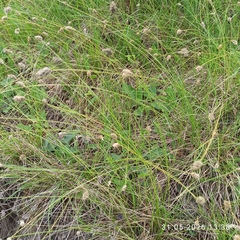 Sesleria heufleriana Balkan blue grass Photo: CC BY, Galyna Mykytynets
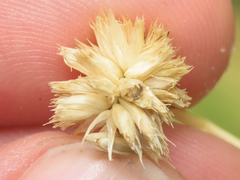 Sesleria nitida Photo: CC BY-SA, Emanuele Santarelli
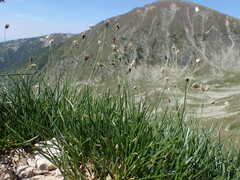 Sesleria bielzii Photo: CC BY, Milan Chytrý
 Sesleria albicans Blue moor-grass Photo: CC BY, Patrick Hacker
 Sesleria tatrae Photo: CC BY-SA, Salicyna
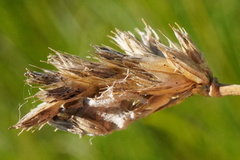 Sesleria uliginosa Photo: CC BY, Patrick Hacker
 Sesleria argentea Photo: CC BY, Denys Vynokurov
 Sesleria alba Photo: CC BY, Юрий Данилевский (Yuriy Danilevsky)
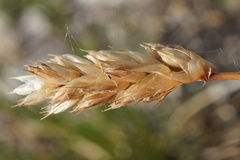 Sesleria sadleriana Photo: CC BY, Patrick Hacker
- no open photograph on file Sesleria rigida
 Sesleria robusta Photo: CC BY-SA, Orjen
Grown: iNaturalist's observations of the species marked captive or cultivated; "not counted" where the species list does not count it. Native ranges: Kew's World Checklist of Vascular Plants (Govaerts et al., CC BY 4.0), file of 4 June 2026. Grown: iNaturalist's observations marked captive or cultivated, counted 17 October 2026 (the species list's count). Habitat climate known: the species page has a habitat climate, read from CHELSA's monthly climate and NASA POWER's daily extremes at its well-placed wild records inside Kew's native range; each page says its own sources and days. Record low: the lowest night in NASA POWER's daily series at the habitat's typical spot, as the species page gives it, held in °C to a tenth and shown in your units; each page says its own years and day read. Counts as the reference built on 19 November 2026 holds them. The CSV holds every result, not only this page's.