Silphium
15 species in the reference · family Asteraceae · 14 with a habitat climate · 15 grown, per iNaturalist
About the genus
Silphium (also known as laserwort or laser; Ancient Greek: σίλφιον, sílphion) is an unidentified plant that was used in classical antiquity as a seasoning, perfume, aphrodisiac, and medicine.
Quoted from Wikipedia, "Silphium", its opening paragraph, revision 1384220213, read 2026-11-08, CC BY-SA 4.0.
Where Silphium is native
| Alabama | 11 |
|---|---|
| Mississippi | 9 |
| Tennessee | 9 |
| Texas | 8 |
| Arkansas | 7 |
| Georgia | 7 |
| Louisiana | 7 |
| Illinois | 6 |
| Indiana | 6 |
| Kentucky | 6 |
| Missouri | 6 |
| North Carolina | 6 |
Species native to each region. A species counts in every region it is native to. Native ranges: Kew's World Checklist of Vascular Plants (Govaerts et al., CC BY 4.0), file of 4 June 2026.
15 species
Silphium
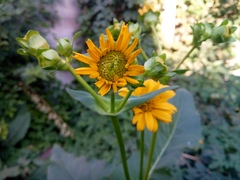 Silphium perfoliatum Cup plant Photo: CC0, Svitlana Kyiak
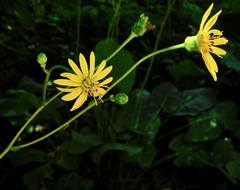 Silphium terebinthinaceum Prairie-dock Photo: CC BY, Michael J. Papay
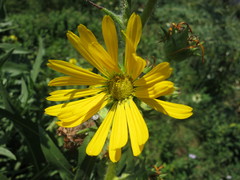 Silphium laciniatum Compass plant Photo: CC0, Alby Penney
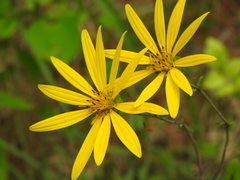 Silphium asteriscus Starry rosinweed Photo: CC0, Yann Kemper
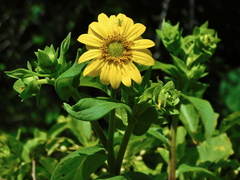 Silphium integrifolium Whole-leaf rosinweed Photo: CC BY, Michael J. Papay
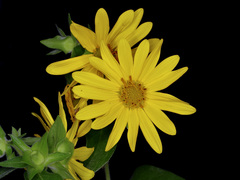 Silphium radula Roughstem rosinweed Photo: CC BY, Michelle W. (鍾偉瑋)
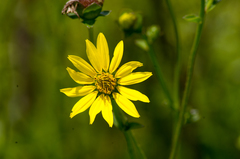 Silphium gracile Photo: CC BY, Irvin Louque
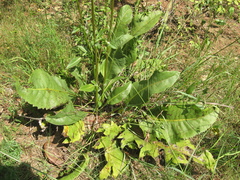 Silphium pinnatifidum Tansy rosinweed Photo: CC0, Mason Brock
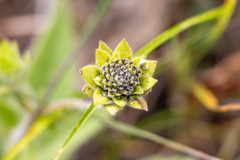 Silphium mohrii Mohr's rosinweed Photo: CC BY, Derrick Wales
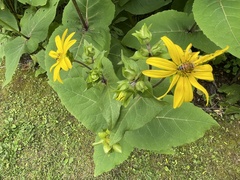 Silphium connatum Photo: CC BY-SA, lejones417
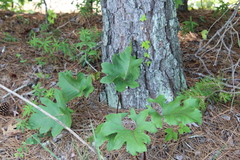 Silphium compositum Kidneyleaf rosinweed Photo: CC BY, Ashwin Srinivasan
 Silphium glutinosum Sticky rosinweed Photo: CC BY-SA, Brian Finzel
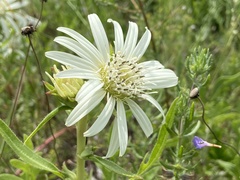 Silphium albiflorum White rosinweed Photo: CC BY, Reid Hardin
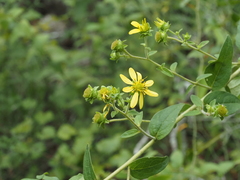 Silphium simpsonii Photo: CC BY, carter
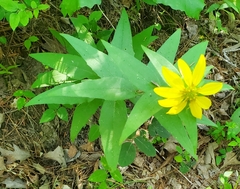 Silphium asperrimum Gates' Rosinweed Photo: CC BY, hr_dragonfly
Grown: iNaturalist's observations of the species marked captive or cultivated; "not counted" where the species list does not count it. Native ranges: Kew's World Checklist of Vascular Plants (Govaerts et al., CC BY 4.0), file of 4 June 2026. Grown: iNaturalist's observations marked captive or cultivated, counted 17 October 2026 (the species list's count). Habitat climate known: the species page has a habitat climate, read from CHELSA's monthly climate and NASA POWER's daily extremes at its well-placed wild records inside Kew's native range; each page says its own sources and days. Record low: the lowest night in NASA POWER's daily series at the habitat's typical spot, as the species page gives it, held in °C to a tenth and shown in your units; each page says its own years and day read. Counts as the reference built on 19 November 2026 holds them. The CSV holds every result, not only this page's.