Syngonium
11 species in the reference · family Araceae · 9 with a habitat climate · 11 grown, per iNaturalist
About the genus
Syngonium is a genus of flowering plants in the family Araceae, native to tropical rainforests in southern Mexico, the West Indies, and Central and South America. They are vines growing to heights of 10–20 m or more in trees. Their leaves change shape according to the plant's stage of growth; adult leaf forms are often much more lobed than the juvenile forms usually seen on small house plants. The scientific name of the genus comes from the Greek words σύν (syn - plus, z) and γονή (gone - gonada) and refers to the fused ovaries of female flowers.
Quoted from Wikipedia, "Syngonium", its opening paragraph, revision 1381415068, read 2026-11-08, CC BY-SA 4.0.
Where Syngonium is native
| Costa Rica | 7 |
|---|---|
| Panama | 7 |
| Belize | 5 |
| Honduras | 5 |
| Mexico Southeast | 5 |
| Mexico Southwest | 5 |
| Nicaragua | 5 |
| Guatemala | 4 |
| Mexico Gulf | 4 |
| Colombia | 3 |
| Mexico Central | 3 |
| Mexico Northeast | 3 |
Species native to each region. A species counts in every region it is native to. Native ranges: Kew's World Checklist of Vascular Plants (Govaerts et al., CC BY 4.0), file of 4 June 2026.
11 species
Syngonium
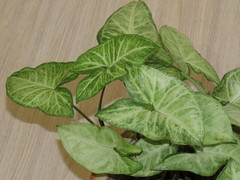 Syngonium podophyllum American evergreen Photo: CC BY, Jeremy Gilmore
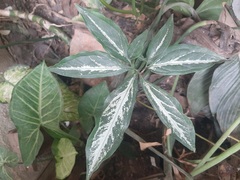 Syngonium angustatum Fivefingers Photo: CC BY, Pablo Cauã da Silva Toledo
 Syngonium wendlandii Silver arrowhead Photo: CC0, Daderot
 Syngonium auritum Arrowhead vine Photo: CC0, andré
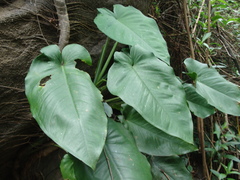 Syngonium chiapense Photo: CC BY, Alexis López Hernández
 Syngonium neglectum Contzontón Photo: CC BY-SA, alessandradalia
 Syngonium macrophyllum Arrowhead vine Photo: CC BY, Neptalí Ramírez Marcial
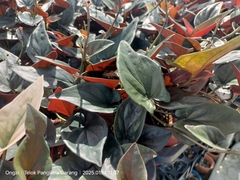 Syngonium erythrophyllum Arrowhead vine Photo: CC BY, Ong Jyh Seng
- no open photograph on file Syngonium rayi
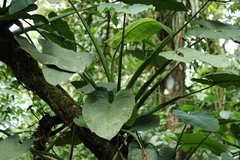 Syngonium schottianum Photo: CC BY, er-birds
- no open photograph on file Syngonium triphyllum
Grown: iNaturalist's observations of the species marked captive or cultivated; "not counted" where the species list does not count it. Native ranges: Kew's World Checklist of Vascular Plants (Govaerts et al., CC BY 4.0), file of 4 June 2026. Grown: iNaturalist's observations marked captive or cultivated, counted 17 October 2026 (the species list's count). Habitat climate known: the species page has a habitat climate, read from CHELSA's monthly climate and NASA POWER's daily extremes at its well-placed wild records inside Kew's native range; each page says its own sources and days. Record low: the lowest night in NASA POWER's daily series at the habitat's typical spot, as the species page gives it, held in °C to a tenth and shown in your units; each page says its own years and day read. Counts as the reference built on 19 November 2026 holds them. The CSV holds every result, not only this page's.