Trachyandra
60 species in the reference · family Asphodelaceae · 29 with a habitat climate · 7 grown, per iNaturalist, 53 not counted
About the genus
Trachyandra is a genus of plant in the family Asphodelaceae, subfamily Asphodeloideae, first described as a genus in 1843. It is native to eastern and southern Africa, as well as to Yemen and Madagascar. Many of the species are endemic to South Africa.
Quoted from Wikipedia, "Trachyandra", its opening paragraph, revision 1368254495, read 2026-11-08, CC BY-SA 4.0.
Where Trachyandra is native
| Cape Provinces | 48 |
|---|---|
| Namibia | 14 |
| KwaZulu-Natal | 7 |
| Northern Provinces | 7 |
| Free State | 5 |
| Botswana | 4 |
| Swaziland | 3 |
| Zimbabwe | 3 |
| Angola | 2 |
| Lesotho | 2 |
| Malawi | 2 |
| Somalia | 2 |
Species native to each region. A species counts in every region it is native to. Native ranges: Kew's World Checklist of Vascular Plants (Govaerts et al., CC BY 4.0), file of 4 June 2026.
60 species
Trachyandra
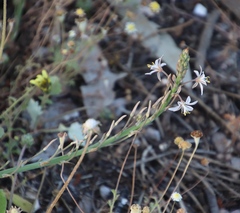 Trachyandra ciliata Common Capespinach Photo: CC BY-SA, Tony Rebelo
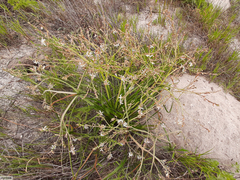 Trachyandra divaricata Dune onionweed Photo: CC BY-SA, Chris Vynbos
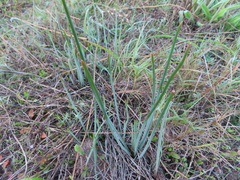 Trachyandra chlamydophylla Thickleaf Capespinach Photo: CC BY, linkie
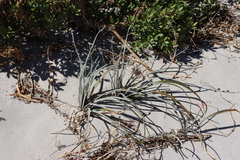 Trachyandra revoluta Fold Capespinach Photo: CC BY-SA, Tony Rebelo
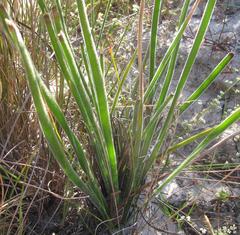 Trachyandra hirsuta Hairy Capespinach Photo: CC BY-SA, douglaseustonbrown
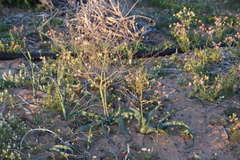 Trachyandra muricata Rolling Capespinach Photo: CC BY-SA, Tony Rebelo
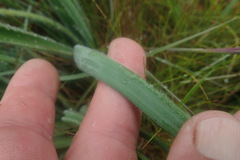 Trachyandra saltii Salty Capespinach Photo: CC0, Jimmy Whatmore
- no open photograph on file Trachyandra acocksii
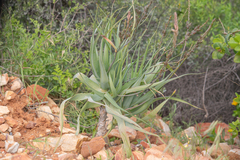 Trachyandra adamsonii Photo: CC BY, Morten Ross
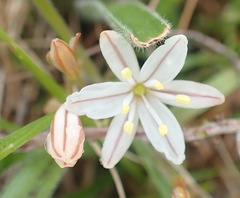 Trachyandra affinis Photo: CC BY-SA, Nicola van Berkel
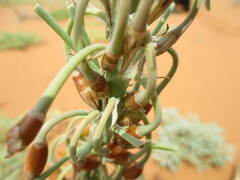 Trachyandra arenicola Photo: CC0, dune_ninja
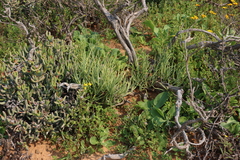 Trachyandra aridimontana Photo: CC BY-SA, Tony Rebelo
 Trachyandra arvensis Photo: CC BY, Robert Taylor
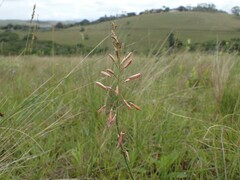 Trachyandra asperata Photo: CC BY, Mahomed Desai
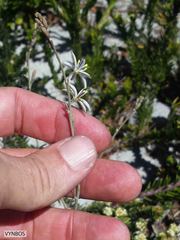 Trachyandra brachypoda Short Capespinach Photo: CC BY-SA, Chris Vynbos
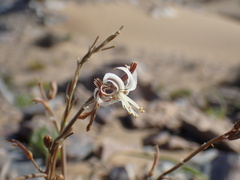 Trachyandra bulbinifolia Photo: CC BY, Mahomed Desai
- no open photograph on file Trachyandra bulbosa
- no open photograph on file Trachyandra burkei
- no open photograph on file Trachyandra capillata
- no open photograph on file Trachyandra dissecta
- no open photograph on file Trachyandra ensifolia
- no open photograph on file Trachyandra eriocarpa
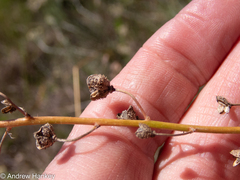 Trachyandra erythrorrhiza Photo: CC BY-SA, Andrew Hankey
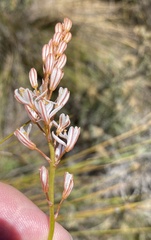 Trachyandra esterhuysenae Photo: CC BY-SA, Dave U
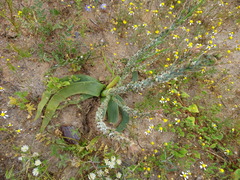 Trachyandra falcata Sabre Capespinach Photo: CC BY, Shaun Swanepoel
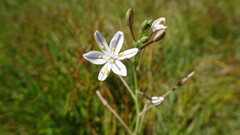 Trachyandra filiformis Fine Capespinach Photo: CC BY-SA, Paul Emms
- no open photograph on file Trachyandra flexifolia
 Trachyandra gerrardii Photo: CC BY-SA, James Deacon
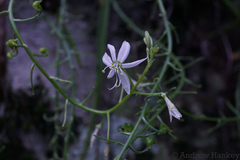 Trachyandra giffenii Photo: CC BY-SA, Andrew Hankey
- no open photograph on file Trachyandra glandulosa
- no open photograph on file Trachyandra gracilenta
- no open photograph on file Trachyandra hantamensis
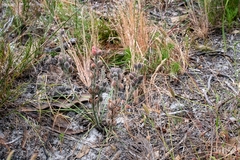 Trachyandra hirsutiflora Roughhair Capespinach Photo: CC BY-SA, magriet b
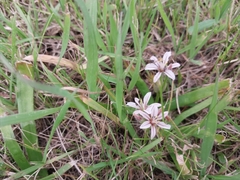 Trachyandra hispida Fuzzy Capespinach Photo: CC BY, De Waal Hugo
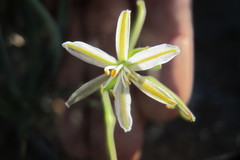 Trachyandra involucrata Photo: CC BY-SA, James Deacon
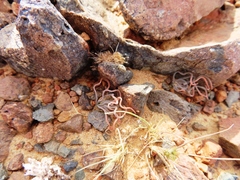 Trachyandra jacquiniana Photo: CC BY, linkie
- no open photograph on file Trachyandra kamiesbergensis
- no open photograph on file Trachyandra karrooica
- no open photograph on file Trachyandra lanata Woolly Capespinach
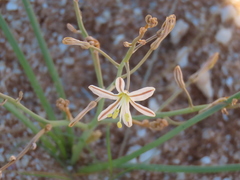 Trachyandra laxa Lax Capespinach Photo: CC0, dune_ninja
- no open photograph on file Trachyandra malosana
- no open photograph on file Trachyandra mandrarensis
- no open photograph on file Trachyandra margaretae
- no open photograph on file Trachyandra mira
 Trachyandra montana Photo: CC BY-SA, douglaseustonbrown
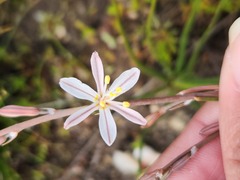 Trachyandra oligotricha Photo: CC BY-SA, sharndreheuvel
- no open photograph on file Trachyandra paniculata
- no open photograph on file Trachyandra patens
Grown: iNaturalist's observations of the species marked captive or cultivated; "not counted" where the species list does not count it. Native ranges: Kew's World Checklist of Vascular Plants (Govaerts et al., CC BY 4.0), file of 4 June 2026. Grown: iNaturalist's observations marked captive or cultivated, counted 17 October 2026 (the species list's count). Habitat climate known: the species page has a habitat climate, read from CHELSA's monthly climate and NASA POWER's daily extremes at its well-placed wild records inside Kew's native range; each page says its own sources and days. Record low: the lowest night in NASA POWER's daily series at the habitat's typical spot, as the species page gives it, held in °C to a tenth and shown in your units; each page says its own years and day read. Counts as the reference built on 19 November 2026 holds them. The CSV holds every result, not only this page's.