Triglochin
5 species in the reference · family Juncaginaceae · 5 with a habitat climate · 4 grown, per iNaturalist, 1 not counted
About the genus
Triglochin is a plant genus in the family Juncaginaceae described by Carl Linnaeus in 1753. It includes 25 known species. It is very nearly cosmopolitan in distribution, with species on every continent except Antarctica. North America has four accepted species, two of which can also be found in Europe: Triglochin palustris (marsh arrowgrass) and Triglochin maritima (sea arrowgrass). More on Wikipedia
Quoted from Wikipedia, "Triglochin", its opening paragraph, revision 1371282788, read 2026-11-08, CC BY-SA 4.0.
Where Triglochin is native
| Argentina Northeast | 4 |
|---|---|
| Argentina South | 4 |
| Bolivia | 4 |
| California | 4 |
| Chile Central | 4 |
| Oregon | 4 |
| Alberta | 3 |
| Argentina Northwest | 3 |
| British Columbia | 3 |
| Montana | 3 |
| Nevada | 3 |
| Saskatchewan | 3 |
Species native to each region. A species counts in every region it is native to. Native ranges: Kew's World Checklist of Vascular Plants (Govaerts et al., CC BY 4.0), file of 4 June 2026.
5 species
Triglochin
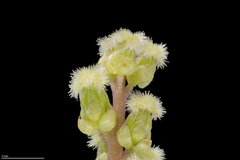 Triglochin maritima Sea arrowgrass Photo: CC BY, Will Pearce
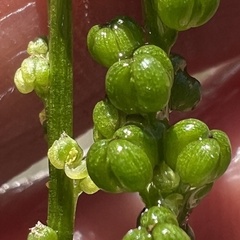 Triglochin striata Three-rib arrowgrass Photo: CC BY, Anne Parker
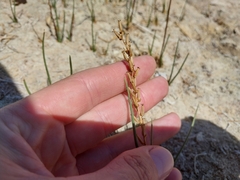 Triglochin bulbosa Bulb Arrowgrass Photo: CC BY, De Waal Hugo
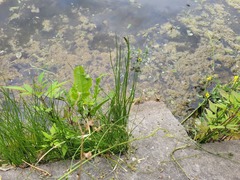 Triglochin palustris Marsh arrowgrass Photo: CC BY, Dmitriy Bochkov
 Triglochin scilloides Flowering-quillwort Photo: CC BY, Patricio Novoa
Grown: iNaturalist's observations of the species marked captive or cultivated; "not counted" where the species list does not count it. Native ranges: Kew's World Checklist of Vascular Plants (Govaerts et al., CC BY 4.0), file of 4 June 2026. Grown: iNaturalist's observations marked captive or cultivated, counted 17 October 2026 (the species list's count). Habitat climate known: the species page has a habitat climate, read from CHELSA's monthly climate and NASA POWER's daily extremes at its well-placed wild records inside Kew's native range; each page says its own sources and days. Record low: the lowest night in NASA POWER's daily series at the habitat's typical spot, as the species page gives it, held in °C to a tenth and shown in your units; each page says its own years and day read. Counts as the reference built on 19 November 2026 holds them. The CSV holds every result, not only this page's.