Uvularia
4 species in the reference · family Colchicaceae · 4 with a habitat climate · 4 grown, per iNaturalist
About the genus
Uvularia is a genus of flowering plants in the family Colchicaceae, which is closely related to the lily family (Liliaceae). They are commonly called bellworts, bellflowers, or merrybells. The genus name is derived from the Latin ūvula meaning "little grape", likely because of the way the flowers hang downward. For the same reason Uvularia may also refer to the similarly derived palatine uvula, which hangs down from the soft palate in the mouth. More on Wikipedia
Quoted from Wikipedia, "Uvularia", its opening paragraph, revision 1317641027, read 2026-11-08, CC BY-SA 4.0.
Where Uvularia is native
| Georgia | 4 |
|---|---|
| Maryland | 4 |
| New York | 4 |
| North Carolina | 4 |
| Pennsylvania | 4 |
| Tennessee | 4 |
| Virginia | 4 |
| West Virginia | 4 |
| Alabama | 3 |
| Arkansas | 3 |
| Connecticut | 3 |
| Kentucky | 3 |
Species native to each region. A species counts in every region it is native to. Native ranges: Kew's World Checklist of Vascular Plants (Govaerts et al., CC BY 4.0), file of 4 June 2026.
4 species
Uvularia
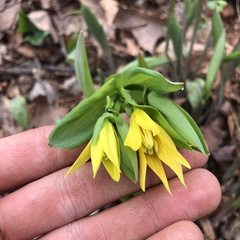 Uvularia grandiflora Large-flowered bellwort Photo: CC BY, Andrew Conboy
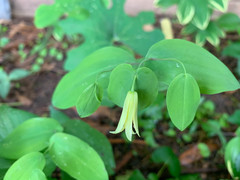 Uvularia perfoliata Perfoliate bellwort Photo: CC BY, Carrie Seltzer
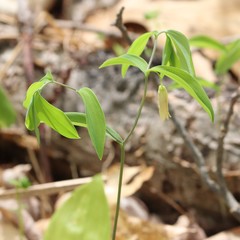 Uvularia sessilifolia Sessile-leaf bellwort Photo: CC BY, Mark Apgar
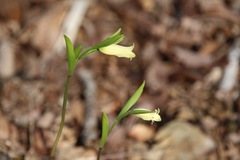 Uvularia puberula Mountain bellwort Photo: CC BY, er-birds
Grown: iNaturalist's observations of the species marked captive or cultivated; "not counted" where the species list does not count it. Native ranges: Kew's World Checklist of Vascular Plants (Govaerts et al., CC BY 4.0), file of 4 June 2026. Grown: iNaturalist's observations marked captive or cultivated, counted 17 October 2026 (the species list's count). Habitat climate known: the species page has a habitat climate, read from CHELSA's monthly climate and NASA POWER's daily extremes at its well-placed wild records inside Kew's native range; each page says its own sources and days. Record low: the lowest night in NASA POWER's daily series at the habitat's typical spot, as the species page gives it, held in °C to a tenth and shown in your units; each page says its own years and day read. Counts as the reference built on 19 November 2026 holds them. The CSV holds every result, not only this page's.