 13 photographs ›
Summary
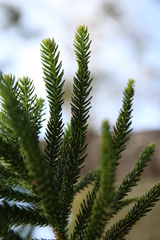
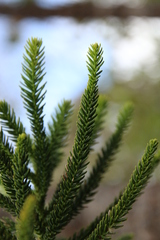
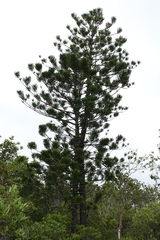
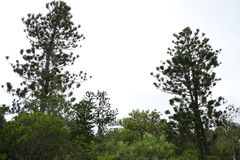
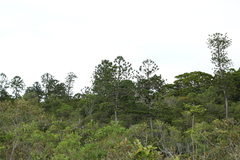
Araucaria nemorosa (Boise araucaria) is a species of conifer in the family Araucariaceae. It is found only in New Caledonia, an island possession of France in the South Pacific. It is mostly found as a small understory tree, typically growing to no more than 15 meters (though rarely reaching 30m), and relatively shade tolerant, though it can also grow as an emergent from coastal scrub. It has feathery foliage somewhat less spiky than most other Araucaria species, and is found only on serpentine soil, in coastal locations below 100m in altitude.
Quoted from Wikipedia, "Araucaria nemorosa", CC BY-SA 4.0.
About the genus · Araucaria
Araucaria is a genus of evergreen coniferous trees in the family Araucariaceae. While today they are largely confined to the Southern Hemisphere, during the Jurassic and Cretaceous they were globally distributed. There are 20 extant species in New Caledonia, eastern Australia, New Guinea, Argentina, Brazil, Chile and Uruguay.
Quoted from Wikipedia, "Araucaria", CC BY-SA 4.0.
Cultivation
Climate across the habitat
Natural habitat
How this section is made
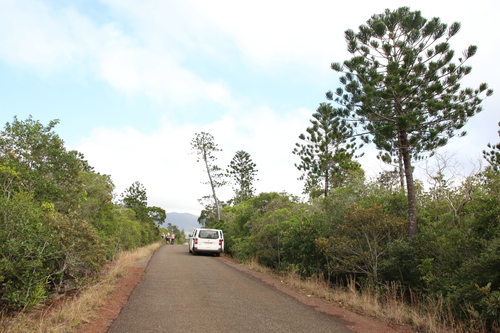
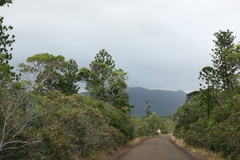
Photographs
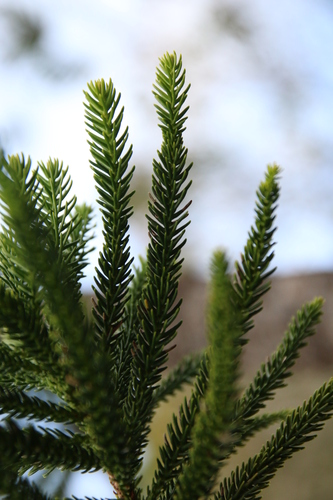
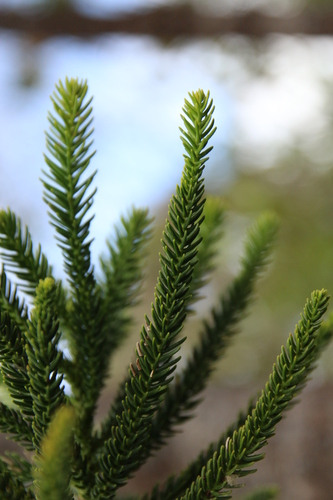
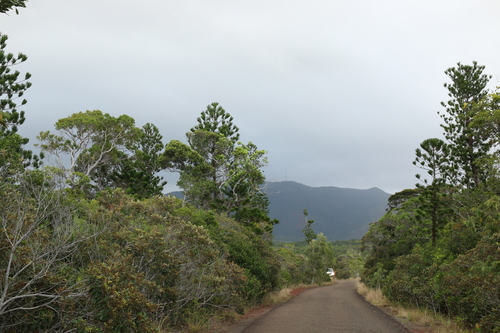
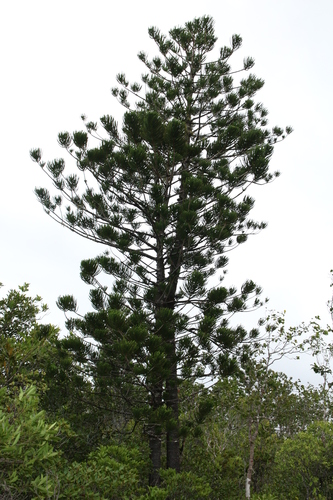
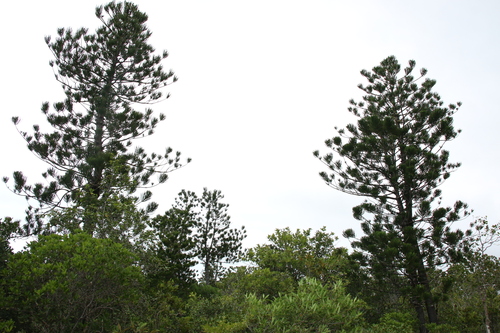
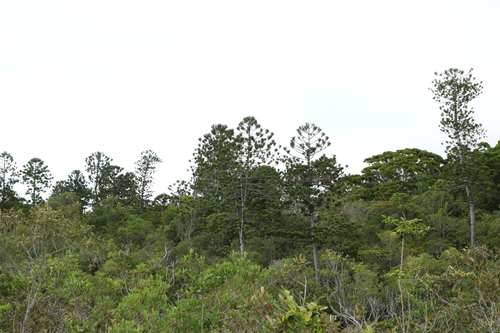
Photographs: author not stated, no rights reserved · CC0 (6).
Related
Other Araucaria 18 in the reference
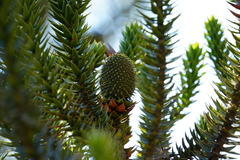 Araucaria angustifolia Parana-pine Photo: CC BY, Pietro
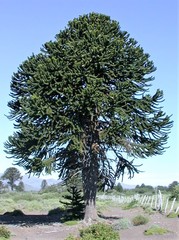 Araucaria araucana Monkey-puzzle Photo: CC BY, Peter L Achuff
 Araucaria bernieri Bernier's araucaria Photo: CC BY, Thomas CUELHO from Bordeaux, France…
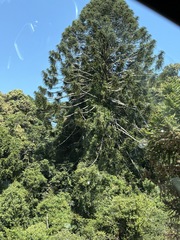 Araucaria bidwillii Bunya bunya Photo: CC BY, Thomas Mesaglio
 Araucaria biramulata Biramule araucaria Photo: CC BY-SA, vanessa_147
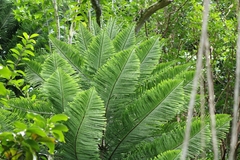 Araucaria columnaris New Caledonia pine Photo: CC0, author not stated
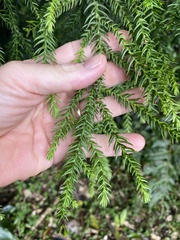 Araucaria cunninghamii Moreton Bay pine Photo: CC0, author not stated
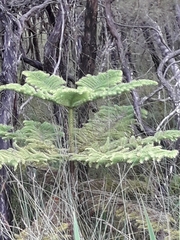 Araucaria heterophylla Norfolk Island pine Photo: CC BY, naturewatchwidow
 Araucaria humboldtensis Humboldt's araucaria Photo: CC BY, Annie Evankow
 Araucaria hunsteinii Klinki pine Photo: CC BY-SA, Phil Markey
 Araucaria laubenfelsii Araucariaceae Photo: CC BY-SA, J. MAlone
 Araucaria luxurians Coast araucaria Photo: CC BY-SA, Christian 57 all 19 ›
Names & registers
Also known as Eutassa nemorosa. (GBIF Backbone)
The record
Every figure here is derived from public data by a stated rule and names its source; nothing about this species is written for its page by a person or by AI, apart from the marked, credited quotations. How →
Where this page came from built 2026-10-21
gbif.species answeredasked 2026-10-21gbif.synonyms answeredasked 2026-10-21gbif.vernacular answeredasked 2026-10-21names fetched 2026-10-21wcvp.distribution answeredas of 2026-06-04gbif.occurrences answeredasked 2026-10-21GBIF occurrence download https://doi.org/10.15468/dl.hbdw64, of 2026-10-21; 0 records of GBIF's key 11275145, Araucaria nemorosa DeLaub. (Kew's file holds it as Araucaria nemorosa de Laub. (accepted)): GBIF occurrence search API; 4 records within 1 km of a botanic garden, herbarium or zoo left out (4 at a botanic garden or arboretum; Wikidata's list)climate nothing to reportasked 2026-10-21only 2 distinct land cells of the climate grid hold an in-range record placed to within 10 km; three are needed for an envelopewikidata answeredasked 2026-10-21wikipedia answeredasked 2026-10-21inat.photos.wild answeredasked 2026-10-22from iNaturalist's open data of 2026-09-27: research-grade observations with an open-licence photograph, the 24 whose photographs iNaturalist received last (the open data holds no votes); filled 2026-10-22inat.photos.cultivated not askedgbif.media answeredasked 2026-10-21commons answeredasked 2026-10-21openalex not askednot yet asked for this reference; a later fill takes the papers from OpenAlex's snapshotEvery source is recorded as having answered, reported nothing, refused, failed, not been asked, or answered twice where one answer is taken (“not taken: two items answered”), and, for a source asked when this page was built, when: the figures are as the source held them that day; a source read from a file (Kew's World Checklist, a GBIF download) says "as of" the file's day instead; a row carried from an earlier build of the page names that build instead. Only “nothing to report” is ever shown as an absence. Records came from 9 datasets via GBIF.org; each carries its own licence.