Arisaema auriculatum Buchet
Photographs not checked
iNaturalist was skipped (not asked) when this page was built. Not asked, or not answered, is not "none": nothing here claims there is none. Why the site says it this way.About the genus · Arisaema
Arisaema is a large and diverse genus of the flowering plant family Araceae. The largest concentration of species is in China and Japan, with other species native to other parts of southern Asia as well as eastern and central Africa, Mexico and eastern North America. Asiatic species are often called cobra lilies, while western species are often called jack-in-the-pulpit; both names refer to the distinctive appearance of the flower, which consists of an erect central spadix rising from a spathe.
Quoted from Wikipedia, "Arisaema", CC BY-SA 4.0.
Cultivation
Climate across the habitat
Natural habitat
How this section is made
Photographs
Related
Other Arisaema 52 in the reference
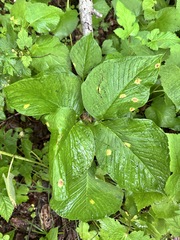 Arisaema amurense Amur jack-in-the-pulpit Photo: CC BY, Tatyana Petrenko
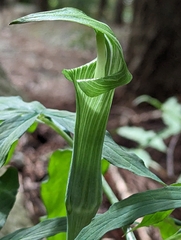 Arisaema angustatum Araceae Photo: CC BY, Alexander Wentworth Arisaema aridum Araceae Arisaema asperatum Araceae
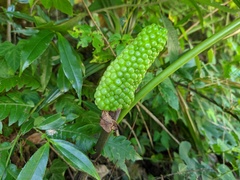 Arisaema bockii Araceae Photo: CC BY, Jiao Sun (孙娇)
 Arisaema candidissimum Araceae Photo: CC0, Peter coxhead
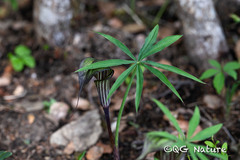 Arisaema ciliatum Araceae Photo: CC BY, Wang.QG
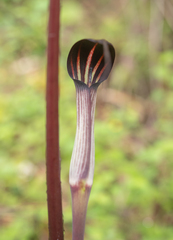 Arisaema concinnum Araceae Photo: CC BY, Morten Ross
 Arisaema consanguineum Himalayan cobra lily Photo: CC BY, Cheng-Tao Lin
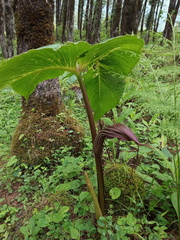 Arisaema costatum Araceae Photo: CC BY, Sagnik Dutta Roy
 Arisaema cucullatum Araceae Photo: CC BY-SA, Qwert1234 Arisaema decipiens Araceae all 53 ›
Names & registers
Also known as Arisaema auriculatum var. hungyaense; Arisaema hungyaense; Arisaema omeiense. (GBIF Backbone)
Registers not checked
Wikidata did not answer when this page was built, so the links it gives (POWO, IPNI, World Flora Online, Wikipedia) were not checked; any shown here are kept from an earlier build. Not asked, or not answered, is not "none": nothing here claims there is none. Why the site says it this way.The record
Every figure here is derived from public data by a stated rule and names its source; nothing about this species is written for its page by a person or by AI, apart from the marked, credited quotations. How →
Where this page came from built 2026-10-21
gbif.species answeredasked 2026-10-21gbif.synonyms answeredasked 2026-10-21gbif.vernacular answeredasked 2026-10-21names fetched 2026-10-21wcvp.distribution answeredas of 2026-06-04gbif.occurrences answeredas of 2026-10-21GBIF occurrence download https://doi.org/10.15468/dl.hbdw64, of 2026-10-21climate nothing to reportasked 2026-10-2121 in-range records, none placed to within 10 kmwikidata failedasked 2026-10-21query.wikidata.org timeout (batched: Wikidata's query service, 200 GBIF keys)wikipedia nothing to reportasked 2026-10-21inat.taxon not askedinat.photos.wild not askedinat.photos.cultivated not askedgbif.media nothing to reportasked 2026-10-21commons nothing to reportasked 2026-10-21openalex not askednot yet asked for this reference; a later fill takes the papers from OpenAlex's snapshotEvery source is recorded as having answered, reported nothing, refused, failed, not been asked, or answered twice where one answer is taken (“not taken: two items answered”), and, for a source asked when this page was built, when: the figures are as the source held them that day; a source read from a file (Kew's World Checklist, a GBIF download) says "as of" the file's day instead; a row carried from an earlier build of the page names that build instead. Only “nothing to report” is ever shown as an absence. Records came from 10 datasets via GBIF.org; each carries its own licence.