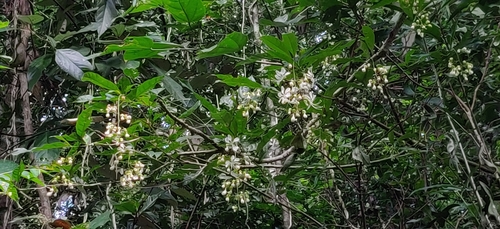


 4 photographs ›
About the genus · Clerodendrum
Clerodendrum is a genus of flowering plants formerly placed in the family Verbenaceae, but now considered to belong to the Lamiaceae (mint) family. Its common names include glorybower, bagflower, pagoda flower and bleeding-heart. It is currently classified in the subfamily Ajugoideae, being one of several genera transferred from Verbenaceae to Lamiaceae in the 1990s, based on phylogenetic analysis of morphological and molecular data.
Quoted from Wikipedia, "Clerodendrum", CC BY-SA 4.0.
Cultivation
Climate across the habitat
Natural habitat
How this section is made
Photographs
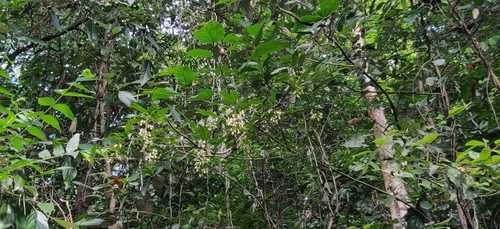


Photographs: (c) T R Shankar Raman, some rights reserved (CC BY); Krzysztof Ziarnek, Kenraiz, CC BY-SA 4.0, via Wikimedia Commons (2).
Related
Other Clerodendrum 29 in the reference
 Clerodendrum buchananii Lamiaceae Photo: CC BY-SA, Tauʻolunga
 Clerodendrum bungei Rose glorybower Photo: CC BY, Carminda Santos
 Clerodendrum calamitosum Lamiaceae Photo: CC BY, Greg III Espera
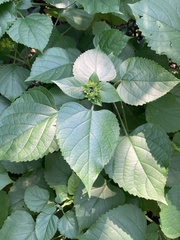 Clerodendrum canescens Lamiaceae Photo: CC BY, Zheng-An Wang
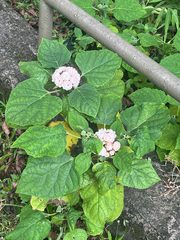 Clerodendrum chinense Stickbush Photo: CC BY, Toby Y Clerodendrum colebrookeanum East Indian glory bower
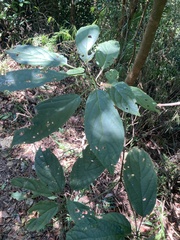 Clerodendrum cyrtophyllum Mayflower Gloryberry Photo: CC BY, Zheng-An Wang
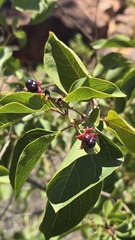 Clerodendrum floribundum Lolly Bush Photo: CC BY, Petra Holland
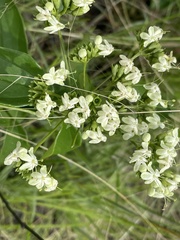 Clerodendrum formicarum Lamiaceae Photo: CC BY, Robert Taylor
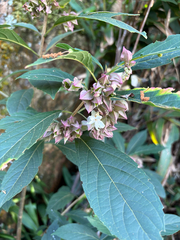 Clerodendrum fortunatum Gloryberry Photo: CC BY, Hilda Chan
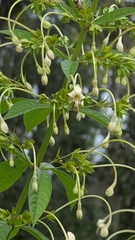 Clerodendrum indicum Turk's turban Photo: CC BY, Daniel Nunez
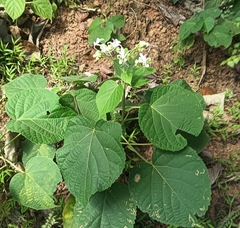 Clerodendrum infortunatum Lamiaceae Photo: CC0, author not stated all 30 ›
Names & registers
Also known as Clerodendrum jackianum; Clerodendrum penduliflorum. (GBIF Backbone)
The record
Every figure here is derived from public data by a stated rule and names its source; nothing about this species is written for its page by a person or by AI, apart from the marked, credited quotations. How →
Where this page came from built 2026-10-21
gbif.species answeredasked 2026-10-21gbif.synonyms answeredasked 2026-10-21gbif.vernacular answeredasked 2026-10-21names fetched 2026-10-21wcvp.distribution answeredas of 2026-06-04gbif.occurrences answeredas of 2026-10-21GBIF occurrence download https://doi.org/10.15468/dl.hbdw64, of 2026-10-21; 2 records within 1 km of a botanic garden, herbarium or zoo left out (2 at a botanic garden or arboretum; Wikidata's list)climate nothing to reportasked 2026-10-21only 2 distinct land cells of the climate grid hold an in-range record placed to within 10 km; three are needed for an envelopewikidata answeredasked 2026-10-21found by its label; its IPNI identifier 862283-1 is Kew's for Clerodendrum nutans Wall. ex Jackwikipedia nothing to reportasked 2026-10-21inat.photos.wild answeredasked 2026-10-22from iNaturalist's open data of 2026-09-27: research-grade observations with an open-licence photograph, the 24 whose photographs iNaturalist received last (the open data holds no votes); filled 2026-10-22inat.photos.cultivated not askedgbif.media answeredasked 2026-10-21none of the photographs on this page is credited to GBIF: those shown are other sources', and GBIF's were the same photographs or were set aside by the photograph rulescommons answeredasked 2026-10-21openalex not askednot yet asked for this reference; a later fill takes the papers from OpenAlex's snapshotEvery source is recorded as having answered, reported nothing, refused, failed, not been asked, or answered twice where one answer is taken (“not taken: two items answered”), and, for a source asked when this page was built, when: the figures are as the source held them that day; a source read from a file (Kew's World Checklist, a GBIF download) says "as of" the file's day instead; a row carried from an earlier build of the page names that build instead. Only “nothing to report” is ever shown as an absence. Records came from 10 datasets via GBIF.org; each carries its own licence.