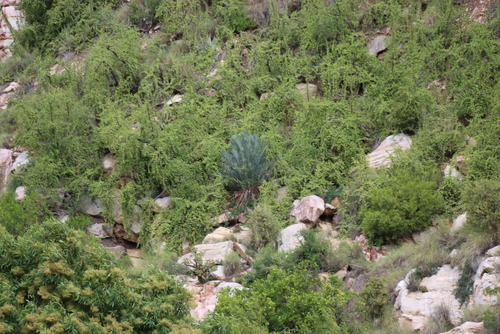
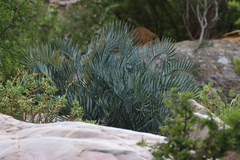
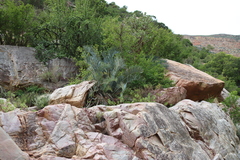
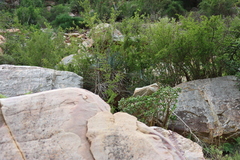
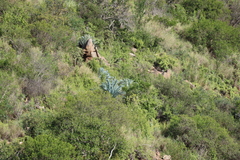
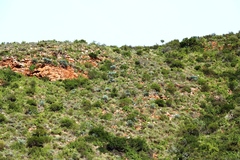
 24 photographs ›
Summary
Encephalartos lehmannii is a low-growing palm-like cycad in the family Zamiaceae. It is commonly known as the Karoo cycad and is endemic to South Africa. The species name lehmannii commemorates Prof J.G.C. Lehmann, a German botanist who studied the cycads and published a book on them in 1834. This cycad is listed as vulnerable in the IUCN Red List of Threatened Species.
Quoted from Wikipedia, "Encephalartos lehmannii", CC BY-SA 4.0.
About the genus · Encephalartos
Encephalartos is a genus of cycad native to Africa. Several species of Encephalartos are commonly referred to as bread trees, or bread palms since a bread-like starchy food can be prepared from the centre of the stem. The genus name is derived from Ancient Greek ἐγκέφαλος, meaning "head", and ἄρτος, meaning "bread", referring to the use of the pith to make food. More on Wikipedia ›
Quoted from Wikipedia, "Encephalartos", CC BY-SA 4.0.
Cultivation
Climate across the habitat
Natural habitat
How this section is made
Photographs
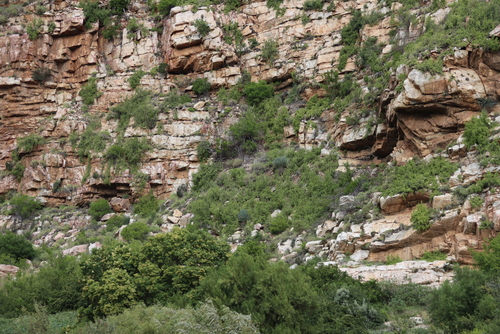
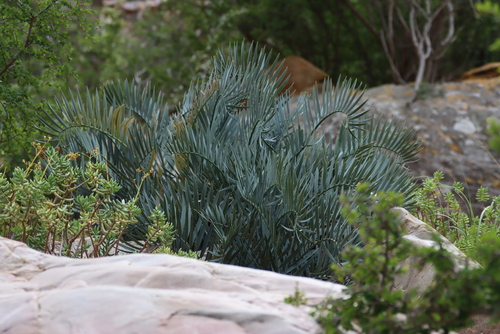
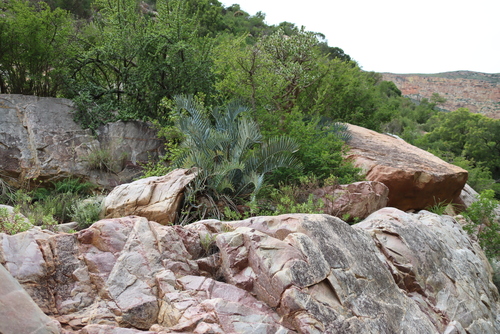
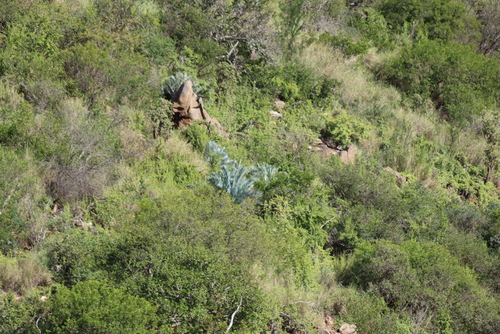
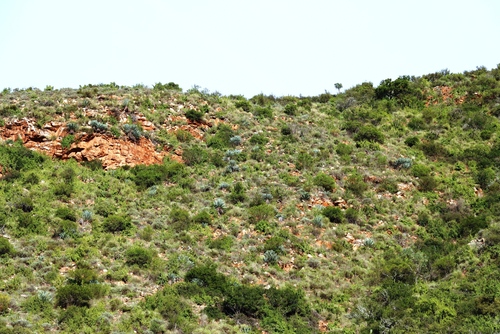
Photographs: (c) Tony Rebelo, some rights reserved (CC BY-SA) (6).
Related
Other Encephalartos 48 in the reference
 Encephalartos aemulans Ngotshe Cycad Photo: CC BY-SA, andy_king50 Encephalartos afer Zamiaceae
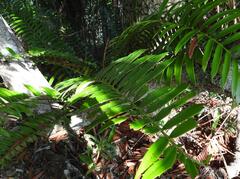 Encephalartos altensteinii Eastern Cape Cycad Photo: CC BY, Henry de Lange
 Encephalartos aplanatus Cycad Photo: CC BY-SA, andy_king50
 Encephalartos arenarius Alexandria Cycad Photo: CC BY-SA, J Brew
 Encephalartos barteri Cycad Photo: CC BY-SA, C T Johansson
 Encephalartos bubalinus Lake Natron Cycad Photo: CC BY-SA, Dryas
 Encephalartos cerinus Waxen Cycad Photo: CC BY-SA, andy_king50
 Encephalartos chimanimaniensis Chimanimani Cycad Photo: CC BY-SA, andy_king50
 Encephalartos concinnus Runde Cycad Photo: CC BY-SA, J Brew
 Encephalartos cupidus Blyde River Cycad Photo: CC BY-SA, User:BotBln Encephalartos dyerianus Lowveld Cycad all 49 ›
Names & registers
Also known as Encephalartos elongatus; Encephalartos lehmannii f. dentatus; Encephalartos lehmannii f. lehmannii; Encephalartos lehmannii f. spinulosus; Encephalartos lehmannii var. lehmannii and 7 more. (GBIF Backbone)
The record
Every figure here is derived from public data by a stated rule and names its source; nothing about this species is written for its page by a person or by AI, apart from the marked, credited quotations. How →
Where this page came from built 2026-10-22
gbif.species answeredasked 2026-10-22gbif.synonyms answeredasked 2026-10-22gbif.vernacular answeredasked 2026-10-22names fetched 2026-10-22wcvp.distribution answeredas of 2026-06-04gbif.occurrences answeredas of 2026-10-21GBIF occurrence download https://doi.org/10.15468/dl.hbdw64, of 2026-10-21; 13 records within 1 km of a botanic garden, herbarium or zoo left out (11 at a botanic garden or arboretum, 2 at a zoo; Wikidata's list)climate nothing to reportasked 2026-10-22only 1 distinct land cell of the climate grid holds an in-range record placed to within 10 km; three are needed for an envelopewikidata answeredasked 2026-10-22wikipedia answeredasked 2026-10-22inat.photos.wild answeredasked 2026-10-22from iNaturalist's open data of 2026-09-27: research-grade observations with an open-licence photograph, the 24 whose photographs iNaturalist received last (the open data holds no votes); filled 2026-10-22inat.photos.cultivated not askedgbif.media answeredasked 2026-10-22commons answeredasked 2026-10-22openalex not askednot yet asked for this reference; a later fill takes the papers from OpenAlex's snapshotEvery source is recorded as having answered, reported nothing, refused, failed, not been asked, or answered twice where one answer is taken (“not taken: two items answered”), and, for a source asked when this page was built, when: the figures are as the source held them that day; a source read from a file (Kew's World Checklist, a GBIF download) says "as of" the file's day instead; a row carried from an earlier build of the page names that build instead. Only “nothing to report” is ever shown as an absence. Records came from 4 datasets via GBIF.org; each carries its own licence.