


 4 photographs ›
Summary
Gossypium raimondii is a species of cotton plant endemic to northern Peru. Its genome has been sequenced in order to improve the productivity and fiber quality of other Gossypium species.
Quoted from Wikipedia, "Gossypium raimondii", CC BY-SA 4.0.
About the genus · Gossypium
Gossypium is a genus of flowering plants in the tribe Gossypieae of the mallow family, Malvaceae, from which cotton is harvested. It is native to tropical and subtropical regions of the Old and New Worlds. There are about 50 Gossypium species, making it the largest genus in the tribe Gossypieae, and new species continue to be discovered. More on Wikipedia ›
Quoted from Wikipedia, "Gossypium", CC BY-SA 4.0.
Cultivation
Climate across the habitat
Natural habitat
How this section is made
Photographs


Photographs: Krzysztof Ziarnek, Kenraiz, CC BY-SA 4.0, via Wikimedia Commons (3).
Related
Other Gossypium 11 in the reference
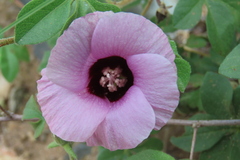 Gossypium anomalum African Wild Cotton Photo: CC0, author not stated
 Gossypium arboreum Tree cotton Photo: CC BY-SA, Ankit Pathak
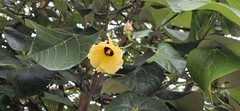 Gossypium barbadense Creole cotton Photo: CC BY, Barry Stewart
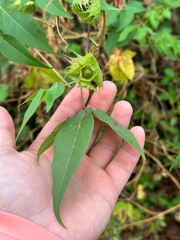 Gossypium darwinii Darwin's Cotton Photo: CC0, author not stated
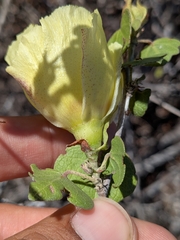 Gossypium harknessii San Marcos Hibiscus Photo: CC BY, Abraham Sánchez Romero
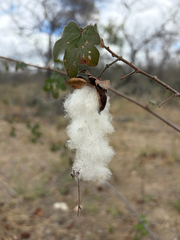 Gossypium herbaceum Levant cotton Photo: CC BY-SA, Rebecca Ryen-Stols
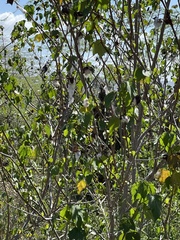 Gossypium hirsutum Cotton Photo: CC0, author not stated
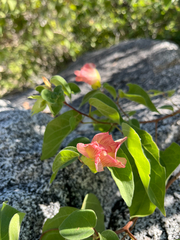 Gossypium klotzschianum Galapagos Cotton Photo: CC BY, Rachel Allingham
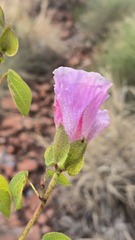 Gossypium sturtianum Sturt's desert rose Photo: CC BY, Petra Holland
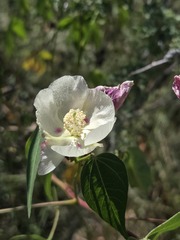 Gossypium thurberi Wild cotton Photo: CC BY, John Thomlinson
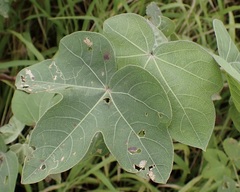 Gossypium tomentosum Hawaiian cotton Photo: CC BY, Thomas Irvine
Names & registers
Also known as Gossypium klotzschianum subsp. raimondii; Gossypium klotzschianum var. raimondii. (GBIF Backbone)
The record
Every figure here is derived from public data by a stated rule and names its source; nothing about this species is written for its page by a person or by AI, apart from the marked, credited quotations. How →
Where this page came from built 2026-10-22
gbif.species answeredasked 2026-10-22gbif.synonyms answeredasked 2026-10-22gbif.vernacular answeredasked 2026-10-22names fetched 2026-10-22wcvp.distribution answeredas of 2026-06-04gbif.occurrences answeredas of 2026-10-21GBIF occurrence download https://doi.org/10.15468/dl.hbdw64, of 2026-10-21; 2 records within 1 km of a botanic garden, herbarium or zoo left out (2 at a botanic garden or arboretum; Wikidata's list)climate nothing to reportasked 2026-10-223 in-range records, none placed to within 10 kmwikidata answeredasked 2026-10-22wikipedia answeredasked 2026-10-22inat.photos.wild nothing to reportasked 2026-10-22from iNaturalist's open data of 2026-09-27: research-grade observations with an open-licence photograph, the 24 whose photographs iNaturalist received last (the open data holds no votes); filled 2026-10-22inat.photos.cultivated not askedgbif.media nothing to reportasked 2026-10-22commons answeredasked 2026-10-22openalex not askednot yet asked for this reference; a later fill takes the papers from OpenAlex's snapshotEvery source is recorded as having answered, reported nothing, refused, failed, not been asked, or answered twice where one answer is taken (“not taken: two items answered”), and, for a source asked when this page was built, when: the figures are as the source held them that day; a source read from a file (Kew's World Checklist, a GBIF download) says "as of" the file's day instead; a row carried from an earlier build of the page names that build instead. Only “nothing to report” is ever shown as an absence. Records came from 4 datasets via GBIF.org; each carries its own licence.