Psidium striatulum DC.
Photographs not checked
iNaturalist was skipped (not asked) when this page was built. Not asked, or not answered, is not "none": nothing here claims there is none. Why the site says it this way.Summary
Psidium striatulum is a species of plant in the family Myrtaceae. It is native to Bolivia, Brazil, Guyana, Suriname, and Venezuela.
Quoted from Wikipedia, "Psidium striatulum", CC BY-SA 4.0.
About the genus · Psidium
Psidium is a genus of trees and shrubs in the family Myrtaceae. It is native to warmer parts of the Western Hemisphere. Many of the species bear edible fruits, and for this reason several are cultivated commercially. More on Wikipedia ›
Quoted from Wikipedia, "Psidium", CC BY-SA 4.0.
Cultivation
Climate across the habitat
Natural habitat
How this section is made
Photographs
Related
Other Psidium 13 in the reference
 Psidium acutangulum Myrtaceae Photo: CC BY-SA, Jleoch
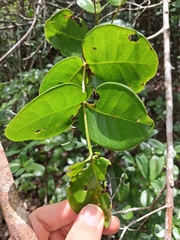 Psidium amplexicaule Mountain guava Photo: CC BY-SA, Kurt Miller
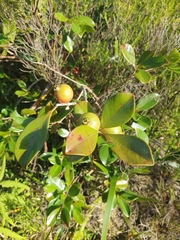 Psidium cattleianum Strawberry guava Photo: CC BY, marius Psidium densicomum Myrtaceae
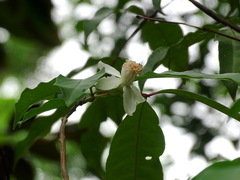 Psidium friedrichsthalianum Wild guava Photo: CC BY, Alexis López Hernández
 Psidium guajava Guava Photo: CC BY-SA, Daniel Dias
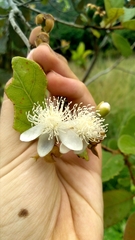 Psidium guineense Guinea guava Photo: CC BY-SA, cristianol1456
 Psidium longipetiolatum Myrtaceae Photo: CC BY, João Medeiros
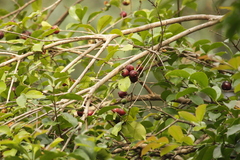 Psidium myrtoides Myrtaceae Photo: CC BY, Bruno Luka de Souza Bambirra Silveira
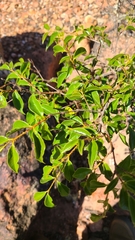 Psidium oligospermum Sintenis' guava Photo: CC BY, Alberto Alcalá Psidium pedicellatum Myrtaceae
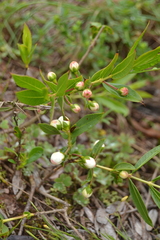 Psidium salutare Myrtaceae Photo: CC BY, Seba Fernández all 14 ›
Names & registers
Also known as Guajava aquatica; Guajava leptoclada; Guajava parviflora; Guajava persicifolia; Guajava striatula and 14 more. (GBIF Backbone)
The record
Every figure here is derived from public data by a stated rule and names its source; nothing about this species is written for its page by a person or by AI, apart from the marked, credited quotations. How →
Where this page came from built 2026-10-22
gbif.species answeredasked 2026-10-22gbif.synonyms answeredasked 2026-10-22gbif.vernacular answeredasked 2026-10-22names fetched 2026-10-22wcvp.distribution answeredas of 2026-06-04gbif.occurrences answeredas of 2026-10-21GBIF occurrence download https://doi.org/10.15468/dl.hbdw64, of 2026-10-21climate nothing to reportasked 2026-10-22only 2 distinct land cells of the climate grid hold an in-range record placed to within 10 km; three are needed for an envelopewikidata answeredasked 2026-10-22wikipedia answeredasked 2026-10-22inat.photos.wild nothing to reportasked 2026-10-22from iNaturalist's open data of 2026-09-27: research-grade observations with an open-licence photograph, the 24 whose photographs iNaturalist received last (the open data holds no votes); filled 2026-10-22inat.photos.cultivated not askedgbif.media nothing to reportasked 2026-10-22commons nothing to reportasked 2026-10-22openalex not askednot yet asked for this reference; a later fill takes the papers from OpenAlex's snapshotEvery source is recorded as having answered, reported nothing, refused, failed, not been asked, or answered twice where one answer is taken (“not taken: two items answered”), and, for a source asked when this page was built, when: the figures are as the source held them that day; a source read from a file (Kew's World Checklist, a GBIF download) says "as of" the file's day instead; a row carried from an earlier build of the page names that build instead. Only “nothing to report” is ever shown as an absence. Records came from 35 datasets via GBIF.org; each carries its own licence.