Abutilon
30 species in the reference · family Malvaceae · 27 with a habitat climate · 30 grown, per iNaturalist
About the genus
Abutilon is a large genus of flowering plants in the mallow family, Malvaceae. It is distributed throughout the tropics and subtropics of the Americas, Africa, Asia, and Australia. General common names include Indian mallow and velvetleaf; ornamental varieties may be known as room maple, parlor maple, or flowering maple.
Quoted from Wikipedia, "Abutilon", its opening paragraph, revision 1364472053, read 2026-11-08, CC BY-SA 4.0.
Where Abutilon is native
| Mexico Northeast | 12 |
|---|---|
| Mexico Northwest | 10 |
| Texas | 9 |
| Mexico Southwest | 8 |
| Arizona | 7 |
| Mexico Central | 7 |
| Mexico Gulf | 7 |
| Angola | 6 |
| Kenya | 6 |
| New Mexico | 6 |
| Northern Provinces | 6 |
| Tanzania | 6 |
Species native to each region. A species counts in every region it is native to. Native ranges: Kew's World Checklist of Vascular Plants (Govaerts et al., CC BY 4.0), file of 4 June 2026.
30 species
Abutilon
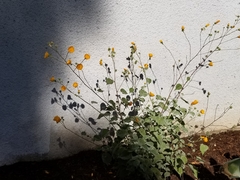 Abutilon palmeri Palmer's Indian mallow Photo: CC BY-SA, Hannah Blumenfeld
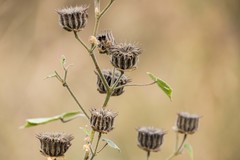 Abutilon theophrasti Velvetleaf Photo: CC BY, Ana Ka'ahanui
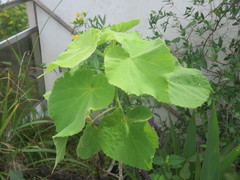 Abutilon grandifolium Hairy Indian mallow Photo: CC0, Diego Carús
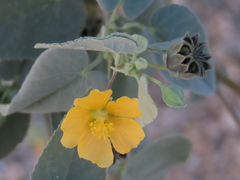 Abutilon fruticosum Texas Indian mallow Photo: CC0, dune_ninja
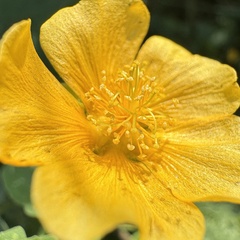 Abutilon indicum Indian abutilon Photo: CC BY-SA, AnnLazaro
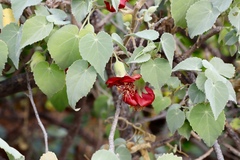 Abutilon menziesii Ko'oloa'ula Photo: CC BY, jimsox
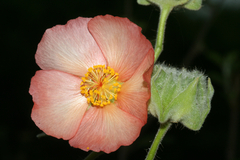 Abutilon hulseanum Mauve Photo: CC BY, J. L. Gómez-Hechavarría
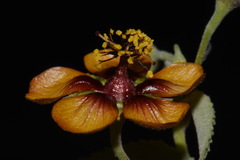 Abutilon incanum Indian mallow Photo: CC BY-SA, Brian Finzel
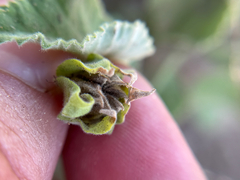 Abutilon wrightii Wright's Indian mallow Photo: CC BY, Chet Burrier
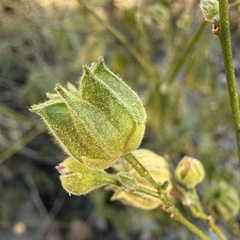 Abutilon mollicomum Sonoran Indian-mallow Photo: CC BY, Sue Carnahan
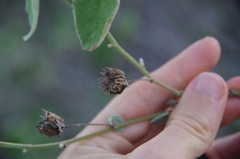 Abutilon abutiloides Bushy abutilon Photo: CC BY, Eric Knight
 Abutilon hypoleucum Rio Grande Abutilon Photo: CC BY, Sam Kieschnick
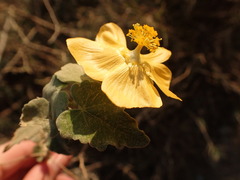 Abutilon sonneratianum Butter and cheese Photo: CC BY, agujaceratops
 Abutilon viscosum Viscid Mallow Photo: CC BY, Alexis López Hernández
 Abutilon trisulcatum Anglestem Indian mallow Photo: CC0, Center for Urban Ecology
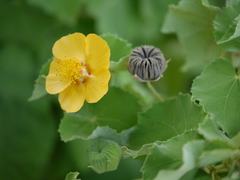 Abutilon hirtum Florida Keys Indian mallow Photo: CC BY-SA, Dinesh Valke
 Abutilon oxycarpum Lantern bush Photo: CC BY-SA, Greg Tasney
- no open photograph on file Abutilon virginianum
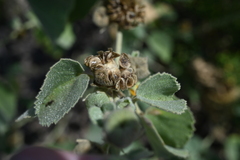 Abutilon pannosum Photo: CC BY, Krzysztof Ziarnek
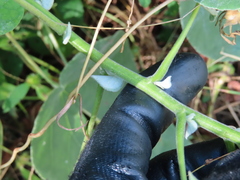 Abutilon reventum Yellowflower Indian mallow Photo: CC BY, Ulises Pinedo
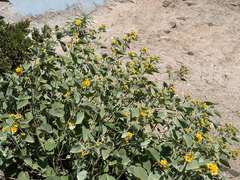 Abutilon malacum Yellow Indian mallow Photo: CC BY, Kevin Floyd
 Abutilon angulatum Photo: CC BY, Alan Manson
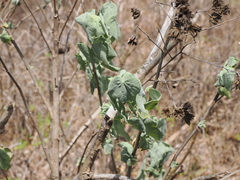 Abutilon auritum Asian Indian mallow Photo: CC BY, Lucas Christofides
 Abutilon grandiflorum Hairy Indian Mallow Photo: CC BY, Wynand Uys
 Abutilon eremitopetalum Hiddenpetal Indian mallow Photo: CC BY, David Eickhoff from Pearl City, Hawaii…
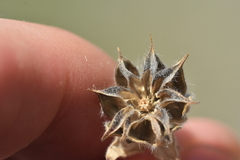 Abutilon parishii Parish's abutilon Photo: CC0, Daniel
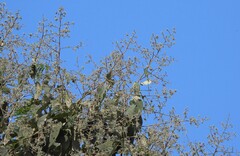 Abutilon densiflorum Photo: CC0, Hugo Hulsberg
 Abutilon ranadei Photo: CC0, S.MORE
 Abutilon mauritianum Photo: CC BY-SA, Emanuele Santarelli
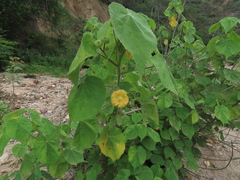 Abutilon mollissimum Photo: CC0, Manuel Roncal
Grown: iNaturalist's observations of the species marked captive or cultivated; "not counted" where the species list does not count it. Native ranges: Kew's World Checklist of Vascular Plants (Govaerts et al., CC BY 4.0), file of 4 June 2026. Grown: iNaturalist's observations marked captive or cultivated, counted 17 October 2026 (the species list's count). Habitat climate known: the species page has a habitat climate, read from CHELSA's monthly climate and NASA POWER's daily extremes at its well-placed wild records inside Kew's native range; each page says its own sources and days. Record low: the lowest night in NASA POWER's daily series at the habitat's typical spot, as the species page gives it, held in °C to a tenth and shown in your units; each page says its own years and day read. Counts as the reference built on 19 November 2026 holds them. The CSV holds every result, not only this page's.