Acmispon
10 species in the reference · family Fabaceae · 10 with a habitat climate · 10 grown, per iNaturalist
About the genus
Acmispon is a genus of flowering plant in the family Fabaceae (legumes), native to North America and the west coast of Chile in South America. It includes several species of American bird's-foot trefoils and deervetches formerly contained in the globally distributed genus Lotus. The former genus Syrmatium is included in Acmispon. The Jepson eFlora accepts only Acmispon.
Quoted from Wikipedia, "Acmispon", its opening paragraph, revision 1359214670, read 2026-11-08, CC BY-SA 4.0.
Where Acmispon is native
| California | 10 |
|---|---|
| Mexico Northwest | 7 |
| Arizona | 4 |
| Nevada | 4 |
| Oregon | 3 |
| Washington | 3 |
| British Columbia | 2 |
| Mexican Pacific Is. | 2 |
| Mexico Northeast | 2 |
| Alabama | 1 |
| Arkansas | 1 |
| Georgia | 1 |
Species native to each region. A species counts in every region it is native to. Native ranges: Kew's World Checklist of Vascular Plants (Govaerts et al., CC BY 4.0), file of 4 June 2026.
10 species
Acmispon
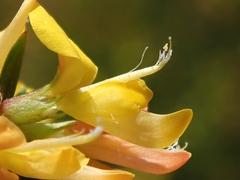 Acmispon glaber California broom Photo: CC BY, Jason Schock
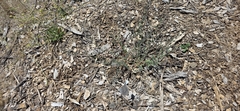 Acmispon americanus American bird's-foot trefoil Photo: CC0, cgbikes
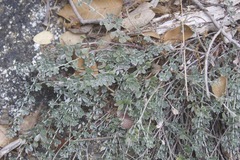 Acmispon argophyllus Silver bird's-foot trefoil Photo: CC0, Diego Blanco
 Acmispon maritimus Coastal bird's-foot trefoil Photo: CC BY, W. Terry Hunefeld
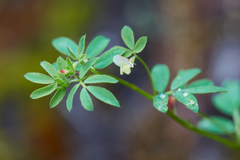 Acmispon parviflorus Desert deer-vetch Photo: CC BY, Ken-ichi Ueda
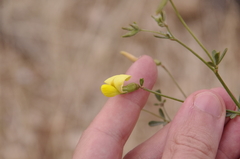 Acmispon rigidus Shrubby deer vetch Photo: CC BY, Eric Knight
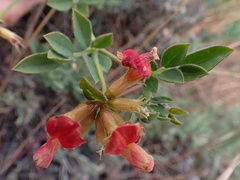 Acmispon grandiflorus Chaparral bird's-foot trefoil Photo: CC BY, Madeleine Claire
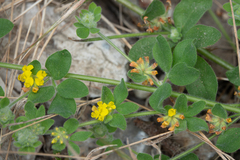 Acmispon tomentosus Heermann's Lotus Photo: CC0, Kyle Nessen
 Acmispon junceus Rush broom Photo: CC BY, Trevor Van Loon
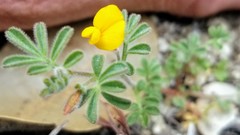 Acmispon strigosus Photo: CC BY, Justin
Grown: iNaturalist's observations of the species marked captive or cultivated; "not counted" where the species list does not count it. Native ranges: Kew's World Checklist of Vascular Plants (Govaerts et al., CC BY 4.0), file of 4 June 2026. Grown: iNaturalist's observations marked captive or cultivated, counted 17 October 2026 (the species list's count). Habitat climate known: the species page has a habitat climate, read from CHELSA's monthly climate and NASA POWER's daily extremes at its well-placed wild records inside Kew's native range; each page says its own sources and days. Record low: the lowest night in NASA POWER's daily series at the habitat's typical spot, as the species page gives it, held in °C to a tenth and shown in your units; each page says its own years and day read. Counts as the reference built on 19 November 2026 holds them. The CSV holds every result, not only this page's.