Amorpha
10 species in the reference · family Fabaceae · 10 with a habitat climate · 10 grown, per iNaturalist
About the genus
Amorpha is a genus of plants in the pea family, Fabaceae. All the species are native to North America, from southern Canada, most of the United States (US), and northern Mexico. They are commonly known as false indigo. The name Amorpha means "deformed" or "without form" in Greek and was given because flowers of this genus only have one petal, unlike the usual "pea-shaped" flowers of the Faboideae subfamily. More on Wikipedia
Quoted from Wikipedia, "Amorpha", its opening paragraph, revision 1372520030, read 2026-11-08, CC BY-SA 4.0.
Where Amorpha is native
| Oklahoma | 5 |
|---|---|
| New Mexico | 4 |
| Texas | 4 |
| Alabama | 3 |
| Arizona | 3 |
| Arkansas | 3 |
| Colorado | 3 |
| Georgia | 3 |
| Minnesota | 3 |
| North Carolina | 3 |
| North Dakota | 3 |
| South Carolina | 3 |
Species native to each region. A species counts in every region it is native to. Native ranges: Kew's World Checklist of Vascular Plants (Govaerts et al., CC BY 4.0), file of 4 June 2026.
10 species
Amorpha
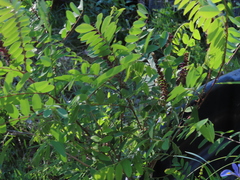 Amorpha fruticosa False indigo Photo: CC BY, Bruce Slater
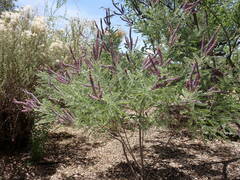 Amorpha canescens Leadplant Photo: CC BY, Matt Lavin
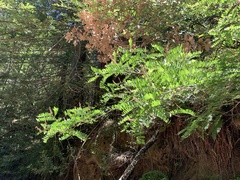 Amorpha californica California false indigo Photo: CC BY, John Hibbard
 Amorpha herbacea Clusterspike false indigo Photo: CC BY, Michael J. Papay
 Amorpha nana Fragrant false indigo Photo: CC BY, Jared Shorma
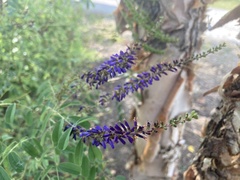 Amorpha laevigata Smooth false indigo Photo: CC BY, David Matthew
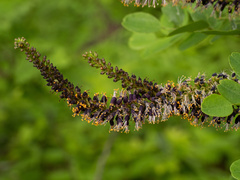 Amorpha ouachitensis Ouachita false indigo Photo: CC BY-SA, Turner Brockman
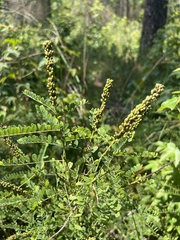 Amorpha georgiana Georgia false indigo Photo: CC0, Alan Weakley
 Amorpha glabra Appalachian indigo-bush Photo: CC BY, Evan M. Raskin
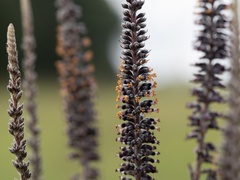 Amorpha paniculata Panicled false indigo Photo: CC BY-SA, Turner Brockman
Grown: iNaturalist's observations of the species marked captive or cultivated; "not counted" where the species list does not count it. Native ranges: Kew's World Checklist of Vascular Plants (Govaerts et al., CC BY 4.0), file of 4 June 2026. Grown: iNaturalist's observations marked captive or cultivated, counted 17 October 2026 (the species list's count). Habitat climate known: the species page has a habitat climate, read from CHELSA's monthly climate and NASA POWER's daily extremes at its well-placed wild records inside Kew's native range; each page says its own sources and days. Record low: the lowest night in NASA POWER's daily series at the habitat's typical spot, as the species page gives it, held in °C to a tenth and shown in your units; each page says its own years and day read. Counts as the reference built on 19 November 2026 holds them. The CSV holds every result, not only this page's.