Anthyllis
7 species in the reference · family Fabaceae · 7 with a habitat climate · 7 grown, per iNaturalist
About the genus
Anthyllis is a genus of flowering plants in the family Fabaceae. This genus contains both herbaceous and shrubby species and is distributed in Europe, the Middle East and North Africa. The most widespread and familiar species is A. vulneraria (kidney vetch), a familiar grassland flower which has also been introduced to New Zealand.
Quoted from Wikipedia, "Anthyllis", its opening paragraph, revision 1354829122, read 2026-11-08, CC BY-SA 4.0.
Where Anthyllis is native
| Algeria | 5 |
|---|---|
| Italy | 5 |
| Spain | 5 |
| Albania | 4 |
| France | 4 |
| Yugoslavia | 4 |
| Baleares | 3 |
| Corse | 3 |
| Greece | 3 |
| Morocco | 3 |
| Sicilia | 3 |
| Austria | 2 |
Species native to each region. A species counts in every region it is native to. Native ranges: Kew's World Checklist of Vascular Plants (Govaerts et al., CC BY 4.0), file of 4 June 2026.
7 species
Anthyllis
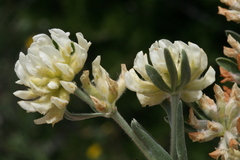
 Anthyllis vulneraria Kidney vetch Photo: CC BY, Andre Hosper
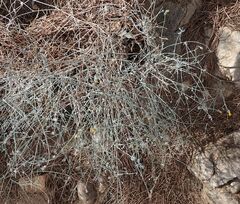
 Anthyllis barba-jovis Jupiter's-beard Photo: CC BY, fmunoz
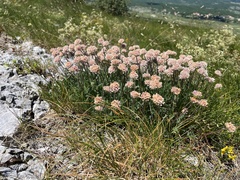
 Anthyllis cytisoides Albaida Photo: CC BY, Jon Mortin
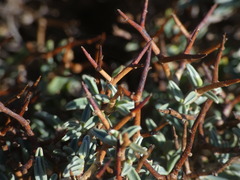
 Anthyllis montana Mountain Kidney-vetch Photo: CC0, Mirko Ubović
 Anthyllis hystrix Photo: CC BY, Yves Bas
 Anthyllis tejedensis Photo: Public domain, Javier martin
 Anthyllis hermanniae Yellow Kidney-Vetch Photo: CC BY, pavlaki1968
Grown: iNaturalist's observations of the species marked captive or cultivated; "not counted" where the species list does not count it. Native ranges: Kew's World Checklist of Vascular Plants (Govaerts et al., CC BY 4.0), file of 4 June 2026. Grown: iNaturalist's observations marked captive or cultivated, counted 17 October 2026 (the species list's count). Habitat climate known: the species page has a habitat climate, read from CHELSA's monthly climate and NASA POWER's daily extremes at its well-placed wild records inside Kew's native range; each page says its own sources and days. Record low: the lowest night in NASA POWER's daily series at the habitat's typical spot, as the species page gives it, held in °C to a tenth and shown in your units; each page says its own years and day read. Counts as the reference built on 19 November 2026 holds them. The CSV holds every result, not only this page's.