Bossiaea
7 species in the reference · family Fabaceae · 7 with a habitat climate · 7 grown, per iNaturalist
About the genus
Bossiaea is a genus of about 78 species of flowering plants in the pea family Fabaceae and is endemic to Australia. Plants in this genus often have stems and branches modified as cladodes, simple, often much reduced leaves, flowers with the upper two sepal lobes larger than the lower three, usually orange to yellow petals with reddish markings, and the fruit a more or less flattened pod.
Quoted from Wikipedia, "Bossiaea", its opening paragraph, revision 1282086103, read 2026-11-08, CC BY-SA 4.0.
Where Bossiaea is native
| New South Wales | 5 |
|---|---|
| Victoria | 5 |
| South Australia | 4 |
| Tasmania | 4 |
| Queensland | 2 |
| Western Australia | 2 |
Species native to each region. A species counts in every region it is native to. Native ranges: Kew's World Checklist of Vascular Plants (Govaerts et al., CC BY 4.0), file of 4 June 2026.
7 species
Bossiaea
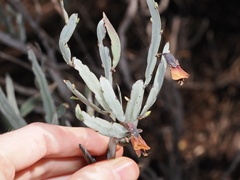 Bossiaea walkeri Cactus bossiaea Photo: CC BY, Thomas Mesaglio
 Bossiaea cinerea Showy bossiaea Photo: CC BY, Kevin Sparrow
- no open photograph on file Bossiaea obtusangula
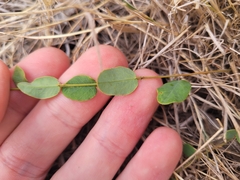 Bossiaea prostrata Creeping bossiaea Photo: CC BY, Eamonn Culhane
- no open photograph on file Bossiaea formosa
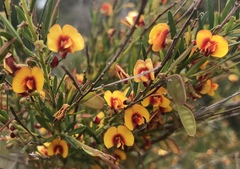 Bossiaea linophylla Yellow Bossiaea Photo: CC BY, Ann Bentley
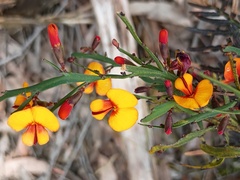 Bossiaea riparia River Leafless Bossiaea Photo: CC BY, grampianshiker
Grown: iNaturalist's observations of the species marked captive or cultivated; "not counted" where the species list does not count it. Native ranges: Kew's World Checklist of Vascular Plants (Govaerts et al., CC BY 4.0), file of 4 June 2026. Grown: iNaturalist's observations marked captive or cultivated, counted 17 October 2026 (the species list's count). Habitat climate known: the species page has a habitat climate, read from CHELSA's monthly climate and NASA POWER's daily extremes at its well-placed wild records inside Kew's native range; each page says its own sources and days. Record low: the lowest night in NASA POWER's daily series at the habitat's typical spot, as the species page gives it, held in °C to a tenth and shown in your units; each page says its own years and day read. Counts as the reference built on 19 November 2026 holds them. The CSV holds every result, not only this page's.