Camellia
40 species in the reference · family Theaceae · 13 with a habitat climate · 40 grown, per iNaturalist
About the genus
Camellia ( or ) is a genus of flowering plants in the family Theaceae. They are found in tropical and subtropical areas in eastern and southern Asia, from the Himalayas east to Japan and Indonesia. There are more than 220 described species; almost all are found in southern China and Indochina. Camellias are popular ornamental, tea, and woody-oil plants cultivated worldwide for centuries. More on Wikipedia
Quoted from Wikipedia, "Camellia", its opening paragraph, revision 1379819984, read 2026-11-08, CC BY-SA 4.0.
Where Camellia is native
| China Southeast | 30 |
|---|---|
| China South-Central | 16 |
| Vietnam | 14 |
| Taiwan | 8 |
| Hainan | 7 |
| Myanmar | 7 |
| Laos | 6 |
| Thailand | 5 |
| Assam | 4 |
| China North-Central | 3 |
| East Himalaya | 3 |
| Japan | 3 |
Species native to each region. A species counts in every region it is native to. Native ranges: Kew's World Checklist of Vascular Plants (Govaerts et al., CC BY 4.0), file of 4 June 2026.
40 species
Camellia
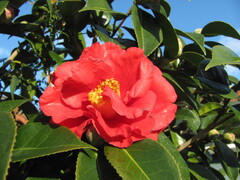 Camellia japonica Common camellia Photo: CC BY, zebedeugalinha
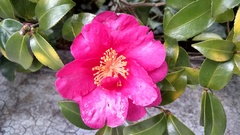 Camellia sasanqua Sasanqua camellia Photo: CC0, Zoltán Stekkelpak
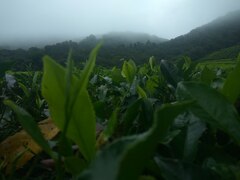 Camellia sinensis Tea Photo: CC BY, Ahirbudhnyan M
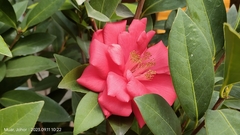 Camellia azalea Photo: CC BY-SA, Ong Jyh Seng
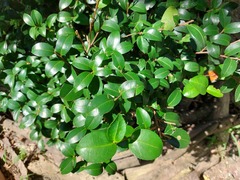 Camellia oleifera Tea-oil-plant Photo: CC BY, 胡正恆(Jackson Hu)
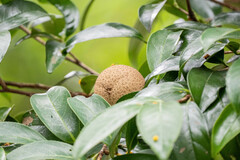 Camellia crapnelliana Crapnell's Camellia Photo: CC BY, Andrew Lai
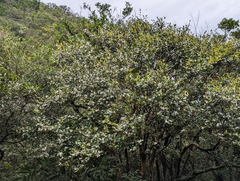 Camellia brevistyla Photo: CC BY, Francisca Wu
 Camellia hiemalis Photo: CC BY, WATANABE Hitoshi 渡辺仁
 Camellia petelotii Photo: CC BY-SA, Michael Wolf (Webseite)
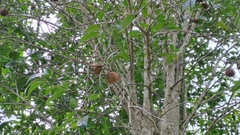 Camellia hongkongensis Hong Kong Camellia Photo: CC BY, CYL
 Camellia amplexicaulis Photo: CC BY-SA, Hungda
 Camellia reticulata To-tsubaki Photo: Public domain, Daderot
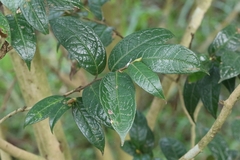 Camellia granthamiana Grantham's Camellia Photo: CC0, Agnes Trekker
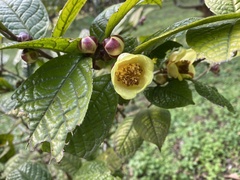 Camellia impressinervis Photo: CC0, 古淑玲
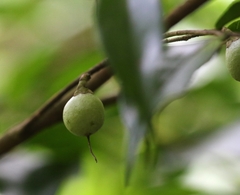 Camellia caudata Photo: CC0, Agnes Trekker
 Camellia uraku Photo: CC BY-SA, 阿橋 HQ
 Camellia grijsii Photo: CC BY-SA, Megan Hansen from Portland, OR, US
 Camellia chekiangoleosa Photo: CC BY-SA, Zhangzhugang
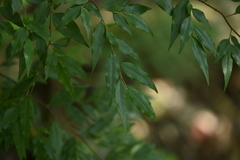 Camellia euryoides Photo: CC BY, 曾昱承 Yu-Cheng Zeng
 Camellia salicifolia Photo: CC BY, 黃美滿
- no open photograph on file Camellia semiserrata
 Camellia euphlebia Photo: CC BY-SA, 阿橋 HQ
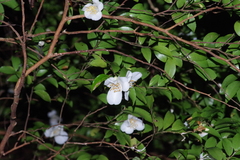 Camellia lutchuensis Photo: CC BY, Takaaki Hattori
 Camellia pitardii Photo: Public domain, Stickpen
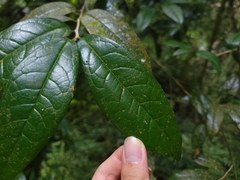 Camellia furfuracea Photo: CC BY, 曾昱承 Yu-Cheng Zeng
 Camellia cuspidata Photo: CC BY, User:BotBln
 Camellia kissi Nepal Camellia Photo: CC0, Agnes Trekker
 Camellia yunnanensis Photo: CC BY-SA, Hortiphoto
- no open photograph on file Camellia indochinensis
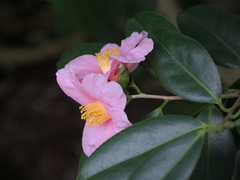 Camellia saluenensis Photo: CC BY, Daniel Cahen
 Camellia chrysanthoides Photo: CC0, Daderot
 Camellia fraterna Photo: CC BY-SA, BS Thurner Hof
 Camellia polyodonta Photo: CC BY-SA, Krzysztof Golik
 Camellia tsaii Photo: CC0, Daderot
- no open photograph on file Camellia amplexifolia
- no open photograph on file Camellia drupifera
- no open photograph on file Camellia flavida
 Camellia taliensis Photo: CC BY-SA, Krzysztof Ziarnek, Kenraiz
 Camellia forrestii Photo: CC BY, Lek Khauv
 Camellia rosiflora Photo: CC0, Daderot
Grown: iNaturalist's observations of the species marked captive or cultivated; "not counted" where the species list does not count it. Native ranges: Kew's World Checklist of Vascular Plants (Govaerts et al., CC BY 4.0), file of 4 June 2026. Grown: iNaturalist's observations marked captive or cultivated, counted 17 October 2026 (the species list's count). Habitat climate known: the species page has a habitat climate, read from CHELSA's monthly climate and NASA POWER's daily extremes at its well-placed wild records inside Kew's native range; each page says its own sources and days. Record low: the lowest night in NASA POWER's daily series at the habitat's typical spot, as the species page gives it, held in °C to a tenth and shown in your units; each page says its own years and day read. Counts as the reference built on 19 November 2026 holds them. The CSV holds every result, not only this page's.