Ceiba
16 species in the reference · family Malvaceae · 14 with a habitat climate · 16 grown, per iNaturalist
About the genus
Ceiba is a genus of trees in the family Malvaceae, native to tropical and subtropical areas of the Americas (from Mexico and the Caribbean to northern Argentina) and tropical West Africa. Some species can grow to 70 m (230 ft) tall or more, with a straight, largely branchless trunk that culminates in a huge, spreading canopy, and buttress roots that can be taller than a grown person. The best-known, and most widely cultivated, species is kapok, Ceiba pentandra, one of several trees known as kapok. Ceiba is a word from the Taíno language meaning "boat" because Taínos would use the wood to build their dugout canoes.
Quoted from Wikipedia, "Ceiba", its opening paragraph, revision 1382153642, read 2026-11-08, CC BY-SA 4.0.
Where Ceiba is native
| Peru | 8 |
|---|---|
| Bolivia | 7 |
| Brazil Northeast | 6 |
| Brazil North | 5 |
| Brazil West-Central | 5 |
| Brazil Southeast | 4 |
| Ecuador | 4 |
| Paraguay | 4 |
| Argentina Northeast | 3 |
| Guatemala | 3 |
| Mexico Southeast | 3 |
| Argentina Northwest | 2 |
Species native to each region. A species counts in every region it is native to. Native ranges: Kew's World Checklist of Vascular Plants (Govaerts et al., CC BY 4.0), file of 4 June 2026.
16 species
Ceiba
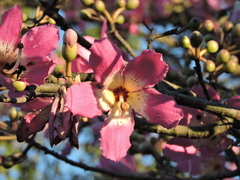 Ceiba speciosa Silk floss tree Photo: CC BY, Davi Eduardo
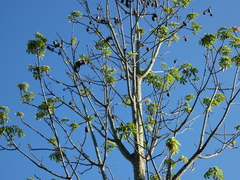 Ceiba pentandra Silk cotton tree Photo: CC BY, Helio Lourencini
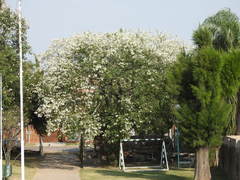 Ceiba chodatii Photo: CC BY, Eduardo Luis Beltrocco
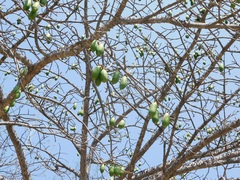 Ceiba aesculifolia Pochote Photo: CC BY, Neptalí Ramírez Marcial
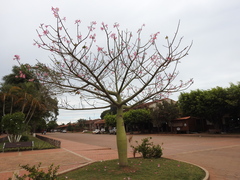 Ceiba camba Photo: CC0, Naturalist Tours
 Ceiba trischistandra Photo: CC BY, David F. Belmonte
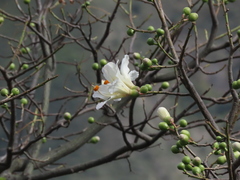 Ceiba insignis White silk floss tree Photo: CC0, Manuel Roncal
 Ceiba pubiflora Photo: CC BY, Humberto Lima
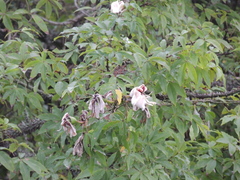 Ceiba erianthos Photo: CC BY, Paulo Nogueira
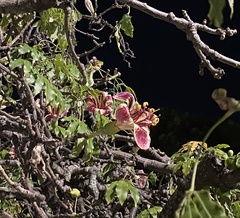 Ceiba boliviana Photo: CC BY, Raquel Mondino
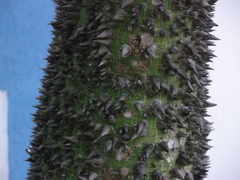 Ceiba glaziovii Photo: CC BY-SA, lucas_rafaelle
 Ceiba samauma Photo: CC BY, Vincent A. Vos
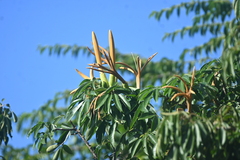 Ceiba schottii Photo: CC BY, Juan Cruzado Cortés
 Ceiba crispiflora Photo: CC BY-SA, SAplants
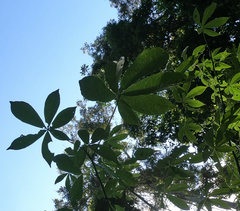 Ceiba lupuna Photo: CC BY, Robin Cañari Marzano
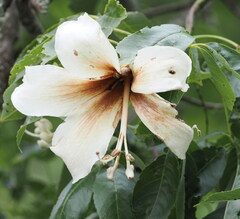 Ceiba guarani Photo: CC BY, Rosario Douglas
Grown: iNaturalist's observations of the species marked captive or cultivated; "not counted" where the species list does not count it. Native ranges: Kew's World Checklist of Vascular Plants (Govaerts et al., CC BY 4.0), file of 4 June 2026. Grown: iNaturalist's observations marked captive or cultivated, counted 17 October 2026 (the species list's count). Habitat climate known: the species page has a habitat climate, read from CHELSA's monthly climate and NASA POWER's daily extremes at its well-placed wild records inside Kew's native range; each page says its own sources and days. Record low: the lowest night in NASA POWER's daily series at the habitat's typical spot, as the species page gives it, held in °C to a tenth and shown in your units; each page says its own years and day read. Counts as the reference built on 19 November 2026 holds them. The CSV holds every result, not only this page's.