Cerastium
27 species in the reference · family Caryophyllaceae · 26 with a habitat climate · 18 grown, per iNaturalist, 9 not counted
About the genus
Cerastium is a genus of annual, winter annual, or perennial flowering plants belonging to the family Caryophyllaceae. They are commonly called mouse-ears or mouse-ear chickweeds. There are 214 accepted species, found nearly worldwide but with the greatest concentration in the northern temperate regions. A number of the species are common weeds in fields and on disturbed ground.
Quoted from Wikipedia, "Cerastium", its opening paragraph, revision 1360251621, read 2026-11-08, CC BY-SA 4.0.
Where Cerastium is native
| Italy | 12 |
|---|---|
| France | 11 |
| Yugoslavia | 11 |
| Czechoslovakia | 10 |
| Poland | 10 |
| Spain | 10 |
| Albania | 9 |
| Austria | 9 |
| Bulgaria | 9 |
| Germany | 9 |
| Switzerland | 9 |
| Great Britain | 7 |
Species native to each region. A species counts in every region it is native to. Native ranges: Kew's World Checklist of Vascular Plants (Govaerts et al., CC BY 4.0), file of 4 June 2026.
27 species
Cerastium
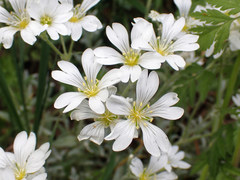 Cerastium tomentosum Snow-in-summer Photo: CC BY, Donald Davesne
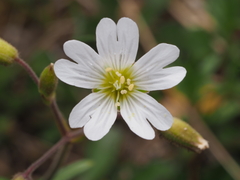 Cerastium arvense Field mouse-ear Photo: CC BY, Saryu Mae 前 朝琉
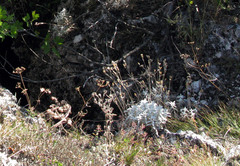 Cerastium biebersteinii Snow-in-summer Photo: CC BY, Igor Balashov
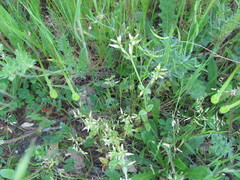 Cerastium glomeratum Sticky mouse-ear Photo: CC BY, zebedeugalinha
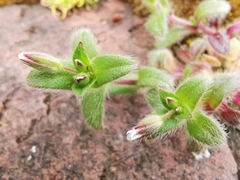 Cerastium fontanum Common mouse-ear chickweed Photo: CC0, Rachel Webster
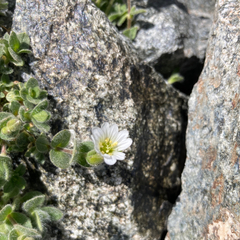 Cerastium alpinum Alpine mouse-ear Photo: CC BY-SA, Fabien Anthelme
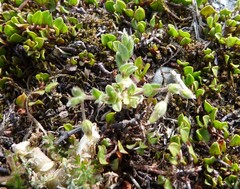 Cerastium semidecandrum Little mouse-ear Photo: CC BY-SA, Colin Meurk
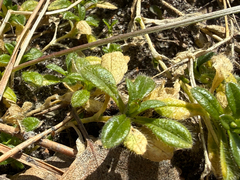 Cerastium holosteoides Common Mouse-ear Photo: CC BY, Мария Стрельникова
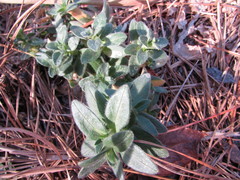 Cerastium velutinum Large field mouse-ear chickweed Photo: CC BY-SA, Chris Hoess
- no open photograph on file Cerastium argenteum
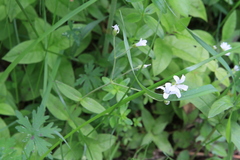 Cerastium pauciflorum Hairy mouse-ear chickweed Photo: CC BY, Oleg Kosterin
 Cerastium tatrae Photo: CC BY-SA, Jerzy Opioła
 Cerastium brachypetalum Grey mouse-ear Photo: CC BY-SA, Grzegorz Grzejszczak
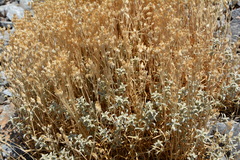 Cerastium candidissimum Greek Snow-In-Summer Photo: CC BY, Pantazi Katerina
 Cerastium davuricum Photo: CC BY, Константин Селивёрстов
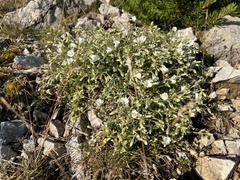 Cerastium decalvans Photo: CC0, Mirko Ubović
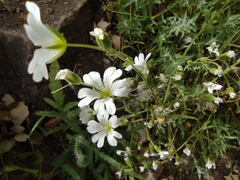 Cerastium gibraltaricum Gibraltar chickweed Photo: CC BY, Santiago Martín-Bravo
 Cerastium soleirolii Photo: CC BY-SA, User:Tigerente
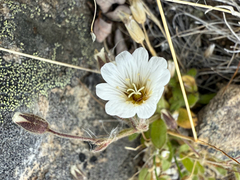 Cerastium arcticum Arctic Mouse-ear Photo: CC BY, Ingvild Riska
 Cerastium banaticum Photo: CC BY-SA, Krzysztof Ziarnek, Kenraiz
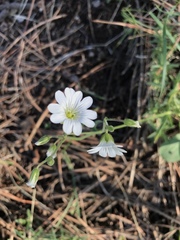 Cerastium elongatum Photo: CC BY, Jared Shorma
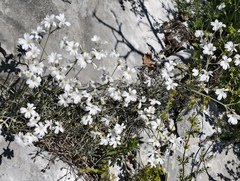 Cerastium grandiflorum Photo: CC BY, fmunoz
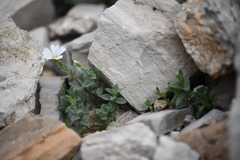 Cerastium latifolium Photo: CC BY, Flavien Saboureau
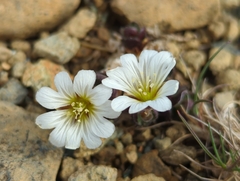 Cerastium nigrescens Shetland Mouse-ear Photo: CC BY, Louis Backstrom
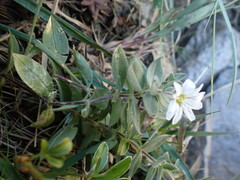 Cerastium pyrenaicum Photo: CC BY, Franck Cabot
- no open photograph on file Cerastium scaranii Italian Mouse-ear
 Cerastium uniflorum One-flowered Mouse-ear Photo: CC BY, Dan Bender
Grown: iNaturalist's observations of the species marked captive or cultivated; "not counted" where the species list does not count it. Native ranges: Kew's World Checklist of Vascular Plants (Govaerts et al., CC BY 4.0), file of 4 June 2026. Grown: iNaturalist's observations marked captive or cultivated, counted 17 October 2026 (the species list's count). Habitat climate known: the species page has a habitat climate, read from CHELSA's monthly climate and NASA POWER's daily extremes at its well-placed wild records inside Kew's native range; each page says its own sources and days. Record low: the lowest night in NASA POWER's daily series at the habitat's typical spot, as the species page gives it, held in °C to a tenth and shown in your units; each page says its own years and day read. Counts as the reference built on 19 November 2026 holds them. The CSV holds every result, not only this page's.