Chamaedorea
28 species in the reference · family Arecaceae · 24 with a habitat climate · 28 grown, per iNaturalist
About the genus
Chamaedorea is a genus of 107 species of palms, native to subtropical and tropical regions of the Americas. They are small palms, growing to 0.3–6 m (1 ft 0 in – 19 ft 8 in) tall with slender, cane-like stems, growing in the understory in rainforests, and often spreading by means of underground runners, forming clonal colonies. The leaves are pinnate (rarely entire), with one to numerous leaflets. The flowers are produced in inflorescences; they are dioecious, with male and female flowers on separate plants. More on Wikipedia
Quoted from Wikipedia, "Chamaedorea", its opening paragraph, revision 1330768308, read 2026-11-08, CC BY-SA 4.0.
Where Chamaedorea is native
| Mexico Gulf | 16 |
|---|---|
| Mexico Southeast | 15 |
| Mexico Southwest | 15 |
| Honduras | 13 |
| Guatemala | 12 |
| Belize | 9 |
| Costa Rica | 6 |
| Mexico Central | 6 |
| Nicaragua | 6 |
| Panama | 5 |
| Colombia | 4 |
| Mexico Northeast | 4 |
Species native to each region. A species counts in every region it is native to. Native ranges: Kew's World Checklist of Vascular Plants (Govaerts et al., CC BY 4.0), file of 4 June 2026.
28 species
Chamaedorea
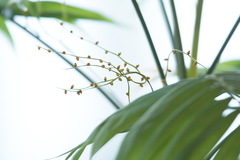 Chamaedorea elegans Parlor palm Photo: CC BY, Вячеслав Юсупов
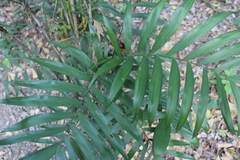 Chamaedorea seifrizii Seifriz's chamaedorea Photo: CC BY, Ricard Busquets Reverte
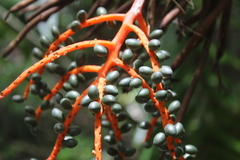 Chamaedorea tepejilote Pacaya palm Photo: CC BY, Ricard Busquets Reverte
 Chamaedorea metallica Metallic palm Photo: Public domain, Chhe
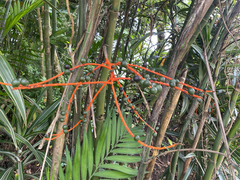 Chamaedorea costaricana Costa Rican bamboo palm Photo: CC BY, Pat Hall
 Chamaedorea cataractarum Cascade palm Photo: CC BY-SA, Krzysztof Ziarnek, Kenraiz
 Chamaedorea microspadix Photo: CC0, Daderot
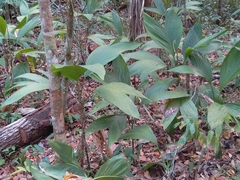 Chamaedorea ernesti-augusti Photo: CC BY, josebarrientos
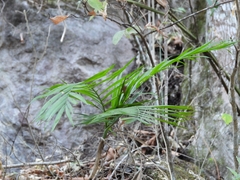 Chamaedorea pochutlensis Photo: CC0, Sinaloa Silvestre
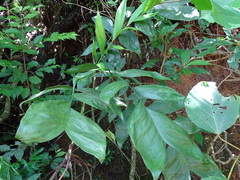 Chamaedorea pinnatifrons Photo: CC BY, Alexis López Hernández
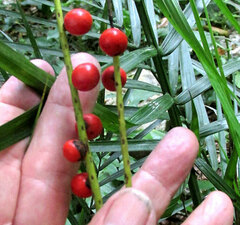 Chamaedorea radicalis Photo: CC0, Jim
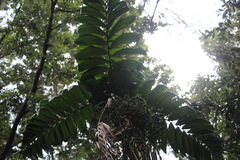 Chamaedorea linearis Photo: CC BY, Andrés Ramírez-Barrera
- no open photograph on file Chamaedorea brachypoda
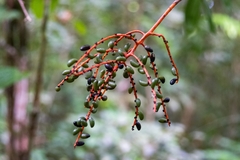 Chamaedorea oblongata Photo: CC BY, José Javier Barrios Flores
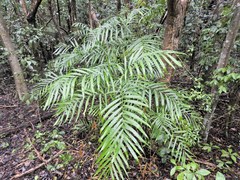 Chamaedorea hooperiana Photo: CC BY, Tom Field
- no open photograph on file Chamaedorea plumosa
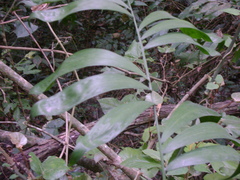 Chamaedorea klotzschiana Photo: CC BY, Tereso Hernández Morales
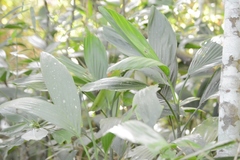 Chamaedorea stolonifera Photo: CC BY, Neptalí Ramírez Marcial
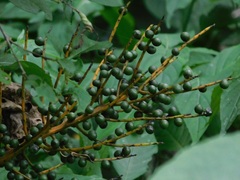 Chamaedorea glaucifolia Photo: CC BY, Neptalí Ramírez Marcial
 Chamaedorea alternans Photo: CC BY-SA, User:Carstor
 Chamaedorea geonomiformis Photo: CC BY, Neptalí Ramírez Marcial
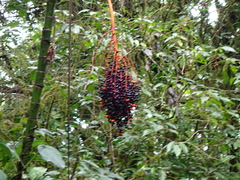 Chamaedorea woodsoniana Photo: CC0, Lynn Harper
- no open photograph on file Chamaedorea atrovirens
 Chamaedorea oreophila Photo: CC BY-SA, David J. Stang
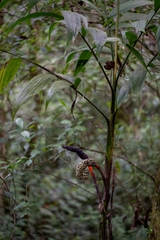 Chamaedorea arenbergiana Photo: CC BY, José Javier Barrios Flores
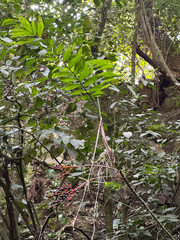 Chamaedorea sartorii Photo: CC BY, Peter Quakenbush
 Chamaedorea elatior Photo: CC BY-SA, KATHERINE WAGNER-REISS
- no open photograph on file Chamaedorea graminifolia
Grown: iNaturalist's observations of the species marked captive or cultivated; "not counted" where the species list does not count it. Native ranges: Kew's World Checklist of Vascular Plants (Govaerts et al., CC BY 4.0), file of 4 June 2026. Grown: iNaturalist's observations marked captive or cultivated, counted 17 October 2026 (the species list's count). Habitat climate known: the species page has a habitat climate, read from CHELSA's monthly climate and NASA POWER's daily extremes at its well-placed wild records inside Kew's native range; each page says its own sources and days. Record low: the lowest night in NASA POWER's daily series at the habitat's typical spot, as the species page gives it, held in °C to a tenth and shown in your units; each page says its own years and day read. Counts as the reference built on 19 November 2026 holds them. The CSV holds every result, not only this page's.