Commersonia
6 species in the reference · family Malvaceae · 6 with a habitat climate · 6 grown, per iNaturalist
About the genus
Commersonia is a genus of twenty-five species of flowering plants in the family Malvaceae. Plants in this genus are shrubs or trees, occurring from Indochina to Australia and have stems, leaves and flowers covered with star-like hairs. The leaves are simple, often with irregularly-toothed edges, the flowers bisexual with five sepals, five petals and five stamens and the fruit a capsule with five valves. The genus underwent a revision in 2011 and some species were separated from Commersonia, others were added from Rulingia.
Quoted from Wikipedia, "Commersonia", its opening paragraph, revision 1311253100, read 2026-11-08, CC BY-SA 4.0.
Where Commersonia is native
| New South Wales | 4 |
|---|---|
| Queensland | 3 |
| Western Australia | 2 |
| Bismarck Archipelago | 1 |
| Borneo | 1 |
| Cambodia | 1 |
| Caroline Is. | 1 |
| China South-Central | 1 |
| China Southeast | 1 |
| Fiji | 1 |
| Hainan | 1 |
| Jawa | 1 |
Species native to each region. A species counts in every region it is native to. Native ranges: Kew's World Checklist of Vascular Plants (Govaerts et al., CC BY 4.0), file of 4 June 2026.
6 species
Commersonia
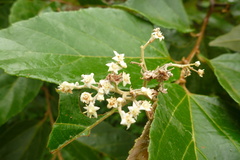 Commersonia bartramia Brown kurrajong Photo: CC BY, coenobita
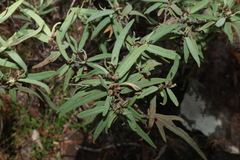 Commersonia salviifolia Sal-leaved commersonia Photo: CC BY-SA, Greg Tasney
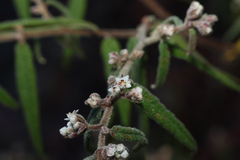 Commersonia dasyphylla Kerrawang Photo: CC BY-SA, Greg Tasney
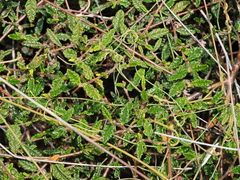 Commersonia hermanniifolia Wrinkled kerrawang Photo: CC BY, Thomas Mesaglio
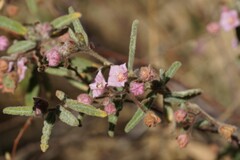 Commersonia magniflora Photo: CC BY, Rod Lowther
 Commersonia erythrogyna Photo: CC BY, Murray Fagg
Grown: iNaturalist's observations of the species marked captive or cultivated; "not counted" where the species list does not count it. Native ranges: Kew's World Checklist of Vascular Plants (Govaerts et al., CC BY 4.0), file of 4 June 2026. Grown: iNaturalist's observations marked captive or cultivated, counted 17 October 2026 (the species list's count). Habitat climate known: the species page has a habitat climate, read from CHELSA's monthly climate and NASA POWER's daily extremes at its well-placed wild records inside Kew's native range; each page says its own sources and days. Record low: the lowest night in NASA POWER's daily series at the habitat's typical spot, as the species page gives it, held in °C to a tenth and shown in your units; each page says its own years and day read. Counts as the reference built on 19 November 2026 holds them. The CSV holds every result, not only this page's.