Cryptocarya
17 species in the reference · family Lauraceae · 15 with a habitat climate · 17 grown, per iNaturalist
About the genus
Cryptocarya is a genus of about 360 species of flowering plants in the laurel family, Lauraceae. Most species are trees, occasionally shrubs, distributed through the Neotropical, Afrotropical, Indomalayan, and Australasian realms. Most plants in the genus Cryptocarya have leaves arranged alternately along the stems, small flowers with 6 tepals, stamens in 2 rows, the inner row alternating with staminodes, and the fruit is a drupe.
Quoted from Wikipedia, "Cryptocarya", its opening paragraph, revision 1288391055, read 2026-11-08, CC BY-SA 4.0.
Where Cryptocarya is native
| New South Wales | 10 |
|---|---|
| Queensland | 10 |
| Taiwan | 3 |
| Cape Provinces | 2 |
| China South-Central | 2 |
| China Southeast | 2 |
| Hainan | 2 |
| KwaZulu-Natal | 2 |
| New Guinea | 2 |
| Philippines | 2 |
| Solomon Is. | 2 |
| Sulawesi | 2 |
Species native to each region. A species counts in every region it is native to. Native ranges: Kew's World Checklist of Vascular Plants (Govaerts et al., CC BY 4.0), file of 4 June 2026.
17 species
Cryptocarya
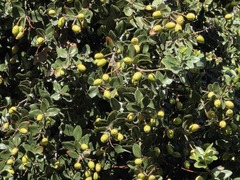 Cryptocarya alba Chilean Acorn Photo: CC BY, Cesar Ormazabal
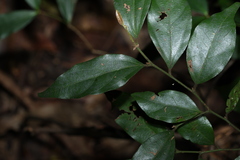 Cryptocarya triplinervis Brown-laurel Photo: CC BY-SA, Greg Tasney
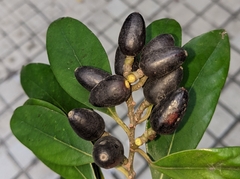 Cryptocarya concinna Photo: CC BY-SA, 許文俊
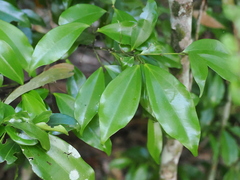 Cryptocarya laevigata Glossy laurel Photo: CC BY, Lucas Christofides
- no open photograph on file Cryptocarya elliptifolia
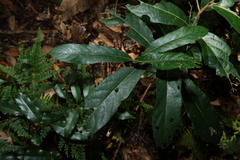 Cryptocarya obovata White-walnut Photo: CC BY-SA, Greg Tasney
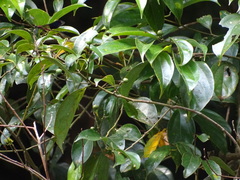 Cryptocarya chinensis Photo: CC BY, 呂一起(Lyu yi-chi)
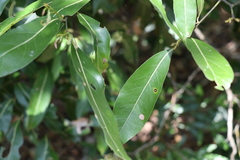 Cryptocarya microneura Brown jack Photo: CC BY-SA, Greg Tasney
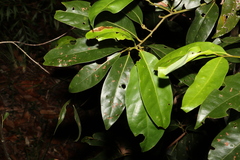 Cryptocarya glaucescens Bolly-laurel Photo: CC BY-SA, Greg Tasney
 Cryptocarya latifolia Broad-leaved Wild-quince Photo: CC BY, Mahomed Desai
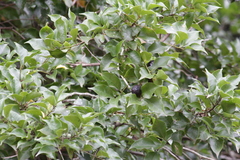 Cryptocarya woodii Bastard Camphor Tree Photo: CC BY, Mahomed Desai
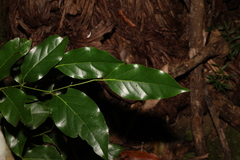 Cryptocarya erythroxylon Pigeonberry-ash Photo: CC BY-SA, Greg Tasney
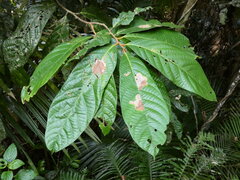 Cryptocarya mackinnoniana Mackinnon's Laurel Photo: CC BY-SA, Steve Fitzgerald
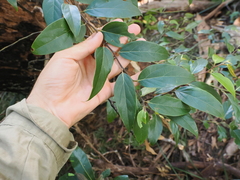 Cryptocarya rigida Forest-maple Photo: CC BY, Lucas Christofides
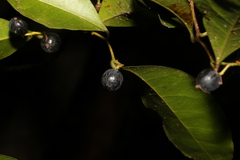 Cryptocarya sclerophylla Totempole Photo: CC BY-SA, Greg Tasney
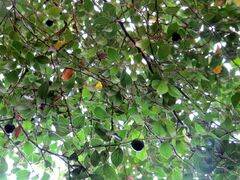 Cryptocarya williwilliana Small-leaved laurel Photo: CC BY, ian_mcallan
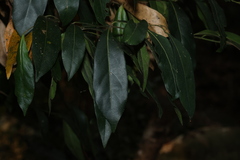 Cryptocarya foetida Stinking cryptocarya Photo: CC BY-SA, Greg Tasney
Grown: iNaturalist's observations of the species marked captive or cultivated; "not counted" where the species list does not count it. Native ranges: Kew's World Checklist of Vascular Plants (Govaerts et al., CC BY 4.0), file of 4 June 2026. Grown: iNaturalist's observations marked captive or cultivated, counted 17 October 2026 (the species list's count). Habitat climate known: the species page has a habitat climate, read from CHELSA's monthly climate and NASA POWER's daily extremes at its well-placed wild records inside Kew's native range; each page says its own sources and days. Record low: the lowest night in NASA POWER's daily series at the habitat's typical spot, as the species page gives it, held in °C to a tenth and shown in your units; each page says its own years and day read. Counts as the reference built on 19 November 2026 holds them. The CSV holds every result, not only this page's.