Cytisus
15 species in the reference · family Fabaceae · 15 with a habitat climate · 14 grown, per iNaturalist, 1 not counted
About the genus
Cytisus is a genus of flowering plants in the family Fabaceae, native to open sites (typically scrub and heathland) in Europe, western Asia and North Africa. It belongs to the subfamily Faboideae, and is one of several genera in the tribe Genisteae which are commonly called brooms. They are shrubs producing masses of brightly coloured, pea-like flowers, often highly fragrant. Members of the segregate genera Calicotome, Chamaecytisus, and Lembotropis are sometimes included in Cytisus.
Quoted from Wikipedia, "Cytisus", its opening paragraph, revision 1354820621, read 2026-11-08, CC BY-SA 4.0.
Where Cytisus is native
| Spain | 10 |
|---|---|
| Morocco | 6 |
| Portugal | 6 |
| France | 5 |
| Greece | 5 |
| Italy | 5 |
| Yugoslavia | 5 |
| Albania | 4 |
| Algeria | 4 |
| Switzerland | 4 |
| Austria | 3 |
| Bulgaria | 3 |
Species native to each region. A species counts in every region it is native to. Native ranges: Kew's World Checklist of Vascular Plants (Govaerts et al., CC BY 4.0), file of 4 June 2026.
15 species
Cytisus
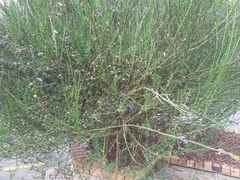 Cytisus scoparius Scotch broom Photo: CC BY, leonlobo
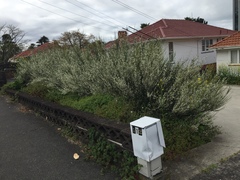 Cytisus multiflorus White broom Photo: CC BY, Stephen Thorpe
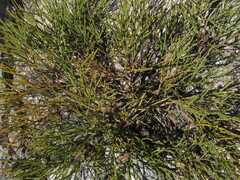 Cytisus oromediterraneus Pyrenean broom Photo: CC BY, zebedeugalinha
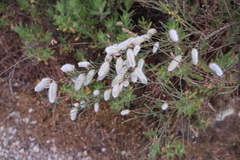 Cytisus striatus Hairy-fruited broom Photo: CC BY, zebedeugalinha
 Cytisus nigricans Black broom Photo: CC BY, Conrad Altmann
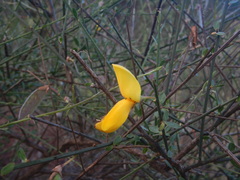 Cytisus grandiflorus Photo: CC BY, Duarte Frade
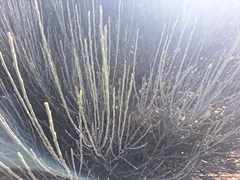 Cytisus supranubius Teide Broom Photo: CC BY-SA, Kaydee Barker
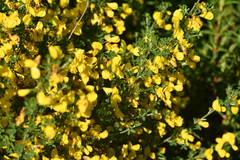 Cytisus arboreus Spanish Tree Broom Photo: CC BY, Flavien Saboureau
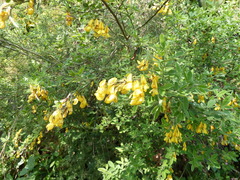 Cytisus villosus Hairybroom Photo: CC BY, aroche
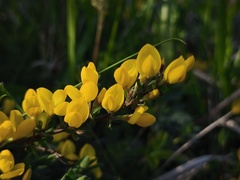 Cytisus decumbens Photo: CC BY, arthur_haendler
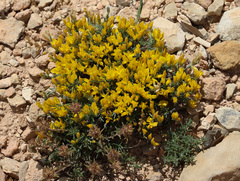 Cytisus balansae Photo: CC BY, Joey Bom
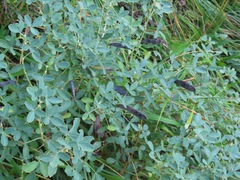 Cytisus emeriflorus Photo: CC BY, Marco Mussita
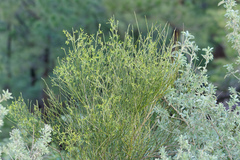 Cytisus filipes Photo: CC BY, Donald Davesne
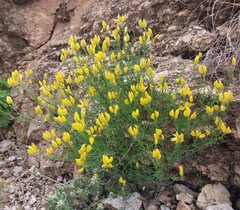 Cytisus fontanesii Photo: CC BY, Juan García
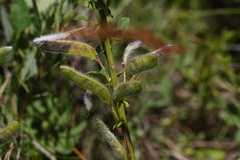 Cytisus procumbens Photo: CC BY, Skjold Søndergaard
Grown: iNaturalist's observations of the species marked captive or cultivated; "not counted" where the species list does not count it. Native ranges: Kew's World Checklist of Vascular Plants (Govaerts et al., CC BY 4.0), file of 4 June 2026. Grown: iNaturalist's observations marked captive or cultivated, counted 17 October 2026 (the species list's count). Habitat climate known: the species page has a habitat climate, read from CHELSA's monthly climate and NASA POWER's daily extremes at its well-placed wild records inside Kew's native range; each page says its own sources and days. Record low: the lowest night in NASA POWER's daily series at the habitat's typical spot, as the species page gives it, held in °C to a tenth and shown in your units; each page says its own years and day read. Counts as the reference built on 19 November 2026 holds them. The CSV holds every result, not only this page's.