Diplacus
17 species in the reference · family Phrymaceae · 17 with a habitat climate · 16 grown, per iNaturalist, 1 not counted
About the genus
Diplacus is a genus of flowering plants in the family Phrymaceae, which was traditionally placed in family Scrophulariaceae. It includes 49 species native to the western United States and northwestern Mexico. Most prefer dry and rocky areas.
Quoted from Wikipedia, "Diplacus", its opening paragraph, revision 1370047455, read 2026-11-08, CC BY-SA 4.0.
Where Diplacus is native
| California | 17 |
|---|---|
| Mexico Northwest | 7 |
| Oregon | 2 |
| Arizona | 1 |
| Nevada | 1 |
| Utah | 1 |
Species native to each region. A species counts in every region it is native to. Native ranges: Kew's World Checklist of Vascular Plants (Govaerts et al., CC BY 4.0), file of 4 June 2026.
17 species
Diplacus
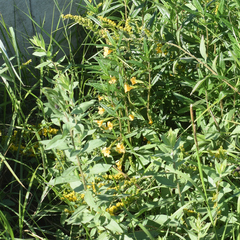 Diplacus aurantiacus Orange bush monkey-flower Photo: CC0, Anne Parsons
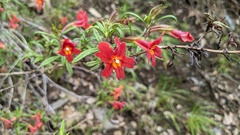 Diplacus puniceus Red bush monkeyflower Photo: CC0, Andy Kleinhesselink
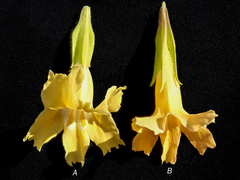 Diplacus longiflorus Southern bush monkeyflower Photo: CC BY, Jason Schock
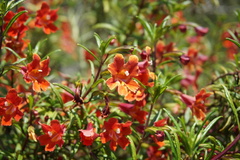 Diplacus × australis Photo: CC0, Jasper Shide
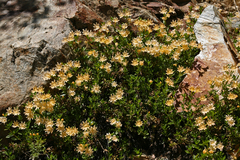 Diplacus grandiflorus Largeflower bush monkeyflower Photo: CC BY, Steve Matson
 Diplacus linearis Chaparral bush monkeyflower Photo: CC BY, Ken-ichi Ueda
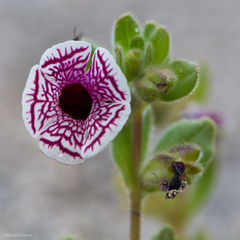 Diplacus pictus Calico monkeyflower Photo: CC BY, Ken-ichi Ueda
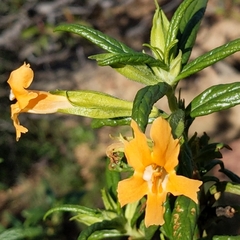 Diplacus calycinus Kaweah River bush monkeyflower Photo: CC0, Vasily Reinkymov
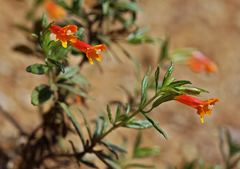 Diplacus parviflorus Island bush monkeyflower Photo: CC BY, Steve Matson
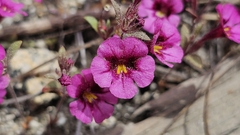 Diplacus bicolor Harlequin monkeyflower Photo: CC BY, Chris Winchell
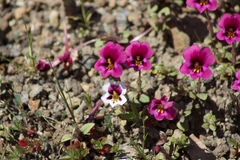 Diplacus kelloggii Kellogg's monkeyflower Photo: CC BY-SA, Arvel Hernandez
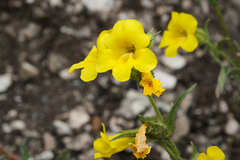 Diplacus brevipes Wide-throat yellow monkey-flower Photo: CC BY, Shawn O'Donnell
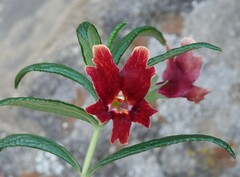 Diplacus rutilus Photo: CC BY, nmoorhatch
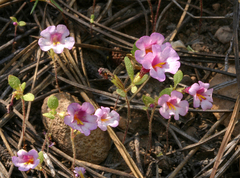 Diplacus torreyi Torrey's monkeyflower Photo: CC BY, Steve Matson
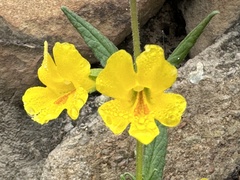 Diplacus clevelandii Cleveland's bush monkeyflower Photo: CC BY, Eric Alan Isaacson
 Diplacus aridus San Diego bush monkeyflower Photo: CC BY, Trevor Van Loon
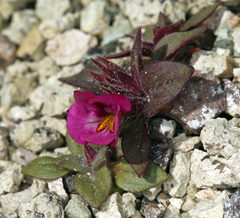 Diplacus bigelovii Bigelow's monkeyflower Photo: CC BY, Steve Matson
Grown: iNaturalist's observations of the species marked captive or cultivated; "not counted" where the species list does not count it. Native ranges: Kew's World Checklist of Vascular Plants (Govaerts et al., CC BY 4.0), file of 4 June 2026. Grown: iNaturalist's observations marked captive or cultivated, counted 17 October 2026 (the species list's count). Habitat climate known: the species page has a habitat climate, read from CHELSA's monthly climate and NASA POWER's daily extremes at its well-placed wild records inside Kew's native range; each page says its own sources and days. Record low: the lowest night in NASA POWER's daily series at the habitat's typical spot, as the species page gives it, held in °C to a tenth and shown in your units; each page says its own years and day read. Counts as the reference built on 19 November 2026 holds them. The CSV holds every result, not only this page's.