Dudleya
52 species in the reference · family Crassulaceae · 40 with a habitat climate · 33 grown, per iNaturalist, 19 not counted
About the genus
Dudleya, commonly known as liveforevers, is a genus of rosette-forming succulent plants in the stonecrop family, Crassulaceae, consisting of about ~70 taxa found in southwestern North America and Guadalupe Island. The genus is very morphologically diverse, with species ranging from large evergreen plants to tiny deciduous geophytic plants. The flowers of Dudleya have parts numbered in fives, with the petals arranged in tubular, star-shaped, or bell-shaped forms and, when fruiting, are filled with tiny, crescent-shaped seeds.
Quoted from Wikipedia, "Dudleya", its opening paragraph, revision 1359543311, read 2026-11-08, CC BY-SA 4.0.
Where Dudleya is native
| Mexico Northwest | 33 |
|---|---|
| California | 27 |
| Arizona | 2 |
| Mexican Pacific Is. | 2 |
| Nevada | 1 |
| Oregon | 1 |
| Utah | 1 |
Species native to each region. A species counts in every region it is native to. Native ranges: Kew's World Checklist of Vascular Plants (Govaerts et al., CC BY 4.0), file of 4 June 2026.
52 species
Dudleya
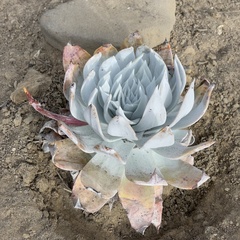 Dudleya brittonii Britton's Dudleya Photo: CC BY, Bill Levine
 Dudleya virens Bright green dudleya Photo: CC BY, Amy
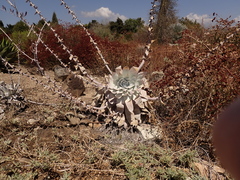 Dudleya pulverulenta Chalk dudleya Photo: CC BY-SA, Andrew Hankey
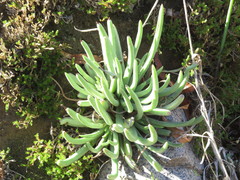 Dudleya edulis Ladies Fingers Photo: CC BY, Millie Basden
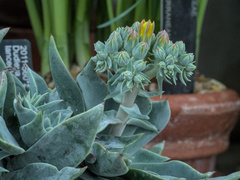 Dudleya lanceolata Lanceleaf liveforever Photo: CC BY, Daniel Cahen
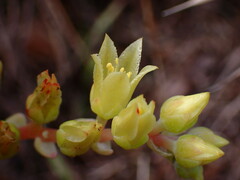 Dudleya farinosa Bluff Lettuce Photo: CC BY, Cricket Raspet
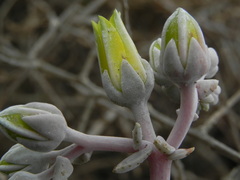 Dudleya cespitosa Sand lettuce Photo: CC BY-SA, James C. Davis
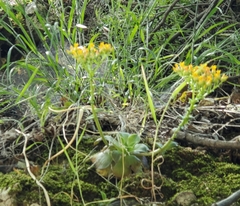 Dudleya cymosa Canyon liveforever Photo: CC0, Dan Horowitz
 Dudleya attenuata Tapertip liveforever Photo: CC BY, Alan Rockefeller
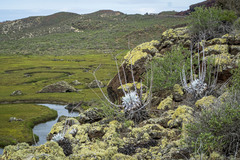 Dudleya anthonyi Anthony's liveforever Photo: CC BY-SA, James C. Davis
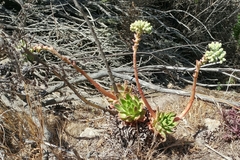 Dudleya greenei Greene's dudleya Photo: CC BY, Casey H. Richart
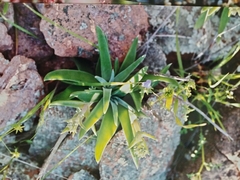 Dudleya saxosa Panamint liveforever Photo: CC BY, runcator
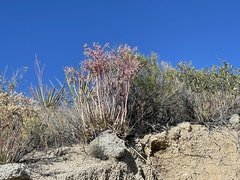 Dudleya ingens Baja Liveforever Photo: CC BY, Sula Vanderplank
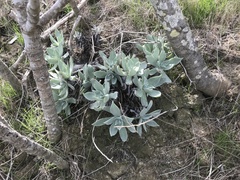 Dudleya traskiae Santa Barbara Island dudleya Photo: CC BY, Adam J. Searcy
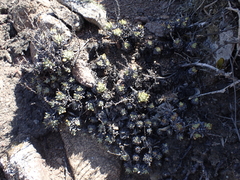 Dudleya anomala Todos Santos liveforever Photo: CC BY-SA, Andrew Hankey
 Dudleya brevifolia Photo: CC BY-SA, James C. Davis
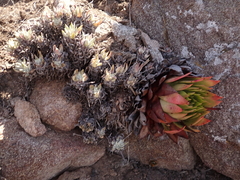 Dudleya josedelgadilloi Photo: CC BY-SA, Andrew Hankey
 Dudleya viscida Sticky Dudleya Photo: CC BY, sdash
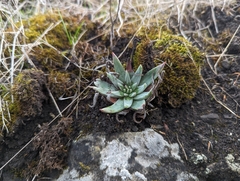 Dudleya abramsii Abrams' liveforever Photo: CC BY, Alexander Wentworth
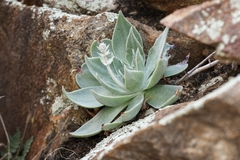 Dudleya arizonica Arizona chalk dudleya Photo: CC BY, Evrytte Carlson
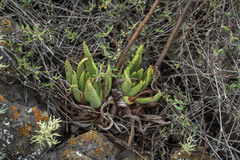 Dudleya cultrata Succulent Maritime Liveforever Photo: CC BY-SA, James C. Davis
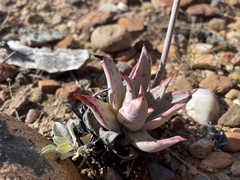 Dudleya gatesii Gates' Liveforever Photo: CC BY, Mike Butler
- no open photograph on file Dudleya × semiteres
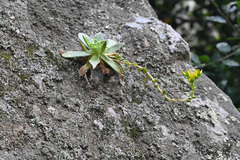 Dudleya stolonifera Laguna Beach dudleya Photo: CC BY, Trevor Van Loon
 Dudleya gnoma Photo: CC BY-SA, Toyonbro
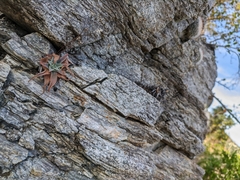 Dudleya nubigena Photo: CC BY-SA, James C. Davis
 Dudleya palmeri Palmer's dudleya Photo: CC BY-SA, paulexcoff
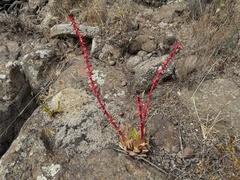 Dudleya reidmoranii Photo: CC BY, wonton_soup
 Dudleya verityi Verity dudleya Photo: CC BY-SA, James C. Davis
 Dudleya candelabrum Candleholder dudleya Photo: CC BY, James M. Maley
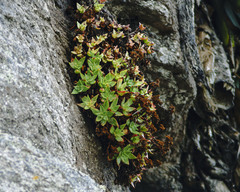 Dudleya formosa La Mision Liveforever Photo: CC BY-SA, James C. Davis
 Dudleya pachyphytum Cedros Liveforever Photo: CC0, Toyonbro
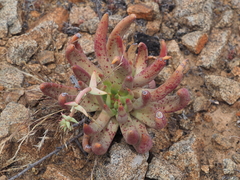 Dudleya albiflora White-Flower Liveforever Photo: CC BY, Rosario Douglas
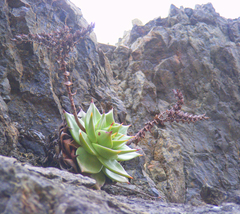 Dudleya acuminata Vizcaino Dudleya Photo: CC BY, MarvalPhotography19
 Dudleya blochmaniae Blochman's liveforever Photo: CC0, Kyle Nessen
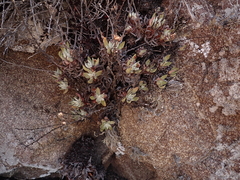 Dudleya campanulata Punta Banda liveforever Photo: CC BY-SA, Andrew Hankey
 Dudleya candida Coronados liveforever Photo: CC0, Toyonbro
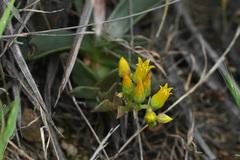 Dudleya chasmophyta Photo: CC BY, Trevor Van Loon
 Dudleya cochimiana Photo: CC BY, Tom Wainwright
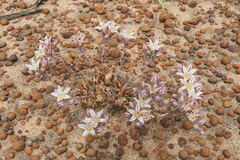 Dudleya crassifolia Thick-Leaf Dudleya Photo: CC BY-SA, Grigory Heaton
- no open photograph on file Dudleya delgadilloi
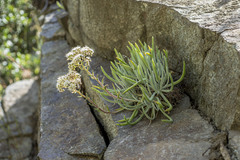 Dudleya densiflora San Gabriel Mountains dudleya Photo: CC BY-SA, James C. Davis
 Dudleya guadalupensis Guadalupe Dudleya Photo: CC0, Toyonbro
 Dudleya hendrixii Hendrix's Liveforever Photo: CC BY-SA, MDodero
 Dudleya linearis San Benitos Liveforever Photo: CC0, steve b
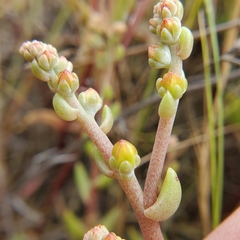 Dudleya multicaulis Many-stemmed liveforever Photo: CC0, John Cowles
 Dudleya nesiotica Santa Cruz Island dudleya Photo: CC BY, Steve Matson
 Dudleya parva Conejo dudleya Photo: CC BY, Zack Abbey
Grown: iNaturalist's observations of the species marked captive or cultivated; "not counted" where the species list does not count it. Native ranges: Kew's World Checklist of Vascular Plants (Govaerts et al., CC BY 4.0), file of 4 June 2026. Grown: iNaturalist's observations marked captive or cultivated, counted 17 October 2026 (the species list's count). Habitat climate known: the species page has a habitat climate, read from CHELSA's monthly climate and NASA POWER's daily extremes at its well-placed wild records inside Kew's native range; each page says its own sources and days. Record low: the lowest night in NASA POWER's daily series at the habitat's typical spot, as the species page gives it, held in °C to a tenth and shown in your units; each page says its own years and day read. Counts as the reference built on 19 November 2026 holds them. The CSV holds every result, not only this page's.