Erigeron
68 species in the reference · family Asteraceae · 67 with a habitat climate · 58 grown, per iNaturalist, 10 not counted
About the genus
Erigeron is a large genus of plants in the composite family (Asteraceae). It is placed in the tribe Astereae and is closely related to the Old World asters (Aster) and the true daisies (Bellis). The genus has a cosmopolitan distribution, and the highest diversity occurs in North America.
Quoted from Wikipedia, "Erigeron", its opening paragraph, revision 1380142431, read 2026-11-08, CC BY-SA 4.0.
Where Erigeron is native
| Oregon | 27 |
|---|---|
| Wyoming | 25 |
| Colorado | 24 |
| Idaho | 23 |
| New Mexico | 22 |
| Utah | 22 |
| California | 21 |
| Washington | 21 |
| British Columbia | 20 |
| Alberta | 19 |
| Montana | 19 |
| Nevada | 17 |
Species native to each region. A species counts in every region it is native to. Native ranges: Kew's World Checklist of Vascular Plants (Govaerts et al., CC BY 4.0), file of 4 June 2026.
68 species
Erigeron
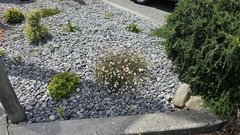 Erigeron karvinskianus Mexican fleabane Photo: CC0, Henry Hart
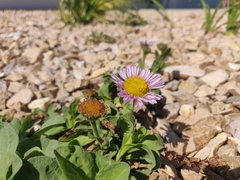 Erigeron glaucus Seaside daisy Photo: CC BY, Alexander Wentworth
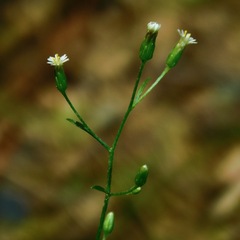 Erigeron canadensis Canadian fleabane Photo: CC BY, Michael J. Papay
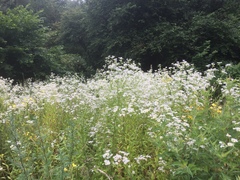 Erigeron annuus Tall fleabane Photo: CC BY, Andre Hosper
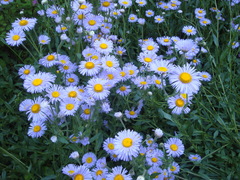 Erigeron speciosus Aspen fleabane Photo: CC BY, Oleksandr Shynder
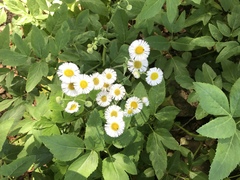 Erigeron philadelphicus Philadelphia fleabane Photo: CC0, Yann Kemper
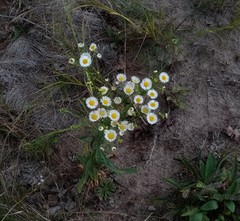 Erigeron strigosus Rough fleabane Photo: CC BY, Oleksandr Shynder
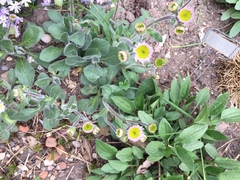 Erigeron pulchellus Robin's plantain Photo: CC BY, aberkov
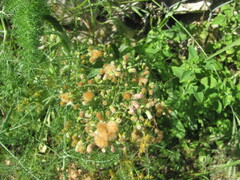 Erigeron sumatrensis Tall fleabane Photo: CC BY, zebedeugalinha
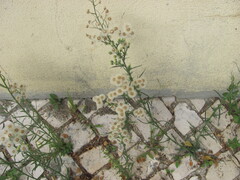 Erigeron bonariensis Argentine fleabane Photo: CC BY, zebedeugalinha
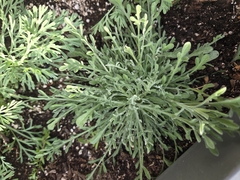 Erigeron divergens Diffuse fleabane Photo: CC0, Tessa L.
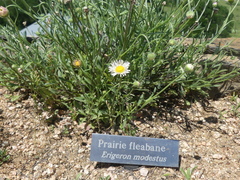 Erigeron modestus Plains fleabane Photo: CC BY, Morgan Hay
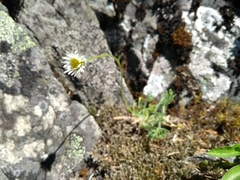 Erigeron compositus Dwarf mountain fleabane Photo: CC0, agbelliveau
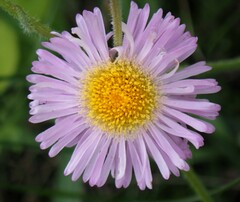 Erigeron glabellus Streamside fleabane Photo: CC BY, mfeaver
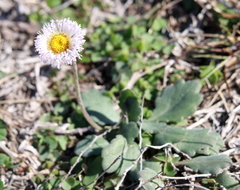 Erigeron procumbens Corpus Christi fleabane Photo: CC BY, Lauren McLaurin
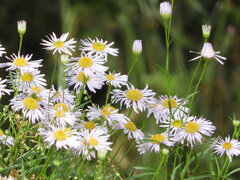 Erigeron foliosus Leafy fleabane Photo: CC BY, Mary K. Hanson
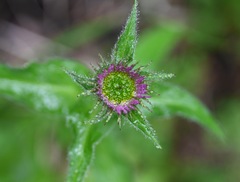 Erigeron peregrinus Wandering fleabane Photo: CC BY, Amber M. King
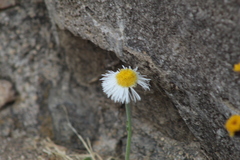 Erigeron longipes Photo: CC0, demianlescano
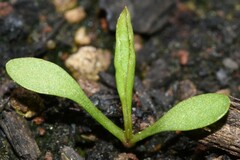 Erigeron glacialis Subalpine fleabane Photo: CC BY, Gabriel Campbell-Martinez
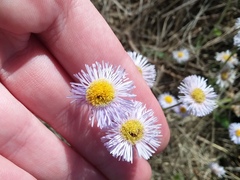 Erigeron quercifolius Oakleaf fleabane Photo: CC0, Nonbinary-Naturalist
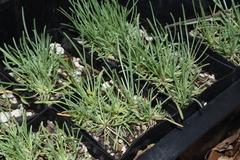 Erigeron linearis Desert yellow fleabane Photo: CC BY, Gabriel Campbell-Martinez
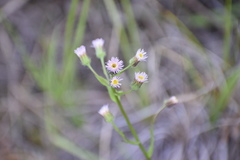 Erigeron acris Blue fleabane Photo: CC BY, Syd Cannings
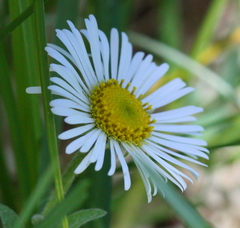 Erigeron coulteri Coulter's fleabane Photo: CC0, Scott Loarie
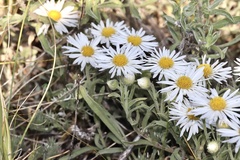 Erigeron caespitosus Tufted fleabane Photo: CC BY, Dustin Snider
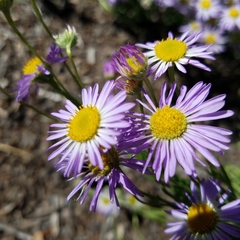 Erigeron decumbens Willamette fleabane Photo: CC0, Ellen Watrous
- no open photograph on file Erigeron darwinii
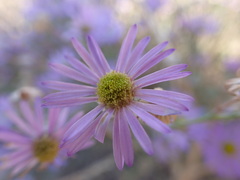 Erigeron filifolius Threadleaf fleabane Photo: CC BY, Chris Fluit
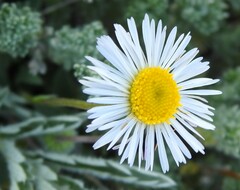 Erigeron flagellaris Running fleabane Photo: CC BY, saltyhiker
 Erigeron vernus Early whitetop fleabane Photo: CC BY, aispinsects
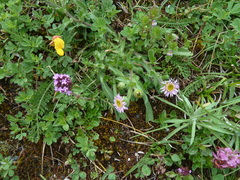 Erigeron alpinus Alpine fleabane Photo: CC BY, aroche
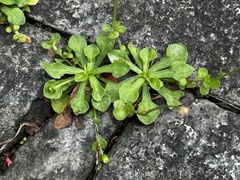 Erigeron bellioides Bellorita Photo: CC BY, scallions
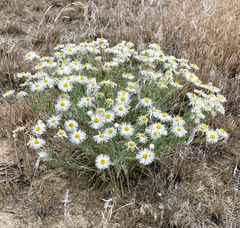 Erigeron pumilus Shaggy fleabane Photo: CC0, Elin Pierce
 Erigeron aphanactis Rayless shaggy fleabane Photo: CC BY, Matt Berger
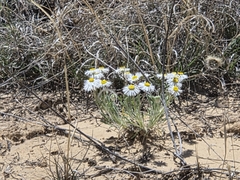 Erigeron concinnus Navajo fleabane Photo: CC0, Craig Martin
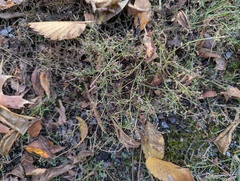 Erigeron divaricatus Dwarf horseweed Photo: CC BY, Ryan Sorrells
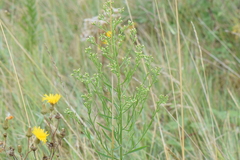 Erigeron floribundus Bilbao fleabane Photo: CC0, Robert H. Wardell
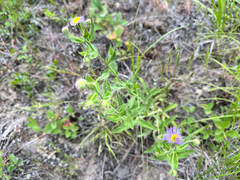 Erigeron subtrinervis Three-nerve Fleabane Photo: CC0, Daryl Nolan
- no open photograph on file Erigeron calderae
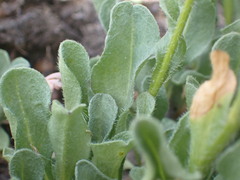 Erigeron flettii Flett's fleabane Photo: CC BY, elik03
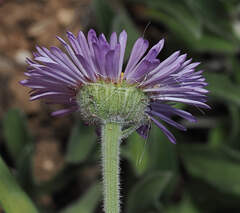 Erigeron formosissimus Beautiful fleabane Photo: CC BY, Wendy McCrady
 Erigeron poliospermus Purple cushion fleabane Photo: CC0, dougbrown
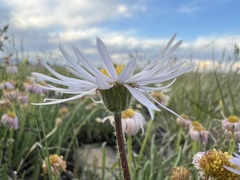 Erigeron vetensis Early bluetop fleabane Photo: CC BY, Jared Shorma
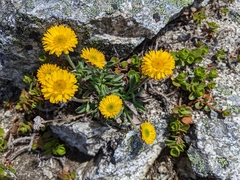 Erigeron aureus Alpine yellow fleabane Photo: CC BY, Sandy Robertson
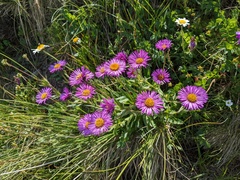 Erigeron caucasicus Photo: CC BY, Yuri Sofronov
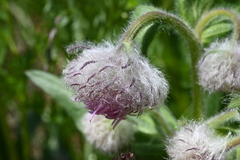 Erigeron elatior Tall fleabane Photo: CC BY, Anders Hastings
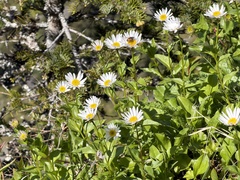 Erigeron howellii Howell's Daisy Photo: CC BY, Dee Shea Himes
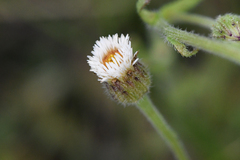 Erigeron lonchophyllus Low meadow fleabane Photo: CC BY, Trevor Van Loon
 Erigeron scopulinus Winn Falls fleabane Photo: CC BY-SA, Ghislain118…
Grown: iNaturalist's observations of the species marked captive or cultivated; "not counted" where the species list does not count it. Native ranges: Kew's World Checklist of Vascular Plants (Govaerts et al., CC BY 4.0), file of 4 June 2026. Grown: iNaturalist's observations marked captive or cultivated, counted 17 October 2026 (the species list's count). Habitat climate known: the species page has a habitat climate, read from CHELSA's monthly climate and NASA POWER's daily extremes at its well-placed wild records inside Kew's native range; each page says its own sources and days. Record low: the lowest night in NASA POWER's daily series at the habitat's typical spot, as the species page gives it, held in °C to a tenth and shown in your units; each page says its own years and day read. Counts as the reference built on 19 November 2026 holds them. The CSV holds every result, not only this page's.