Helleborus
15 species in the reference · family Ranunculaceae · 14 with a habitat climate · 14 grown, per iNaturalist, 1 not counted
About the genus
Commonly known as hellebores, the Eurasian genus Helleborus consists of approximately 20 species of herbaceous or evergreen perennial flowering plants in the family Ranunculaceae, within which it gave its name to the tribe of Helleboreae. Many hellebore species are poisonous.
Quoted from Wikipedia, "Hellebore", its opening paragraph, revision 1378434340, read 2026-11-08, CC BY-SA 4.0.
Where Helleborus is native
| Yugoslavia | 8 |
|---|---|
| Italy | 5 |
| Albania | 4 |
| Austria | 3 |
| Germany | 3 |
| Hungary | 3 |
| Romania | 3 |
| Switzerland | 3 |
| Baleares | 2 |
| Belgium | 2 |
| Bulgaria | 2 |
| Corse | 2 |
Species native to each region. A species counts in every region it is native to. Native ranges: Kew's World Checklist of Vascular Plants (Govaerts et al., CC BY 4.0), file of 4 June 2026.
15 species
Helleborus
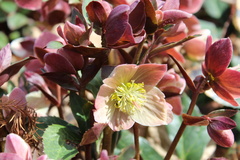 Helleborus orientalis Lenten-rose Photo: CC BY, L.J. Lamera
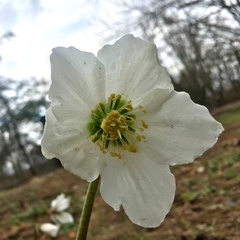 Helleborus niger Christmas-rose Photo: CC BY, Kai Löhr
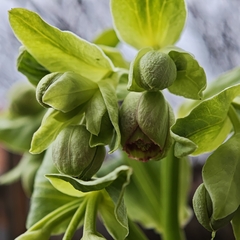 Helleborus foetidus Stinking hellebore Photo: CC BY, Evelyn Gussmann
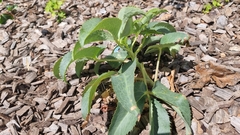 Helleborus argutifolius Corsican Hellebore Photo: CC BY, Julien Lepage
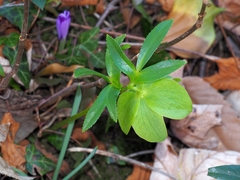 Helleborus viridis Green hellebore Photo: CC BY, olrett
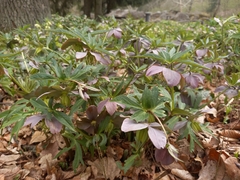 Helleborus purpurascens Purple-flowered Christmas Rose Photo: CC BY, lekhaim katalpa
 Helleborus lividus Majorcan Hellebore Photo: CC BY, KENPEI
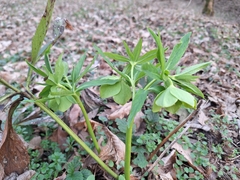 Helleborus odorus Sweet-scented Hellebore Photo: CC BY, Dávid Horváth
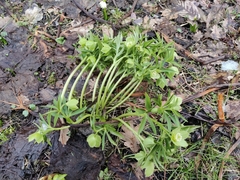 Helleborus dumetorum Green-flowered hellebore Photo: CC BY, ivica_cvrtila
 Helleborus thibetanus Photo: CC BY, zhangshen
 Helleborus multifidus Photo: CC0, Nico
 Helleborus cyclophyllus Photo: CC BY, Todd Boland
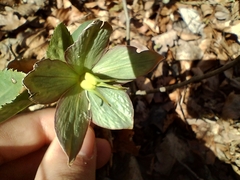 Helleborus atrorubens Photo: CC BY, Karlo Ostojcic
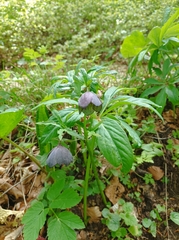 Helleborus torquatus Photo: CC BY, Manfred Kolbacher
 Helleborus vesicarius Photo: CC BY-SA, Zeynel Cebeci
Grown: iNaturalist's observations of the species marked captive or cultivated; "not counted" where the species list does not count it. Native ranges: Kew's World Checklist of Vascular Plants (Govaerts et al., CC BY 4.0), file of 4 June 2026. Grown: iNaturalist's observations marked captive or cultivated, counted 17 October 2026 (the species list's count). Habitat climate known: the species page has a habitat climate, read from CHELSA's monthly climate and NASA POWER's daily extremes at its well-placed wild records inside Kew's native range; each page says its own sources and days. Record low: the lowest night in NASA POWER's daily series at the habitat's typical spot, as the species page gives it, held in °C to a tenth and shown in your units; each page says its own years and day read. Counts as the reference built on 19 November 2026 holds them. The CSV holds every result, not only this page's.