Lippia
12 species in the reference · family Verbenaceae · 12 with a habitat climate · 12 grown, per iNaturalist
About the genus
Lippia is a genus of flowering plants in the verbena family, Verbenaceae. It was named after Augustin Lippi (1678–1705), a French-Italian naturalist and botanist. The genus contains roughly 200 species of tropical shrubs that are found around the world. Plants are fragrant due to their essential oils, which vary between species but may include estragole, carvacrol, linalool or limonene. More on Wikipedia
Quoted from Wikipedia, "Lippia", its opening paragraph, revision 1353142183, read 2026-11-08, CC BY-SA 4.0.
Where Lippia is native
| Honduras | 6 |
|---|---|
| Mexico Southwest | 6 |
| Nicaragua | 6 |
| Venezuela | 6 |
| Belize | 5 |
| Colombia | 5 |
| Costa Rica | 5 |
| Guatemala | 5 |
| Mexico Gulf | 5 |
| Mexico Northeast | 5 |
| Mexico Northwest | 5 |
| Mexico Southeast | 5 |
Species native to each region. A species counts in every region it is native to. Native ranges: Kew's World Checklist of Vascular Plants (Govaerts et al., CC BY 4.0), file of 4 June 2026.
12 species
Lippia
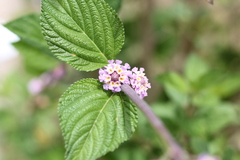 Lippia alba Bushy lippia Photo: CC BY, Larus
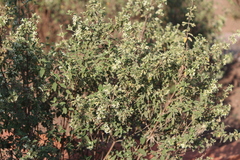 Lippia origanoides Mexican-sage Photo: CC BY, José Belem Hernández Díaz
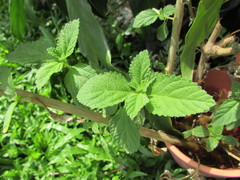 Lippia dulcis Aztec Sweet Herb Photo: CC BY, Guillermo J. Fadul R.
 Lippia micromera Spanish thyme Photo: CC BY, Forest and Kim Starr
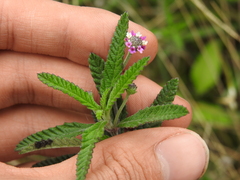 Lippia stoechadifolia Southern frogfruit Photo: CC0, Yann Kemper
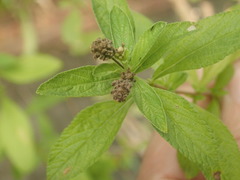 Lippia javanica Lemonbush Photo: CC BY-SA, Nanna Joubert
 Lippia hirsuta Photo: CC BY, Andrés Ramírez-Barrera
 Lippia turbinata Photo: CC BY, aacocucci
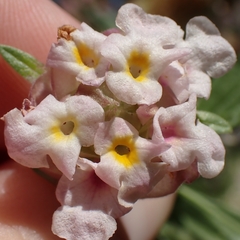 Lippia formosa Photo: CC0, John Cowles
 Lippia umbellata Photo: CC BY, Francisco Farriols Sarabia
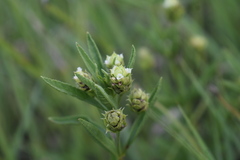 Lippia scaberrima Photo: CC BY, Justin Ponder
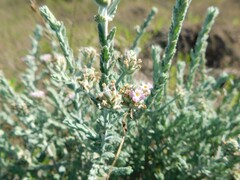 Lippia fastigiata Photo: CC BY, Jose Luis Leon de la Luz
Grown: iNaturalist's observations of the species marked captive or cultivated; "not counted" where the species list does not count it. Native ranges: Kew's World Checklist of Vascular Plants (Govaerts et al., CC BY 4.0), file of 4 June 2026. Grown: iNaturalist's observations marked captive or cultivated, counted 17 October 2026 (the species list's count). Habitat climate known: the species page has a habitat climate, read from CHELSA's monthly climate and NASA POWER's daily extremes at its well-placed wild records inside Kew's native range; each page says its own sources and days. Record low: the lowest night in NASA POWER's daily series at the habitat's typical spot, as the species page gives it, held in °C to a tenth and shown in your units; each page says its own years and day read. Counts as the reference built on 19 November 2026 holds them. The CSV holds every result, not only this page's.