Melicope
11 species in the reference · family Rutaceae · 11 with a habitat climate · 11 grown, per iNaturalist
About the genus
Melicope is a genus of about 240 species of shrubs and trees in the family Rutaceae, occurring from the Hawaiian Islands across the Pacific Ocean to tropical Asia, Australia and New Zealand. Plants in the genus Melicope have simple or trifoliate leaves arranged in opposite pairs, flowers arranged in panicles, with four sepals, four petals and four or eight stamens and fruit composed of up to four follicles.
Quoted from Wikipedia, "Melicope", its opening paragraph, revision 1359043760, read 2026-11-08, CC BY-SA 4.0.
Where Melicope is native
| New Guinea | 4 |
|---|---|
| New South Wales | 3 |
| New Zealand North | 3 |
| New Zealand South | 3 |
| Queensland | 3 |
| Taiwan | 3 |
| Vanuatu | 3 |
| Bismarck Archipelago | 2 |
| Cambodia | 2 |
| Fiji | 2 |
| Laos | 2 |
| Maluku | 2 |
Species native to each region. A species counts in every region it is native to. Native ranges: Kew's World Checklist of Vascular Plants (Govaerts et al., CC BY 4.0), file of 4 June 2026.
11 species
Melicope
 Melicope denhamii Photo: CC BY-SA, V C Balakrishnan
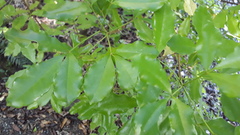 Melicope ternata Wharangi Photo: CC BY, Doug Miller
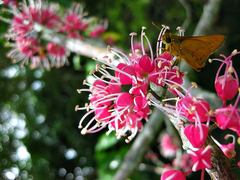 Melicope rubra Mueller's evodia Photo: CC BY-SA, bushmanjim
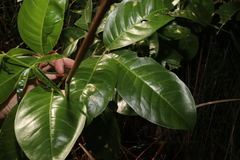 Melicope elleryana Pink doughwood Photo: CC BY-SA, Greg Tasney
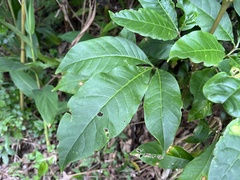 Melicope pteleifolia Thin-Evodia Photo: CC BY, 黃美滿
 Melicope simplex Poataniwha Photo: CC BY, Lisa Bennett
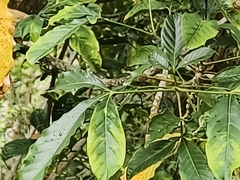 Melicope semecarpifolia Photo: CC BY, Yinling Chen
- no open photograph on file Melicope baueri
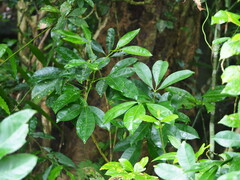 Melicope triphylla Photo: CC0, 葉子
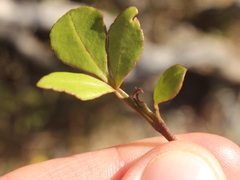 Melicope × mantellii Photo: CC BY, Joe Dillon
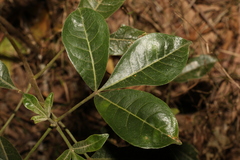 Melicope micrococca Hairy-leaved doughwood Photo: CC BY-SA, Greg Tasney
Grown: iNaturalist's observations of the species marked captive or cultivated; "not counted" where the species list does not count it. Native ranges: Kew's World Checklist of Vascular Plants (Govaerts et al., CC BY 4.0), file of 4 June 2026. Grown: iNaturalist's observations marked captive or cultivated, counted 17 October 2026 (the species list's count). Habitat climate known: the species page has a habitat climate, read from CHELSA's monthly climate and NASA POWER's daily extremes at its well-placed wild records inside Kew's native range; each page says its own sources and days. Record low: the lowest night in NASA POWER's daily series at the habitat's typical spot, as the species page gives it, held in °C to a tenth and shown in your units; each page says its own years and day read. Counts as the reference built on 19 November 2026 holds them. The CSV holds every result, not only this page's.