Metrosideros
21 species in the reference · family Myrtaceae · 19 with a habitat climate · 21 grown, per iNaturalist
About the genus
Metrosideros (MET-roe-SID-uh-ruhs) is a genus of approximately 60 trees, shrubs, and vines in the family Myrtaceae, mostly found in the Pacific region. Most of the tree forms are small, but some are exceptionally large, the New Zealand species in particular. The name derives from the Ancient Greek metra or "heartwood" and sideron or "iron". Perhaps the best-known species are the pōhutukawa (M. excelsa), northern rātā (M. robusta) and southern rātā (M. umbellata) of New Zealand, and ʻōhiʻa lehua (M. polymorpha) from the Hawaiian Islands.
Quoted from Wikipedia, "Metrosideros", its opening paragraph, revision 1379446680, read 2026-11-08, CC BY-SA 4.0.
Where Metrosideros is native
| New Zealand North | 12 |
|---|---|
| New Zealand South | 7 |
| New Caledonia | 2 |
| Antipodean Is. | 1 |
| Argentina South | 1 |
| Cape Provinces | 1 |
| Chile Central | 1 |
| Chile South | 1 |
| Cook Is. | 1 |
| Fiji | 1 |
| Hawaii | 1 |
| Kermadec Is. | 1 |
Species native to each region. A species counts in every region it is native to. Native ranges: Kew's World Checklist of Vascular Plants (Govaerts et al., CC BY 4.0), file of 4 June 2026.
21 species
Metrosideros
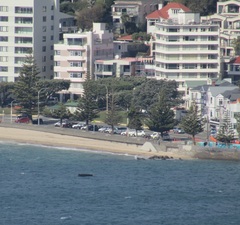 Metrosideros excelsa New Zealand Christmastree Photo: CC BY, wild_wind
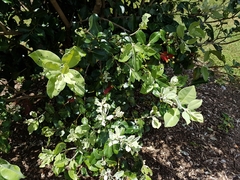 Metrosideros collina Vunga Photo: CC BY, Lek Khauv
Metrosideros robusta Northern rātā Photo: CC BY, John Barkla
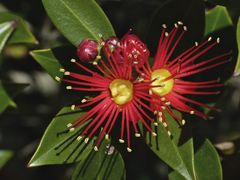 Metrosideros umbellata Southern rātā Photo: CC BY, Steve Kerr
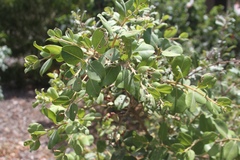 Metrosideros polymorpha 'Ohi'a lehua Photo: CC0, Sonny Gamponia
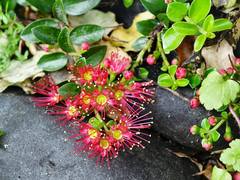 Metrosideros carminea Crimson rata Photo: CC BY, Jacqui Geux
 Metrosideros bartlettii Bartlett's rata Photo: CC BY, Jacqui Geux
 Metrosideros kermadecensis Pohutukawa Photo: CC BY, Tim Park
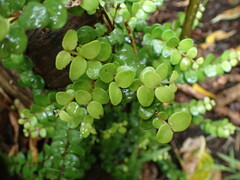 Metrosideros perforata Climbing rātā Photo: CC BY, Lisa Bennett
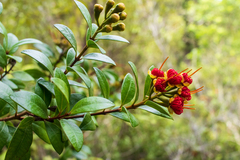 Metrosideros fulgens Scarlet rātā vine Photo: CC BY, Kane Fleury
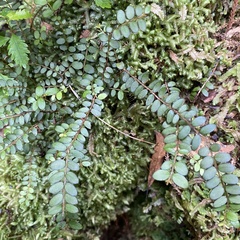 Metrosideros diffusa Small ratavine Photo: CC BY, Emma Naylor
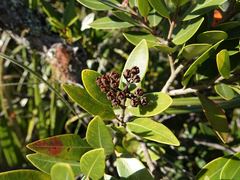 Metrosideros × subtomentosa Photo: CC BY, Jacqui Geux
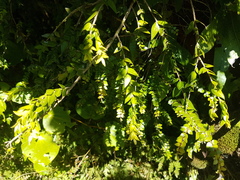 Metrosideros colensoi Photo: CC BY, Emily Roberts
 Metrosideros stipularis Photo: CC BY, Nicolás Lavandero
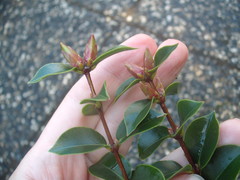 Metrosideros nervulosa Mountain Rose Photo: CC BY, Stephen Thorpe
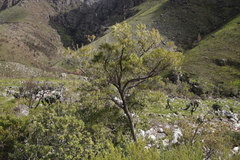 Metrosideros angustifolia Photo: CC BY-SA, Tony Rebelo
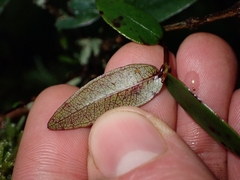 Metrosideros parkinsonii Parkinson’s Rātā Photo: CC BY, Oscar Dove
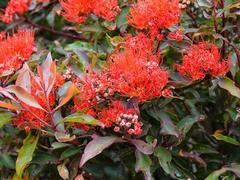 Metrosideros vitiensis Photo: CC BY, Jacqui Geux
 Metrosideros laurifolia Photo: CC BY-SA, Jean-Pierre Chéreau & Roger Culos
 Metrosideros albiflora White Flowering Rātā Photo: CC BY, Tim Park
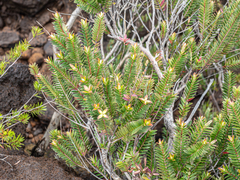 Metrosideros operculata Photo: CC BY, rainerburkard
Grown: iNaturalist's observations of the species marked captive or cultivated; "not counted" where the species list does not count it. Native ranges: Kew's World Checklist of Vascular Plants (Govaerts et al., CC BY 4.0), file of 4 June 2026. Grown: iNaturalist's observations marked captive or cultivated, counted 17 October 2026 (the species list's count). Habitat climate known: the species page has a habitat climate, read from CHELSA's monthly climate and NASA POWER's daily extremes at its well-placed wild records inside Kew's native range; each page says its own sources and days. Record low: the lowest night in NASA POWER's daily series at the habitat's typical spot, as the species page gives it, held in °C to a tenth and shown in your units; each page says its own years and day read. Counts as the reference built on 19 November 2026 holds them. The CSV holds every result, not only this page's.