Origanum
17 species in the reference · family Lamiaceae · 12 with a habitat climate · 16 grown, per iNaturalist, 1 not counted
About the genus
Origanum ( oh-RIG-ə-nəm) is a genus of herbaceous perennial flowering plants and subshrubs in the family Lamiaceae. They are native to Europe, North Africa, and much of temperate Asia, where they are found in open or mountainous habitats. A few species also naturalized in scattered locations in North America and other regions.
Quoted from Wikipedia, "Origanum", its opening paragraph, revision 1376226358, read 2026-11-08, CC BY-SA 4.0.
Where Origanum is native
| Turkey | 11 |
|---|---|
| East Aegean Is. | 5 |
| Greece | 5 |
| Cyprus | 4 |
| Kriti | 4 |
| Lebanon-Syria | 3 |
| Spain | 3 |
| Baleares | 2 |
| Iraq | 2 |
| Morocco | 2 |
| Sicilia | 2 |
| Transcaucasus | 2 |
Species native to each region. A species counts in every region it is native to. Native ranges: Kew's World Checklist of Vascular Plants (Govaerts et al., CC BY 4.0), file of 4 June 2026.
17 species
Origanum
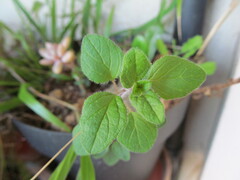 Origanum vulgare Wild marjoram Photo: CC BY, zebedeugalinha
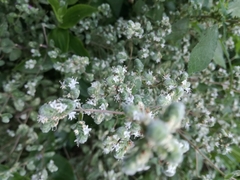 Origanum majorana Pot marjoram Photo: CC BY-SA, Andrea Meucci
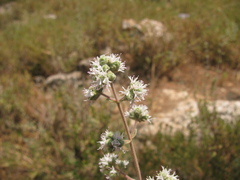 Origanum syriacum Biblical-hyssop Photo: CC BY, Nachman bones
 Origanum × majoricum Italian oregano Photo: CC BY, Forest & Kim Starr
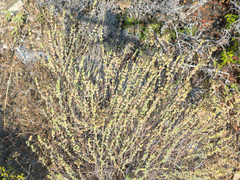 Origanum onites Pot marjoram Photo: CC BY, Eleftherios Katsillis
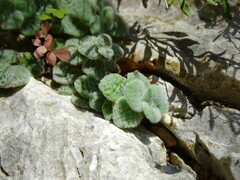 Origanum dictamnus Cretan dittany Photo: CC BY-SA, Grzegorz Grzejszczak
 Origanum rotundifolium Photo: CC BY-SA, David J. Stang
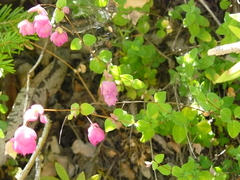 Origanum libanoticum Lebanon Oregano Photo: CC BY, elias ziade
 Origanum laevigatum Photo: CC BY-SA, Ghislain118 (AD)…
 Origanum hypericifolium Photo: CC BY-SA, DomsGarden
- no open photograph on file Origanum scabrum Greek Oregano
- no open photograph on file Origanum × intercedens
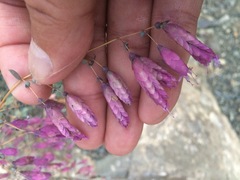 Origanum sipyleum Photo: CC BY-SA, Serdar Ölez
 Origanum acutidens Photo: CC BY-SA, Ghislain118 (AD)…
 Origanum amanum Photo: CC BY-SA, Emőke Dénes
 Origanum compactum Photo: CC0, Jun2013
 Origanum calcaratum Dittany of Amorgos Photo: CC BY-SA, Krzysztof Ziarnek, Kenraiz
Grown: iNaturalist's observations of the species marked captive or cultivated; "not counted" where the species list does not count it. Native ranges: Kew's World Checklist of Vascular Plants (Govaerts et al., CC BY 4.0), file of 4 June 2026. Grown: iNaturalist's observations marked captive or cultivated, counted 17 October 2026 (the species list's count). Habitat climate known: the species page has a habitat climate, read from CHELSA's monthly climate and NASA POWER's daily extremes at its well-placed wild records inside Kew's native range; each page says its own sources and days. Record low: the lowest night in NASA POWER's daily series at the habitat's typical spot, as the species page gives it, held in °C to a tenth and shown in your units; each page says its own years and day read. Counts as the reference built on 19 November 2026 holds them. The CSV holds every result, not only this page's.