Orthosiphon
2 species in the reference · family Lamiaceae · 2 with a habitat climate · 2 grown, per iNaturalist
About the genus
Orthosiphon is a genus of plants in the family Lamiaceae native to Africa, Southern Asia and Queensland, with one species (O. americanus) in Colombia. They are herbaceous shrubs which grow to a height of 1.5 m (5 ft). Some Orthosiphon species are popular garden plants because of their flowers, which are white and bluish with filaments resembling a cat's whiskers. In the wild, the plants can be seen growing in forests and along roadsides.
Quoted from Wikipedia, "Orthosiphon", its opening paragraph, revision 1360430864, read 2026-11-08, CC BY-SA 4.0.
Where Orthosiphon is native
| China Southeast | 2 |
|---|---|
| India | 2 |
| Jawa | 2 |
| Laos | 2 |
| Sri Lanka | 2 |
| Vietnam | 2 |
| Angola | 1 |
| Assam | 1 |
| Bangladesh | 1 |
| Benin | 1 |
| Bismarck Archipelago | 1 |
| Borneo | 1 |
Species native to each region. A species counts in every region it is native to. Native ranges: Kew's World Checklist of Vascular Plants (Govaerts et al., CC BY 4.0), file of 4 June 2026.
2 species
Orthosiphon
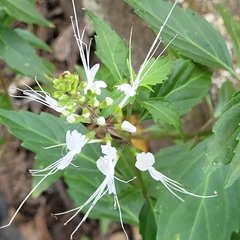 Orthosiphon aristatus Cat's-whiskers Photo: CC BY, Maria Janeiro
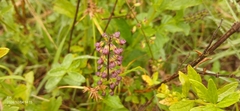 Orthosiphon thymiflorus Chilantippatam Photo: CC0, Phindile Mboyi
Grown: iNaturalist's observations of the species marked captive or cultivated; "not counted" where the species list does not count it. Native ranges: Kew's World Checklist of Vascular Plants (Govaerts et al., CC BY 4.0), file of 4 June 2026. Grown: iNaturalist's observations marked captive or cultivated, counted 17 October 2026 (the species list's count). Habitat climate known: the species page has a habitat climate, read from CHELSA's monthly climate and NASA POWER's daily extremes at its well-placed wild records inside Kew's native range; each page says its own sources and days. Record low: the lowest night in NASA POWER's daily series at the habitat's typical spot, as the species page gives it, held in °C to a tenth and shown in your units; each page says its own years and day read. Counts as the reference built on 19 November 2026 holds them. The CSV holds every result, not only this page's.